
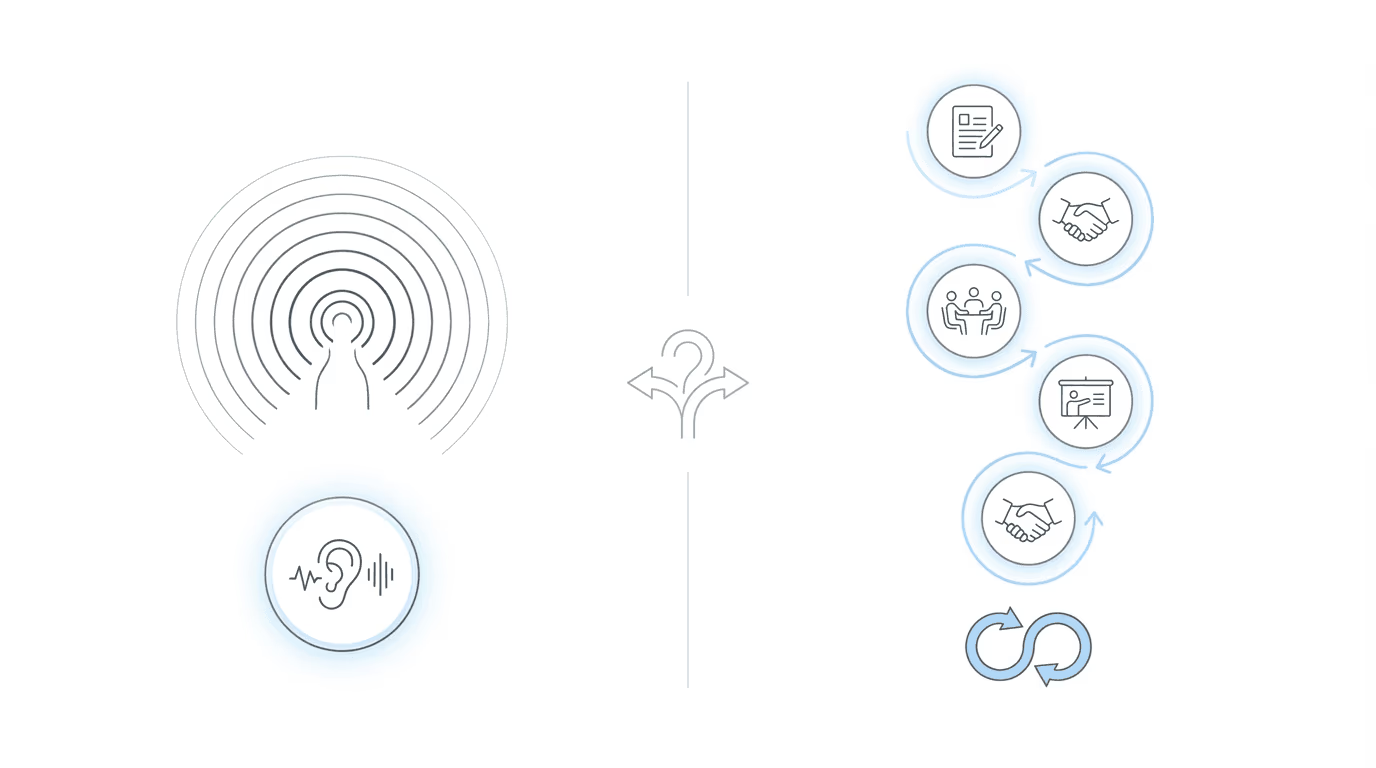
At a glance: Assure Disability and Chronicle are both SSD software suites, but with fundamentally different focuses. Assure is a hearing prep platform—it accesses the ERE specifically for exhibit review and hearing preparation, typically pulling files 3-5 times as cases approach hearing. Chronicle is a full-lifecycle operations platform—continuous ERE monitoring every two hours, virtual mailroom, AI-powered chronologies, and workflow automation from initial application through post-hearing. Assure offers a simple Litify integration and connects to Prevail; Chronicle integrates with Clio, Filevine, MyCase, Litify, and Zapier. Firms focused on hearing prep may prefer Assure. Firms wanting operational visibility across the full case lifecycle often choose Chronicle.
Disability law firms run on information flow. Cases move forward when documents arrive, get reviewed, and trigger the right response. They stall when something sits unnoticed in the ERE for three days.
Both Assure Disability and Chronicle address this problem, but they approach it differently. Assure built a hearing prep suite: hearing coverage, brief writing tools, and ERE access for exhibit review, anchored by Atlasware technology. Chronicle built a full-lifecycle operations platform: continuous ERE monitoring, virtual mailroom, medical chronology, and workflow automation from initial application through post-hearing.
If you’re comparing Assure Disability vs. Chronicle, or considering switching from one to the other, this comparison breaks down what each platform does, where they differ, and how to decide which fits your practice.
Quick Comparison: Assure Disability vs. Chronicle
| Feature | Assure Disability | Chronicle |
|---|---|---|
| Core Focus | Hearing prep platform | Full-lifecycle operations platform |
| ERE Access | ~3-5 pulls leading up to hearing | Every 2 hours (Pro/Enterprise) |
| Lifecycle Coverage | Hearing-centric | Initial application through post-hearing |
| Brief Writing | Brief Tool Pro (template wizard) or freelancer service | AC Brief add-on ($100/case) |
| Hearing Coverage | Nationwide attorney network | Not offered |
| AI Features | Medical summaries, document ID | Medical chronology, hearing transcripts |
| Integrations | Simple Litify integration, Prevail | Clio, Filevine, MyCase, Litify, Zapier |
| Pricing Model | Custom, MSA required | Per-case ($9-14), transparent |
| Approach | Hearing prep suite | Full-lifecycle operations suite |
Both platforms are suites of tools—the difference is focus. Assure optimizes for hearing prep. Chronicle optimizes for full-lifecycle operations.
What Is Assure Disability?
The platform traces back to 2011, when Assure launched to connect disability claimants with qualified local attorneys. The company has expanded considerably since then.
Today, Assure manages over 30,000 cases monthly across their network. Their offerings include:
Atlasware Cloud: The technology backbone for ERE access and exhibit preparation. Handles ERE document collection, organizes files with OCR and linked indexes, and provides cloud access from any device. The ERE access is hearing-centric: it typically pulls files 3-5 times total on a fixed schedule leading up to a hearing. Outside scheduled pulls, updates require manual triggering and can take 2-24 hours to process. Uploads take roughly 2-12 hours. Firms using Atlasware report cutting ERE upload and download time roughly in half compared to fully manual processes.
Brief Tool Pro: A template wizard that walks attorneys through the Five Step Sequential Analysis. Uses optical character recognition to pull relevant information from disability files. Assure also offers a writer service where briefs are prepared by freelancers. This is a paid add-on, comparable to Chronicle’s AC Brief offering.
Hearing Coverage Network: Access to 500+ disability attorneys nationwide who can appear at hearings on behalf of your firm. This started as Assure’s core service and remains central to their offering.
Atlasware Intelligence: AI-powered medical chronology generation. Creates summaries and organized chronologies from medical records.
Assure’s strength is hearing prep specialization. Assure accesses the ERE for exhibit review as cases approach hearing; Chronicle monitors the ERE continuously across the full case lifecycle. If you want hearing coverage, brief writing assistance, and exhibit preparation in a single vendor relationship, Assure has built that package. The tradeoff is lifecycle coverage—Assure doesn’t provide ongoing operational visibility between hearings—and integration options are limited to a simple Litify connection and Prevail.
What Is Chronicle?

Manual ERE checking is the problem Chronicle set out to solve. Checking the SSA portal case by case, logging in repeatedly, wondering if something arrived overnight. That workflow consumes hours of staff time weekly. Miss a document for a few days, and you’re scrambling to meet deadlines.
Chronicle is a full-lifecycle SSD operations platform built specifically for Social Security disability law firms. The suite includes ERE monitoring, virtual mailroom, medical chronology, and hearing prep tools—covering cases from initial application through post-hearing.
The system checks ERE every two hours for each case (with Pro and Enterprise plans), surfaces new documents immediately, and notifies your team.
Core capabilities include:
- Real-time case dashboard showing status across your entire caseload
- Automatic OCR and linked exhibit packets
- Team-wide secure ERE access without sharing login credentials
- AI-powered medical chronologies delivered in about an hour
- Hearing transcript generation for appeals preparation
- Virtual mailroom for centralized SSA mail management
- Open API and Zapier integration for custom workflows
Chronicle is trusted by 100+ disability practices nationwide, managing over 70,000 cases with more than 1.5 million documents processed.
The design philosophy matters here. Chronicle supports the full SSD lifecycle: initial application, reconsideration, hearing, and post-hearing updates. Rather than optimizing for one stage (like hearing prep), it provides continuous operational visibility at every stage. Chronicle complements existing case management systems rather than replacing them. If you have a CMS you’re satisfied with, Chronicle adds full-lifecycle operations without forcing a system migration.
Head-to-Head Feature Comparison
ERE Access and Monitoring
This is where the platforms diverge most clearly.
Chronicle monitors the ERE every two hours with Pro and Enterprise plans across the full case lifecycle—from initial application through post-hearing. When documents arrive, your team gets notified. The dashboard shows real-time status across all cases: which are at initial, which are pending hearing, which have new evidence. Staff stop refreshing portals and start reviewing complete files.
Chronicle’s infrastructure scales to handle over 100,000 monitoring sessions monthly. That ensures reliability even during high-volume periods or SSA portal instability.
Assure’s Atlasware accesses ERE for hearing preparation. The approach is hearing-centric: it typically pulls files 3-5 times total on a fixed schedule as cases approach hearing. Outside those scheduled pulls, manual updates can take 2-24 hours to process. The emphasis is on document management (OCR, indexing, searchability) for exhibit review, not ongoing operational monitoring.
If your primary pain is not knowing when documents arrive across your full caseload—with staff wasting hours on manual checks and occasional missed notices at any case stage—Chronicle’s continuous monitoring provides operational visibility. If your primary need is exhibit preparation specifically for hearings, Atlasware’s document management features address that workflow.
Document Management and Organization
Both platforms process ERE documents with OCR and create organized, searchable files.
Atlasware creates hyperlinked indexes on the first page of converted files. Click an exhibit bookmark, jump to that section. Documents become searchable text rather than static images.
Chronicle generates OCRed exhibit packets with linked navigation. Files are assembled and indexed automatically as they arrive.
The document handling is comparable. The difference is context: Atlasware as part of a comprehensive suite, Chronicle as part of a monitoring-focused system.
AI Capabilities
Both platforms have invested in AI, with different emphases.
Assure’s Atlasware Intelligence generates medical chronologies from disability files. Brief writing is separate; Brief Tool Pro is a template wizard, and the Writer Service uses freelancers to prepare briefs.
Chronicle’s AI focuses on case preparation. Medical chronologies generate in about an hour and refresh automatically when new evidence arrives. You’re not recreating them from scratch each time. Hearing transcripts help with appeals preparation. Case summaries provide quick overviews for hearing prep.
If automated brief writing is central to your workflow, Assure has invested heavily there. If you need faster chronologies and hearing prep materials, Chronicle’s AI is oriented toward that use case.
Brief Writing
Assure offers Brief Tool Pro as a paid add-on. It’s a template wizard that guides attorneys through the Five Step Sequential Analysis, pulling information from the OCRed disability file. Assure also offers a writer service where freelancers prepare briefs.
Chronicle offers AC Brief as an add-on at $100 per case. It produces ready-to-file briefs with five-step analysis, available in Word and PDF formats.
Both platforms treat brief writing as a paid add-on rather than a core feature. Assure’s approach involves templates and optional freelancer assistance; Chronicle’s is a per-case service.
Integrations
Chronicle provides direct integrations with Clio, Filevine, MyCase, and Litify, plus Zapier support for connecting to other platforms. You can automatically trigger workflows when cases move forward and build custom notification chains. Chronicle is CMS-agnostic by design—it works alongside whatever system your firm already uses.
Assure offers a simple integration with Litify and connects to Prevail (which Assure acquired). If your firm uses a different CMS, Assure’s ability to flow data into your system of record is limited.
If your firm uses Clio, Filevine, or MyCase, Chronicle has direct integrations. If you use Litify, both platforms offer integration options. If you use Prevail, Assure connects natively through Atlasware; Chronicle does not have a Prevail integration, though firms can use both tools separately.
Team Access and Collaboration
Chronicle gives entire teams secure access to ERE without sharing login credentials. Everyone with appropriate permissions can view and upload documents through the platform. This eliminates the password-passing problem and creates an audit trail of who accessed what.
Atlasware Cloud provides multi-user access through the cloud platform. Staff can access from any device with internet connectivity, replacing the older desktop version’s hardware limitations.
Both solve the “one person holds the ERE login” problem. Chronicle emphasizes the security angle: no passcode sharing, team-wide access with proper controls and audit trails.
Security and Compliance
Chronicle is SOC2 certified with privacy-first architecture. The platform maintains independence from law firms and insurers. No data sharing with third parties.
Assure maintains SOC2 and HIPAA compliance with annual audits. They emphasize that cloud-based systems provide better security than desktop applications.
Both platforms take security seriously. Compliance is table stakes for disability law software handling SSA documents and medical records.
Pricing Comparison
Chronicle publishes transparent per-case pricing:
| Plan | Price | Minimum | Key Features |
|---|---|---|---|
| Essentials | $9/case | $90/month (10 cases) | Firm dashboard, notifications, OCRed packets, monthly checks |
| Pro | $14/case | $196/month (14 cases) | + API access, transcripts, every 2-hour checks |
| Enterprise | Custom | 50+ cases | + Priority support, customizations, volume pricing |
Add-ons: Medical Chronology ($50/case), AC Brief ($100/case)
Chronicle offers a free trial activated through a 15-minute setup call.
Assure uses custom pricing based on which services your firm subscribes to. You’ll need to complete a demo and sign a Master Service Agreement. There’s no long-term contract requirement, but pricing varies based on your service mix.
The pricing philosophies differ. Chronicle is predictable: you know exactly what each case costs. Assure offers flexibility: you build a custom package reflecting your specific service needs.
Why Firms Choose Chronicle
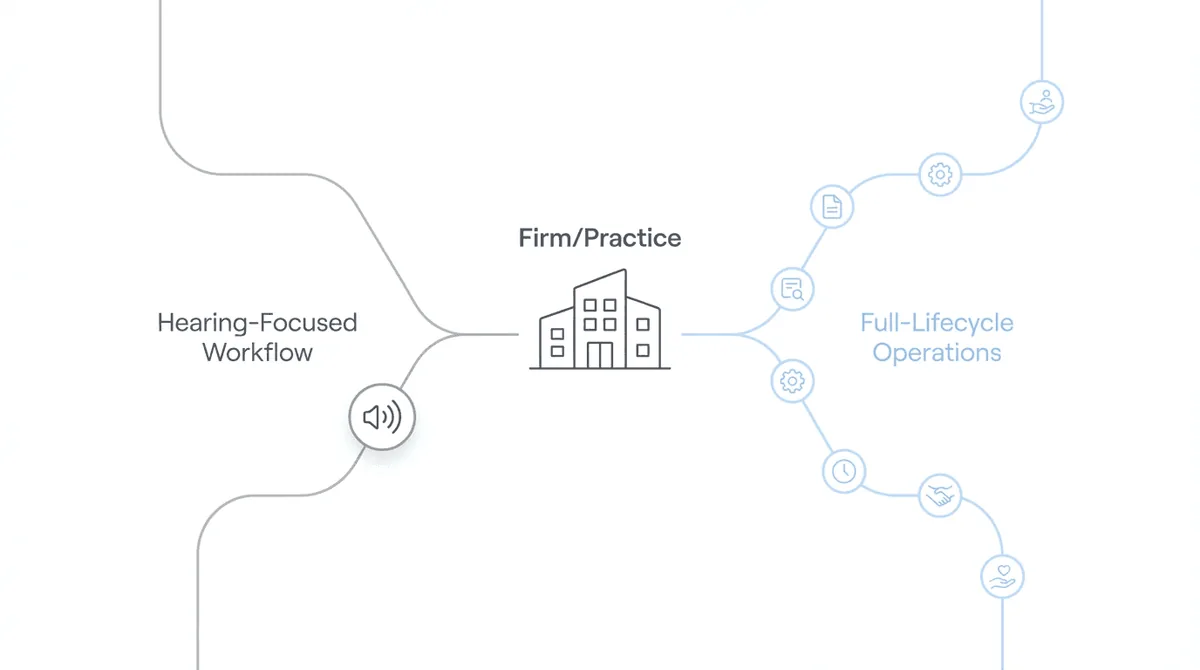
Disability practices increasingly choose Chronicle for its full-lifecycle approach and continued innovation. The pattern among firms that adopt Chronicle reflects specific operational priorities.
Full-lifecycle visibility changes operations: checking ERE every two hours from initial application through post-hearing changes how your team operates. Documents surface faster. Response time improves. The anxiety of “did something come in?” decreases because your team knows they’ll be notified at every case stage.
The platform keeps expanding: Chronicle’s architecture handles 100,000+ sessions monthly. Capabilities continue growing—AI chronologies, hearing transcripts, virtual mailroom, API integrations—all focused on full-lifecycle operations.
Integration flexibility matters for existing workflows: firms with case management systems they’re satisfied with can add Chronicle without migration. Direct integrations with Clio, Filevine, MyCase, and Litify mean data flows into your current workflows. You’re adding operational visibility, not replacing a system.
Quantified results from firms using Chronicle:
- Ficek Law: 67% year-over-year revenue growth, 10-20 staff hours saved weekly, zero missed deadlines since implementation
- Viner Disability Law: Scaled from 900 to 3,000 active cases without adding staff
- Disability Champions: Tripled caseload capacity while maintaining service standards
- Typical outcomes: 40% reduction in admin work, 15% increase in intake capacity
These reflect operational shifts: fewer missed documents, faster preparation, more capacity without proportional headcount growth.
When Assure Makes More Sense
Assure serves a different set of priorities. Consider Assure Disability if:
Hearing prep is your primary pain point: Assure’s suite is optimized for exhibit review and hearing preparation. If your operational challenges center on getting ready for hearings specifically, Assure addresses that workflow.
You want brief writing assistance: Brief Tool Pro provides a template wizard for the Five Step Analysis, and Assure’s writer service connects you with freelancers. If you need help producing briefs, they offer options.
You need the hearing network: Assure’s 500+ attorney network provides local representation nationwide. If covering distant hearings is a persistent operational challenge, that service addresses it directly.
You use Prevail and want native connectivity: Assure acquired Prevail, so the platforms connect. (Note: Prevail is a separate product, not bundled with Assure.)
Which Solution Is Right for Your Firm?
The choice depends on what problem you’re solving.
Choose Chronicle if: - Your primary pain is operational visibility across the full case lifecycle - You want continuous ERE monitoring (every 2 hours) from application through post-hearing - You have a CMS you’re satisfied with and want to add operations tools without migration - You use Clio, Filevine, MyCase, or need flexible integrations - Transparent, predictable pricing matters to your budgeting - You’re focused on scaling without adding proportional headcount
Choose Assure if: - Your primary pain is hearing preparation specifically - You want hearing coverage and brief writing assistance together - You need access to a nationwide hearing attorney network - You use Prevail or Litify and want that ecosystem
Neither platform is wrong. They reflect different operational focuses. Chronicle optimizes for full-lifecycle operations. Assure optimizes for hearing prep.
Making the Switch: What to Expect
If you’re considering Chronicle, whether moving from Assure or adding it alongside your current setup:
Chronicle doesn’t require migration: you can run it in parallel with existing case management. Many firms use Chronicle for full-lifecycle operations (ERE monitoring, virtual mailroom, chronologies) while keeping their CMS for case records and billing.
Setup is fast: initial configuration happens in a 15-minute call. A trial period with 10-20 cases typically runs 1-2 weeks. Staff training takes about 30 minutes.
Integration connects your systems: if you want Chronicle data flowing into your CMS, the API and Zapier options make that possible without custom development.
Support is hands-on: the Chronicle team works directly with firms during onboarding. Enterprise customers get priority support and customization options.
The operational shift happens quickly. Within days, you stop manually checking ERE and start responding to notifications.
Frequently Asked Questions
Can I use Chronicle alongside Assure Disability?
The systems can run in parallel. Chronicle is designed to complement existing systems, not replace them. If you use Atlasware for brief writing and want Chronicle for real-time ERE monitoring, that configuration works. Chronicle’s API can feed data into other platforms.
How often does Chronicle check the ERE?
Every two hours with Pro and Enterprise plans. Essentials includes monthly document checks. Automated monitoring at that frequency means documents surface faster than manual checking allows.
What integrations does Chronicle offer?
Chronicle provides an open API and Zapier support. You can connect it to your practice management system, trigger automated workflows when case status changes, and build custom notification chains.
Is Chronicle SOC2 compliant?
Chronicle is SOC2 certified with privacy-first architecture. No data is shared with third parties. The platform maintains independence from law firms and insurers.
How much does Chronicle cost per case?
Essentials is $9/case with a $90/month minimum. Pro is $14/case with a $196/month minimum. Enterprise pricing is custom for firms with 50+ cases. Add-ons include Medical Chronology at $50/case and AC Brief at $100/case.
Does Chronicle offer a free trial?
Chronicle offers a free trial activated through a 15-minute setup call. Most firms run a trial period with 10-20 cases over 1-2 weeks to evaluate fit.
Conclusion
Assure Disability built a hearing prep suite anchored by hearing coverage, brief writing assistance, and exhibit preparation via Atlasware. It serves firms whose primary operational challenge is getting ready for hearings.
Chronicle built a full-lifecycle operations platform: continuous ERE monitoring, virtual mailroom, medical chronology, and workflow automation from initial application through post-hearing. The two-hour check cycle, team-wide access, and integrations with Clio, Filevine, MyCase, and Litify address operational visibility across every case stage.
Firms choosing Chronicle often share a common profile. They’ve grown past manual ERE workflows. They want visibility that doesn’t depend on staff memory. They need operations tools that work at every case stage, not just as hearings approach. The results reflect that operational shift: zero missed deadlines, 40% less admin time, caseloads scaling without adding staff.
If that matches where your practice is headed, Chronicle offers a free trial.
Ready to see Chronicle in action? Book a demo to experience full-lifecycle SSD operations for your firm.