

Disability law software breaks into two distinct categories that serve different purposes: hearing prep platforms and full-lifecycle operations tools. The confusion is understandable. Both involve the ERE. Both support hearing preparation. But they answer different questions and engage at different points in the case lifecycle.
Hearing prep platforms optimize for the weeks before an ALJ hearing. Full-lifecycle operations platforms provide continuous visibility from initial application through post-hearing. Understanding the difference helps you choose the approach that fits your firm’s workflow, caseload, and growth trajectory.
Two Approaches to SSD Software
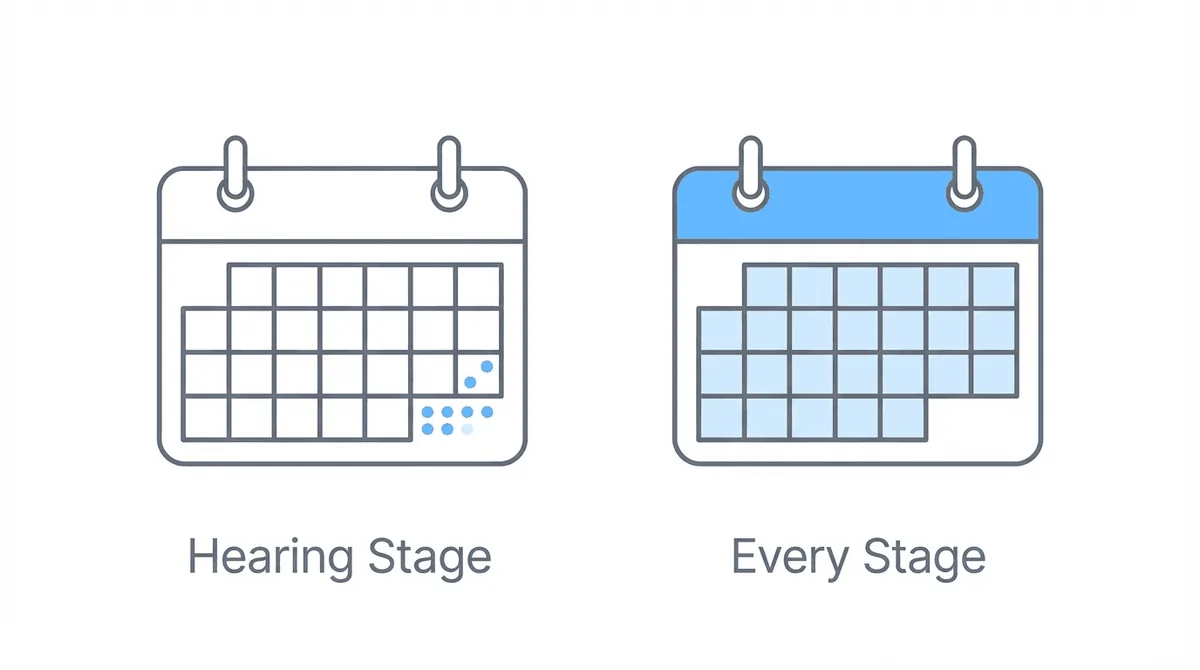
The fundamental distinction is timing: when does the tool engage, and for what purpose?
- Hearing prep platforms focus on getting cases ready for ALJ hearings. They access the ERE on a scheduled basis (typically 3-5 times) leading up to a hearing date. Their core value is exhibit review, document organization, brief writing support, and hearing readiness features.
- Full-lifecycle operations platforms monitor the ERE continuously, regardless of case stage. They check for changes daily across all cases, from initial application through post-hearing. Their core value is operational visibility: knowing what the SSA is doing with your cases today, not just as hearings approach.
Why this distinction matters:
Most SSD cases spend 12-24 months in initial application and reconsideration before a hearing is ever scheduled. If your firm only gains ERE visibility when hearings approach, you’re operating blind during the longest phase of most cases. Questionnaires arrive. Consultative exams get scheduled. Status changes occur. Denials post and appeal deadlines start running.
Hearing prep platforms don’t solve this problem because they’re not designed to. They engage later in the lifecycle, when the case has already reached the hearing stage.
What Hearing Prep Platforms Do
Hearing prep platforms are designed for a specific moment in the case lifecycle: the period when you’re preparing for an ALJ hearing.
ERE access pattern: hearing prep platforms typically access the ERE on a fixed schedule leading up to hearings. The exact frequency varies, but 3-5 scheduled pulls is common. This provides the evidence needed for exhibit review and hearing preparation.
Core features:
- Exhibit review and organization: OCR processing, document categorization, and tools for reviewing the administrative record
- Brief writing support: templates, document assembly, and tools for creating pre-hearing briefs
- Hearing coverage networks: some platforms offer coverage services for firms that need representation at hearings in other jurisdictions
- ALJ analytics: data on ALJ decision patterns and hearing preparation guidance
Integration patterns: hearing prep platforms often integrate tightly with specific case management systems. Prevail integration is common, as is Litify. Data flows between the hearing prep tool and the CMS.
When they engage: primarily in the weeks before scheduled hearings. The workflow is: hearing gets scheduled, case enters the hearing prep platform’s pipeline, exhibits are reviewed, brief is prepared, hearing occurs.
What they don’t do: hearing prep platforms are not designed for continuous monitoring during initial application and reconsideration. They optimize for hearing readiness, not daily operational visibility.
What Full-Lifecycle Operations Platforms Do
Full-lifecycle operations platforms monitor the ERE continuously, at every stage of the disability process.
ERE access pattern: daily checks regardless of case stage. The system monitors every case, every day, from initial application through post-hearing. When something changes, the platform surfaces it.
Core features:
- Continuous ERE monitoring: daily visibility into status changes, new documents, hearing schedules, and decisions
- Virtual mailroom: centralized access to SSA correspondence without depending on physical mail
- Alerts and notifications: automatic flagging when something changes in a case
- Dashboard visibility: real-time view of where every case stands
- Medical chronology: tools for hearing preparation, including AI-powered chronology generation
- CMS integration: connections to multiple case management systems
Integration patterns: full-lifecycle platforms tend to be CMS-agnostic. Chronicle integrates with Clio, Filevine, MyCase, Litify, and Zapier. The platform works with whatever CMS you already use.
When they engage: constantly. From the day you file an initial application through post-hearing appeals, the platform monitors for SSA activity.
What enables this approach:
At The Disability Champions, staff use their monitoring platform “from start to finish of workflow” alongside their CMS. The firm grew from 900 to 3,000 active cases while reducing staff needs, with Chronicle contributing roughly two-thirds to the staff savings.
For many firms, initial and reconsideration cases feel invisible compared to hearing-stage work. There’s no scheduled event forcing attention. Updates happen in the ERE without notification. The result: staff learn about SSA activity when clients call or mail arrives and not when it actually happens.
Key Differences Compared
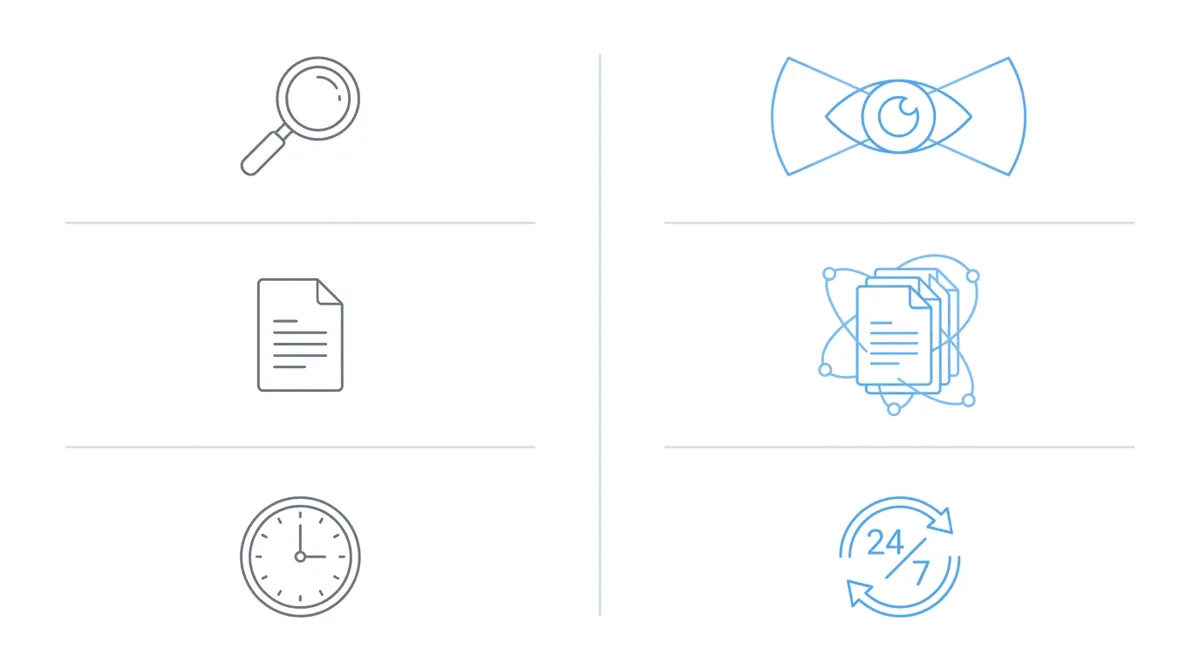
The operational differences become clear when you compare specific aspects of each approach.
| Aspect | Hearing Prep Platforms | Full-Lifecycle Operations |
|---|---|---|
| ERE access timing | 3-5 scheduled pulls leading up to hearing | Daily checks regardless of stage |
| Case stage coverage | Hearing-centric | Initial through post-hearing |
| Primary value | Exhibit review, brief support, hearing readiness | Continuous awareness, deadline protection |
| Integration pattern | Tight coupling with specific CMS (Prevail, Litify) | CMS-agnostic (works with multiple systems) |
| When you gain visibility | When hearing is scheduled | From day one |
Monitoring frequency matters:
The difference between 3-5 ERE pulls and daily monitoring is operational, not just technical. With daily monitoring, you know when a questionnaire posts before the physical mail arrives. You know when a status changes before the client calls. You know when a decision posts within 24 hours.
At Martin, Jones & Piemonte, staff estimated spending “five or six hours per week per paralegal” on manual ERE checking before implementing automated monitoring. At The Law Office of Nancy L. Cavey, each paralegal spent “15 to 20 hours per week in the ERE.”
Case stage coverage matters:
Hearing prep platforms excel at what they’re designed for: getting cases ready for hearings. But if your firm handles initial applications and reconsiderations, you need visibility during those stages too. A questionnaire with a 10-day deadline can’t wait until the case reaches hearing prep.
At Disability Advocates LLC, the tipping point came around 100-125 cases: “It wasn’t as bad at 50 or 75 cases. But once we hit 100-125, it became more and more cumbersome.”
Which Approach Fits Your Firm
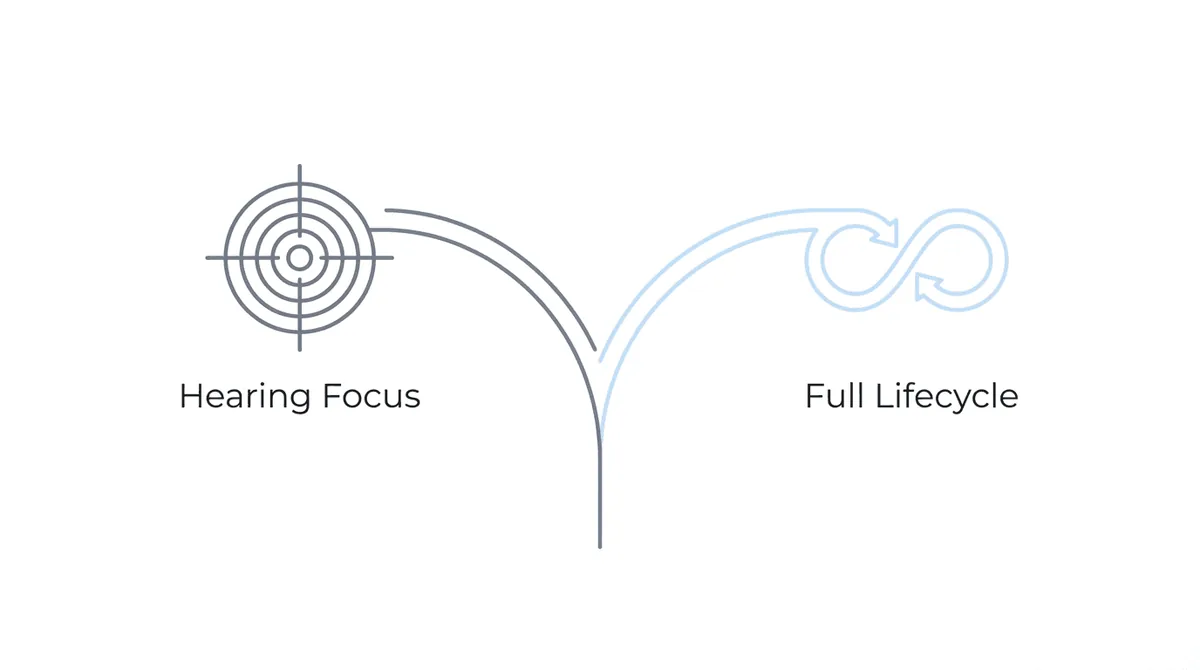
The right choice depends on your workflow, caseload composition, and integration requirements.
Choose a hearing prep platform if:
- Your firm focuses primarily on hearing-stage work
- You already have visibility into initial and reconsideration cases through other means
- You outsource case development and engage primarily for hearing preparation
- Your CMS is Prevail or Litify and you want tight integration with hearing prep features
- Your workflow centers on exhibit review and brief writing as the primary bottleneck
Choose full-lifecycle operations if:
- You handle cases from initial application through hearing
- Your initial and reconsideration cases feel like a “black hole” with limited visibility
- You want proactive client communication rather than reactive response to client calls
- You’re scaling past 150 cases and manual monitoring is breaking down
- CMS flexibility matters (you’re not locked to a specific system)
- You want continuous visibility regardless of case stage
The hybrid option:
Some firms use both approaches. A hearing prep platform handles exhibit review and brief support; a full-lifecycle platform provides continuous monitoring and earlier-stage visibility. This works when the tools serve complementary purposes and the data flows are manageable.
Firm scenarios:
Solo practitioner with 75 cases, mostly hearings: A hearing prep platform may be sufficient. Manual monitoring at this scale is still feasible, and the primary workflow bottleneck is hearing preparation.
Growing firm with 200 cases across all stages: Full-lifecycle operations becomes important. Manual ERE monitoring at this volume breaks down, and you need visibility into initial and reconsideration activity, not just hearing prep.
High-volume firm with 500+ cases: Full-lifecycle monitoring is essential. The math on manual ERE checking doesn’t work at this scale. You may also want hearing prep capabilities, either through the same platform or a separate tool.
The Integration Question
Integration requirements often drive software decisions as much as features do.
Hearing prep platform integration:
Hearing prep platforms typically integrate with specific case management systems. If you’re running Prevail or Litify, the integration path is often straightforward. Data flows between the hearing prep tool and your CMS.
If you’re running a different CMS, integration may be limited or require workarounds. Some platforms focus on a single CMS ecosystem.
Full-lifecycle platform integration:
Full-lifecycle platforms tend toward CMS-agnostic design. Chronicle integrates directly with Clio, Filevine, MyCase, and Litify. Zapier integration enables connection to other systems.
This flexibility matters if:
- You’re not committed to a specific CMS long-term
- You’re using a CMS that isn’t Prevail or Litify
- You want the monitoring layer to work regardless of what happens with your CMS
Why integration matters:
Data needs to flow into your system of record. If your monitoring tool detects a new document but that information doesn’t reach your CMS, you’ve created a workflow gap. Staff end up checking two systems, or information falls through the cracks.
The question isn’t which tool has more features. It’s which tool connects to your actual workflow.
How Chronicle Approaches Full-Lifecycle Operations
Chronicle is a full-lifecycle SSD operations platform. It checks the ERE and e-file daily for changes across your firm’s cases, from initial application through post-hearing.
What Chronicle provides:
- Daily ERE monitoring at every case stage
- Real-time dashboard showing status across your caseload
- Virtual mailroom for SSA correspondence
- Medical chronology for hearing preparation
- Integration with Clio, Filevine, MyCase, Litify, and Zapier
How firms use it:
For firms adopting full-lifecycle operations, Chronicle runs parallel to their CMS — not as a replacement, but as the SSA visibility layer. At Anderson Marois & Associates, staff monitor Chronicle multiple times daily and flag status changes that trigger next steps without waiting for attorney oversight. The workflow shift means they can file appeals before denial letters arrive by mail.
At Ficek Law, Chronicle functions as a “control tower” alongside calendars and email. The firm credits the shift from reactive to proactive planning — and their hearing approval rate climbed from the low 60s to 70-75%.
The pattern across these firms: Chronicle handles SSA awareness, their CMS handles execution. You can read more of these ERE monitoring software success stories here.
How this compares to hearing prep platforms:
Chronicle and hearing prep platforms solve different problems. A hearing prep platform optimizes for exhibit review and brief writing. Chronicle optimizes for continuous visibility at every case stage. Firms that need both capabilities can use both tools; they’re not mutually exclusive.
The question is what problem you’re trying to solve: hearing readiness, or full-lifecycle operational visibility.
Ready to see full-lifecycle operations in action? Book a demo to see how Chronicle provides continuous ERE monitoring from initial application through post-hearing.