
Check that the client is linked to the correct project, the document is available in Chronicle, Documents is on and its section is included. Use the shared resync guide after correcting the cause.
Use the Filevine integration
Use matched Filevine projects for mapped case data, SSA document filing and the optional syncs your firm enables. Complete Connect Filevine to Chronicle first.
What syncs
Available capabilities and enabled settings are different. Review the options your firm wants to use.
Capability | Direction | What it does |
|---|---|---|
Stages and client fields | Chronicle to Filevine | Update mapped phases and scalar project fields. |
Documents | Chronicle to Filevine | File selected SSA document sections on the matched project. |
SSN back-sync | Filevine to Chronicle | Fill missing full SSNs from the configured source. |
Hearings and CEs | Chronicle to Filevine | Create appointments and follow reschedules and cancellations. |
Contact details | Filevine to Chronicle | Pull selected date of birth, phone and email sources. |
Matching | Links existing records | Use the project links verified during setup. |
Client messages | Chronicle to Filevine | Log new Dispatch texts and client replies as project notes. |
Case ownership | Filevine to Chronicle | Make eligible teammates follow their owned projects. |
Open the integration
A Chronicle administrator or account owner can manage these settings.
In Chronicle, open Settings > Integrations.
Open Filevine.
Use Overview for settings and Sync for status and run results.
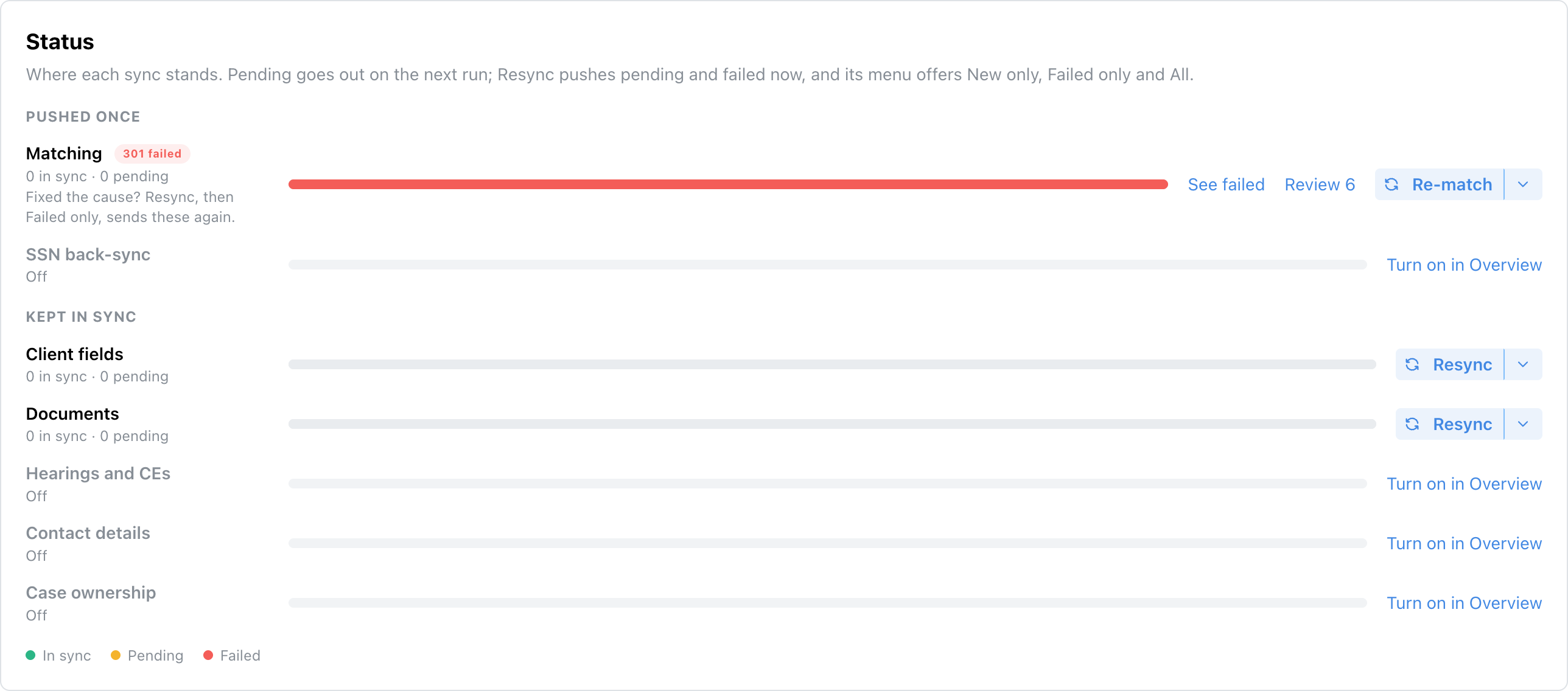
The Filevine Sync tab's Status view.
Move from matching to everyday use
If the app checklist is still open, the remaining choices control how your firm uses the integration.
Use Open mapping to configure destination mappings when offered, or Skip for now to leave them for later.
Open Choose what to sync and review the capabilities below.
Click Finish setup after reviewing the choices.
On a new Filevine connection, documents and hearings start on. Skip for now in Choose what to sync completes the app checklist without turning those defaults off. Review the switches before finishing.
Stages and client fields
Destination mappings control what we maintain after matching. The matching SSN source remains a separate setting.
Map SSA statuses to Filevine phases
In Overview > Mapping, click Edit mapping.
Open Stages.
Expand a Filevine phase and select the SSA status groups or individual statuses that should move a project to it.
Click Save mapping.
An unmapped phase receives no status-driven update. Use Refresh stages from Filevine after changing Filevine phases.
Repeated syncs do not reset a manual phase change when the mapped target is the same phase we last sent. A later SSA status mapping to a different phase can move it again.
Map client fields
In the mapping page, open Client fields.
Click Add Mapping.
Choose the Chronicle field and the destination Filevine section and field.
Click Save mapping.
Use Show descriptions for field explanations and Refresh fields from Filevine for new destination fields. Supported destinations are text, text area, phone, date, date and time, number and currency fields. Pick lists, related-contact fields and fields inside repeating sections are not offered. Ongoing sync fills mapped fields going forward, and a resync repopulates the mapped fields of existing matched projects; unmapped fields are untouched, and a resync does not reverse manual phase changes.
Client field mapping options lists the fields and accepted types.
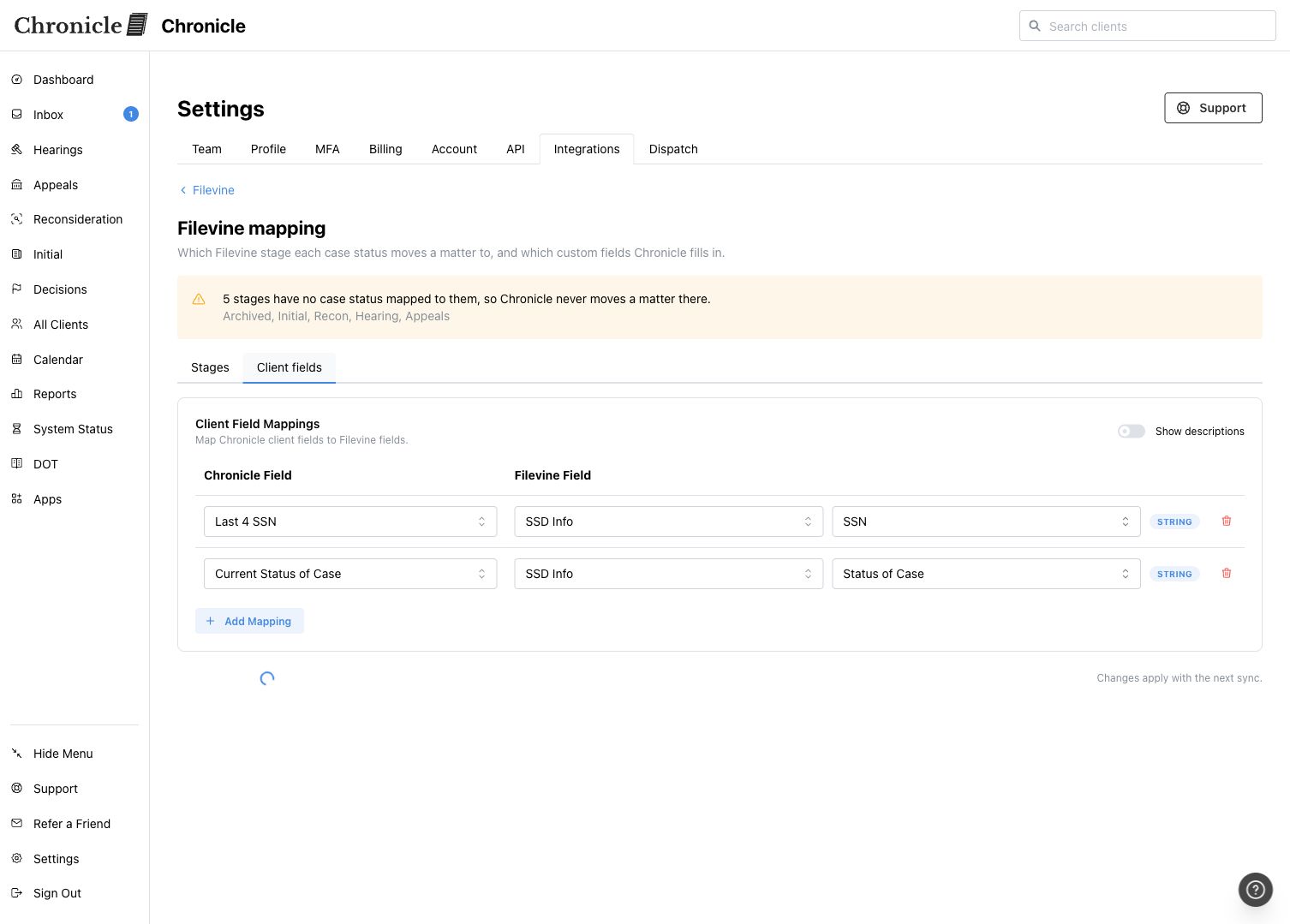
Example field mappings. These show field names, not client values.
Documents
File SSA documents already available in Chronicle in a Chronicle ERE folder on the matched project.
In Overview > What syncs, turn on Documents.
Click Change sections.
Select the sections to include.
Click Save.
Document sync runs every 15 minutes. For historical documents or failed filing, use Resync integration data. Turning Documents off or unchecking a section stops new filing for that scope; existing files remain in the destination.
We create the folder on the first document sync.
SSN back-sync
Fill a missing full SSN in Chronicle from the Filevine SSN source chosen during matching setup. An SSN already present in Chronicle is not replaced.
In Overview > What syncs, review SSN back-sync.
Use Change field if the contact or project source needs to change.
Turn on SSN back-sync.
The source needs the full SSN to fill a missing full SSN. When the client already has last four digits on file, Chronicle writes the SSN only if its last four digits match them. If they differ, the client is skipped and the run result says the last four do not match, so a project linked to the wrong person never supplies an SSN.
A client with an SSN on file is monitored for new SSA documents, the same as a client whose SSN you entered by hand. Filling an SSN through the back-sync therefore starts e-File monitoring for that client. A one-time e-File monitoring fee per case applies once the first pull from SSA succeeds; Review client billing explains when it applies, and Enable e-File monitoring covers the monitoring controls.
Hearings and CEs
Choose the appointment types to send to Filevine independently.
In Overview > What syncs, click Change beside Hearings and CEs.
Set Sync hearings and Sync CE appointments to the scope your firm wants.
Check an upcoming appointment on the matched Filevine project after syncing.
The settings save automatically. Appointments reach Filevine on the regular sync, usually within about 15 minutes. A reschedule updates the same appointment. A cancellation does not delete it: the appointment stays on the project with [Cancelled] at the start of its title. If you delete a synced appointment in Filevine, we do not recreate it.
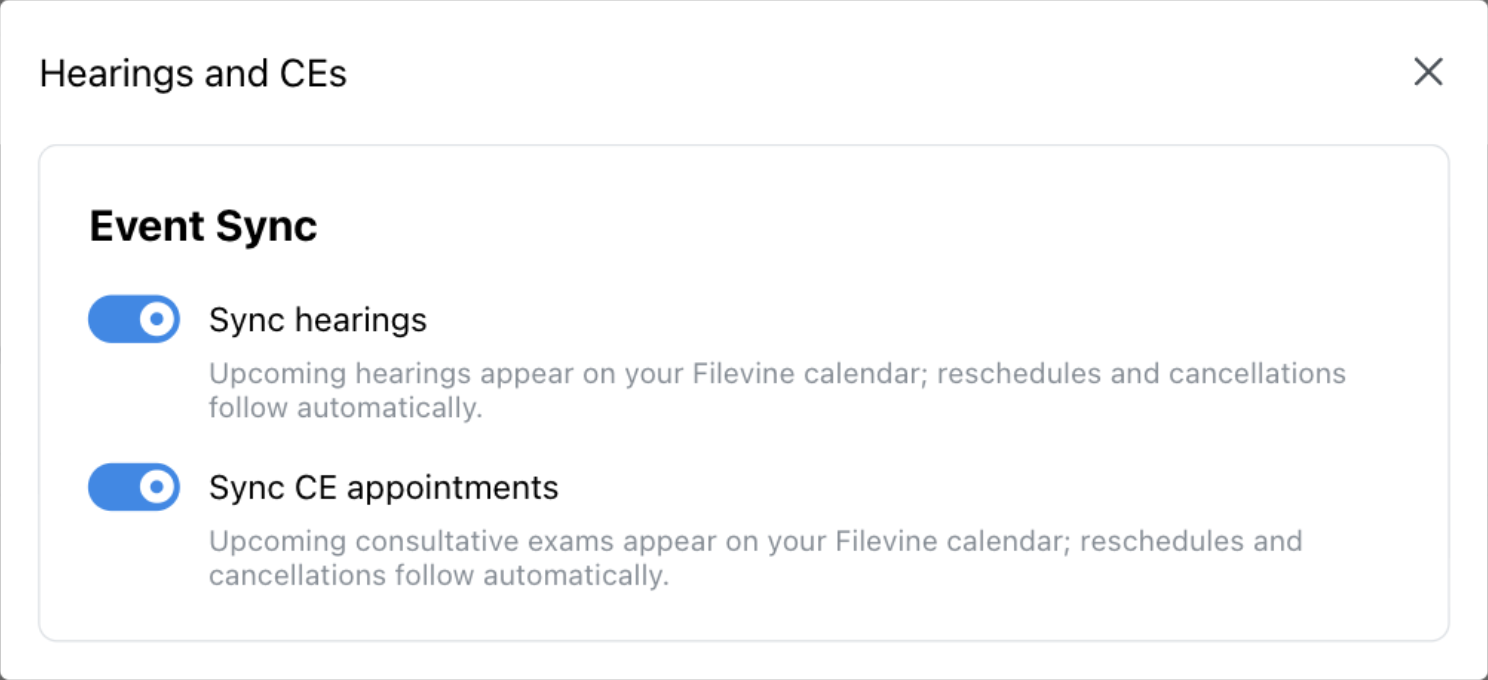
The Hearings and CEs dialog.
Contact details
Pull selected contact details from Filevine into Chronicle. This is separate from destination fields sent in the other direction.
In Overview > What syncs, click Change beside Contact details.
Turn on Sync contact details from Filevine.
Select a source for Date of birth, Phone number and Email, leaving fields blank when you do not want to pull them.
Changes save automatically. Valid values can update existing Chronicle details; blank incoming values do not clear them. A field pulled from the provider is excluded from the outbound mapping picker.
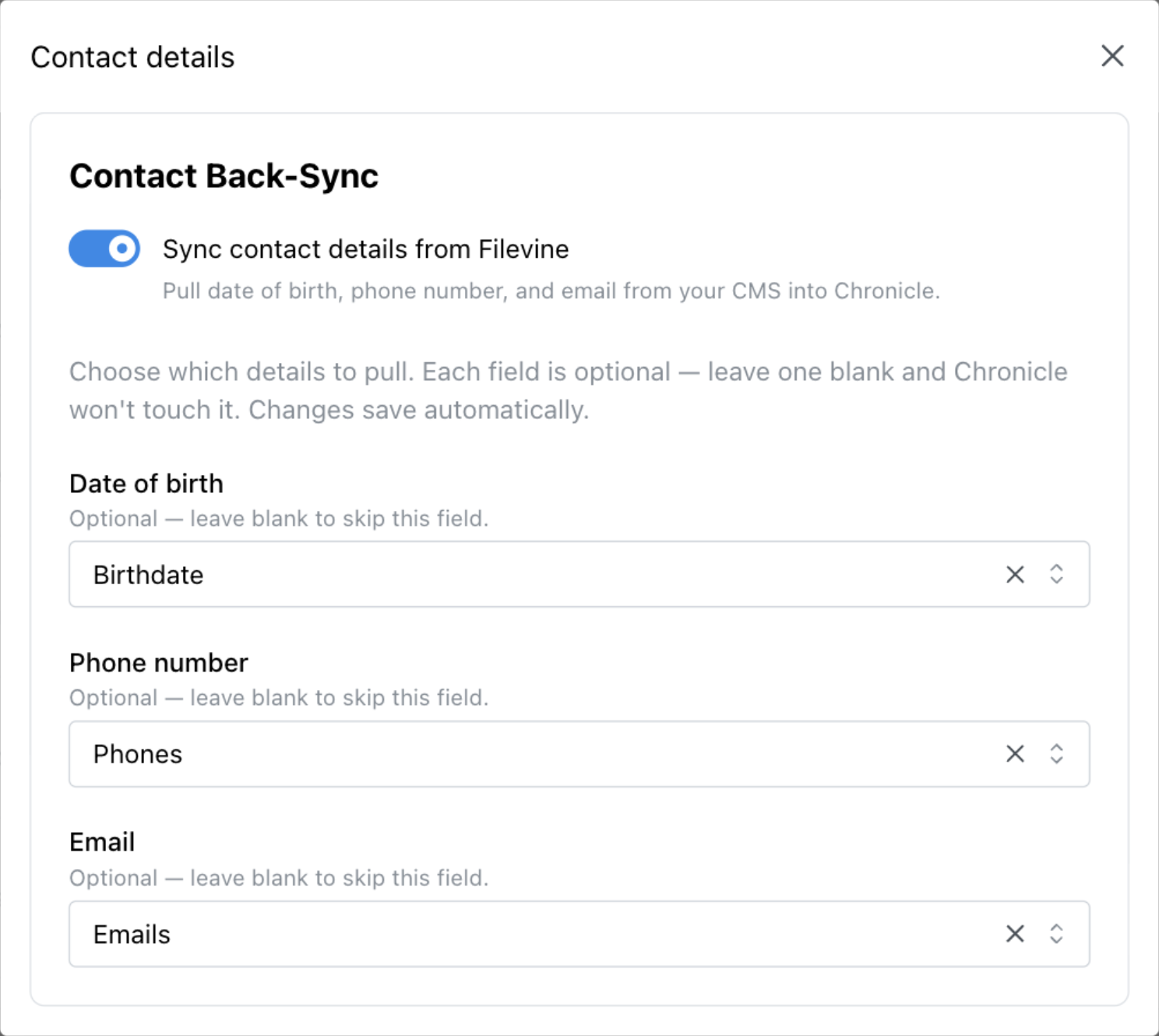
Contact Back-Sync with sources selected for date of birth, phone number and email.
Client messages
Dispatch access is required. New outbound texts and client replies are logged as notes on the matched Filevine project.
In Overview > What syncs, click Change beside Client messages.
Turn on Sync client messages.
Check a new message on the matched project after it is sent.
Only messages from after syncing is enabled are included. Existing notes remain when syncing is turned off.
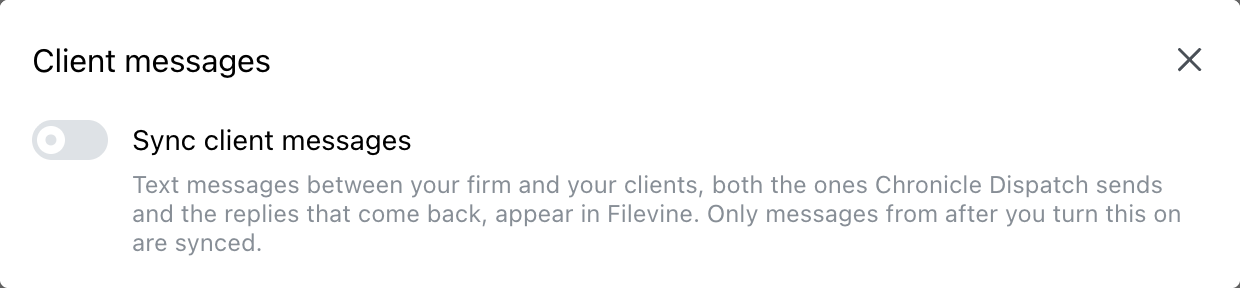
The Client messages dialog.
Case ownership
Eligible Chronicle teammates automatically follow cases associated with the provider roles your firm selects.
In Overview > What syncs, use Set up beside Case ownership, or Change roles when configured.
Select the ownership roles your firm uses.
Review the provider-user matches and choose the correct Chronicle teammate where needed.
Click Save roles.
First primary identifies the first primary member of the project team and is selected by default the first time you open the section. You can also select your firm's Org roles and Project team roles after the first ownership sync discovers them.
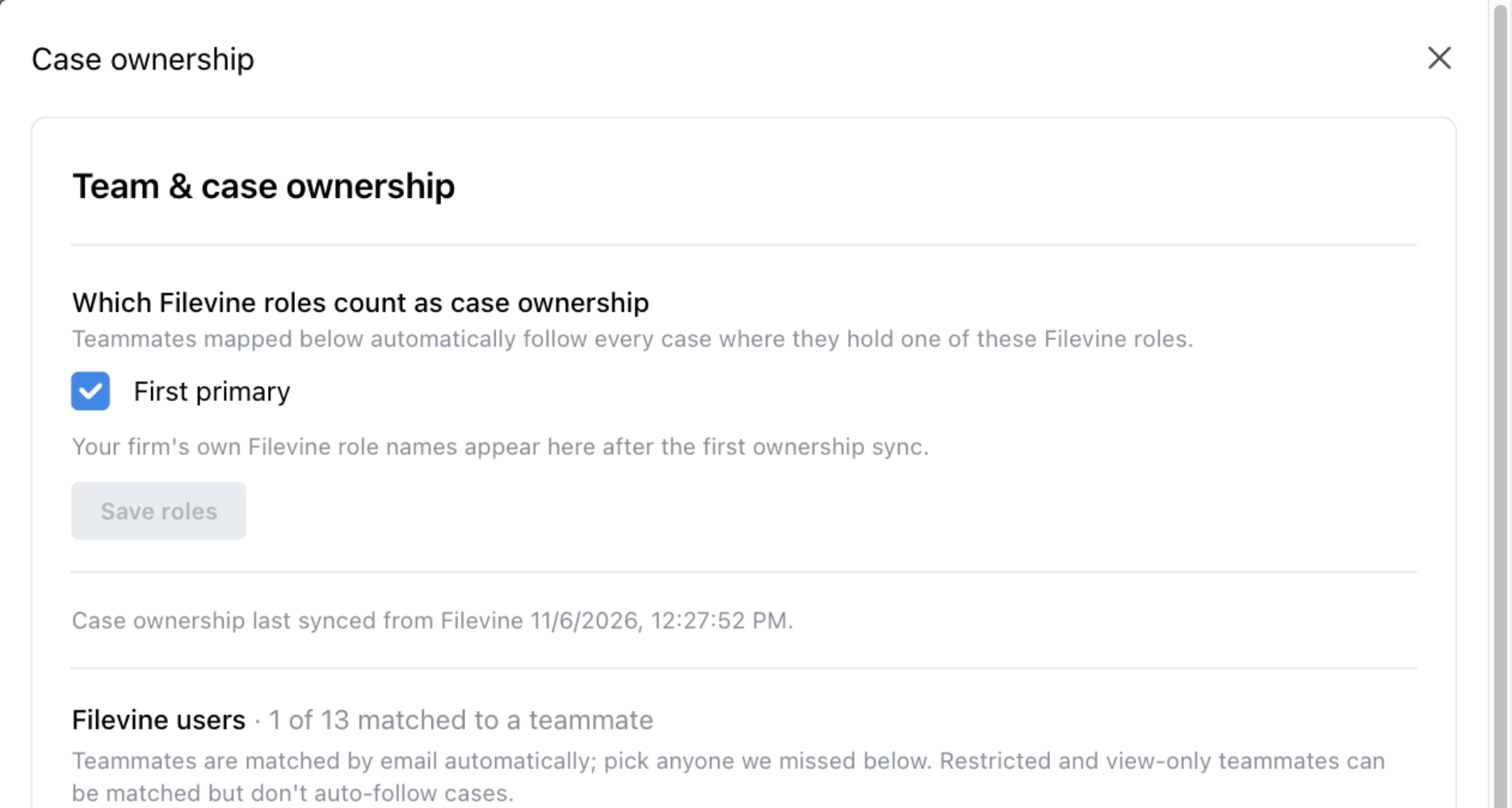
Case ownership roles in Filevine.
Restricted and view-only teammates can be matched to provider users but do not automatically follow cases through ownership. Removing a role or turning ownership off removes follows supplied only by that ownership rule.
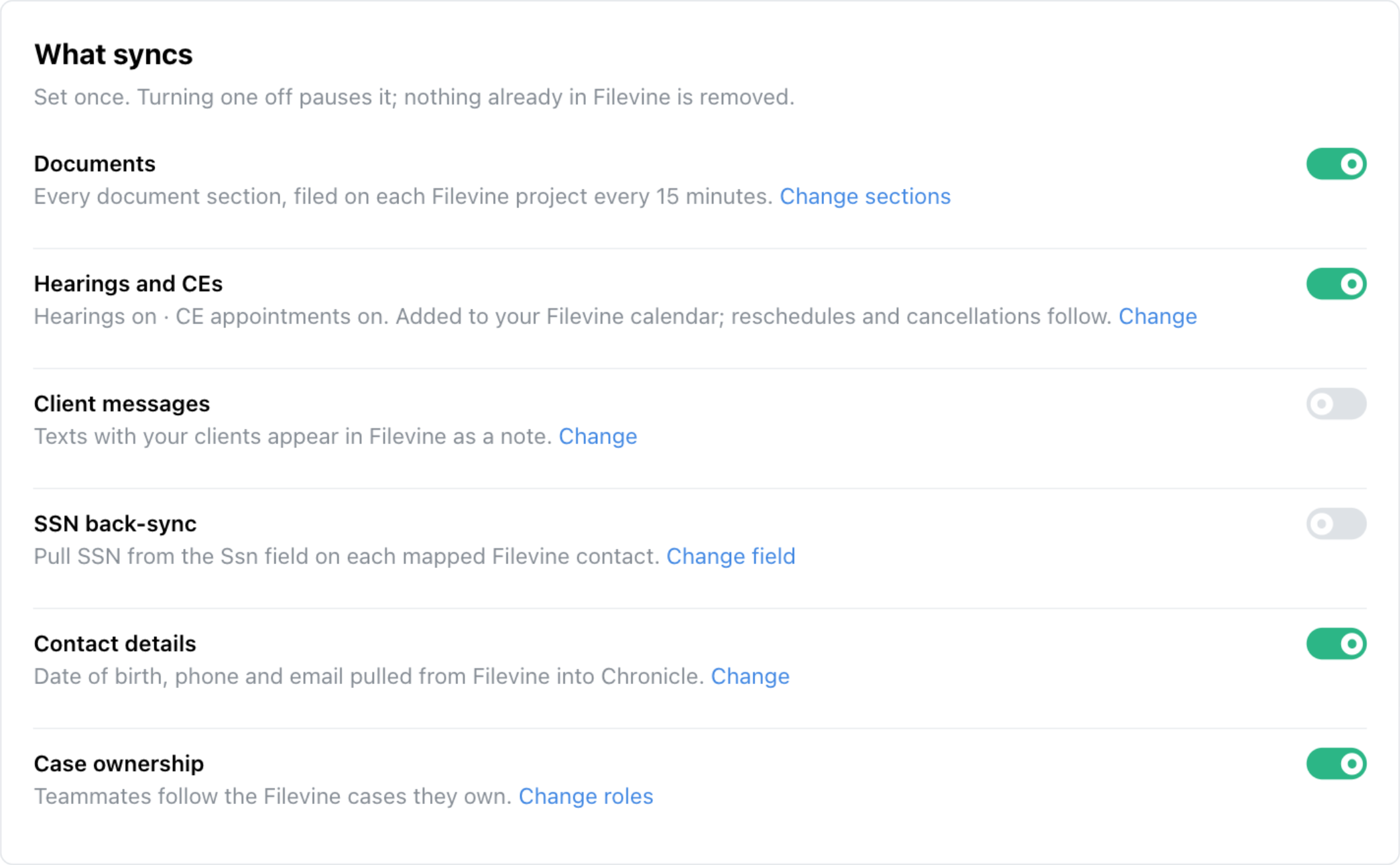
The What syncs switches on the Filevine Overview.
Fill Chronicle case roles from Filevine
If your firm uses case roles, you can also choose which Chronicle role each selected Filevine role should fill. For example, you can connect First primary to Case Manager.
Your firm's discovered roles can include Hearing Attorney, Hearing Case Manager or other names you use in Filevine. Check that a role identifies the person responsible on each project, rather than everyone included on its team.
In Case ownership, select the Filevine roles you need.
Beside each selected role, choose the Chronicle case role it should fill. Choose Not a case role to use that source only for following.
Review the Filevine user matches and choose the correct Chronicle teammates.
Click Save roles.
Review the affected cases and any assignments that will be replaced, then click Confirm and save.
Hearing Representative allows one person per case. If your Filevine role identifies several eligible people on a project, we use the first person listed. Confirm that this matches how your firm assigns hearing work before connecting it.
The first sync can replace existing assignments, except where someone has already taken control of that case role by editing it in Chronicle. Changes flow from Filevine into Chronicle, not back into Filevine.
Sync case roles from your case management system explains first-time setup, manual changes and missing assignments.
Shared sync and matching guides
Check integration sync status: review capability status, run results and one client's activity.
Resync integration data: choose a retry scope or retry an individual item.
Fix a client's integration match: resolve missing or ambiguous matches and correct an existing link.
Usage troubleshooting
A document is missing
A destination field or phase is missing
Refresh fields or stages from the mapping page. Confirm the selected project type contains the destination. Refreshing does not make unsupported field types, or fields inside repeating sections, available.
Was this helpful?
Was this helpful?