
Before
The challenge
Stacey Dembo has practiced Social Security disability law since 2008. In 2014 she went out on her own through a legal incubator built around using technology to keep overhead low. The model stuck. Stacey handles the hearings and legal work, two full-time staff handle records requests and client calls, and the office is, she says, "a mailbox, for all intents and purposes."
The technology underneath was a patchwork, though: an ERE monitoring tool, Prevail for case management, the ERE itself for uploads. Fee payments were the worst of it. Fees arrived by direct deposit at Chase, and the alert gave her the amount but not the client.
"So then I would have to call this number at Chase and ask them to tell me the name that was embedded in the metadata or whatever. And half the time the person I would talk to would not know what I was talking about."
"So even on Saturday when I wasn't working, I'd be calling Chase in the morning because I couldn't wait. I was very anxious to know what it was."
That lasted years, until SSA started putting the detail in AARPS, and even then she had to log in and piece it together. She was calling one to five times a week, sometimes on a Saturday morning. "Over the course of many years it was hours. Cumulative hours."
ERE access had its own choke point.
Where the gaps showed up
One phone for every login
"I always had to have my cell phone near me so I could get that text to log into ERE and other people that work for me didn't have ability to upload to ERE because of it. So that was a bottleneck for sure."
Every login ran through a text code sent to Stacey's phone.
Mail behind the clients
Clients called about letters the firm hadn't seen yet, because "our mail was showing up after theirs."
And the mail set the pace for everyone.
The turn
The tipping point
Stacey wasn't shopping for anything. Nikhil, Chronicle's co-founder, was living in Chicago a few blocks from her, and in 2024 he asked her to try what he was building. She said yes without dropping her existing tool.
"I wasn't divorcing myself from Assure at that point. I was like, yeah, I'll try it. But immediately to me it was just a superior product."
The first thing that stood out was the hearing audio transcripts, a feature she hadn't seen anywhere else. The low commitment made the trial easy to say yes to.
A low bar to try it
"The barrier to entry is very low. You're not buying a huge subscription. You're just paying per case. So if you don't like it, after you try it, you don't have to keep using it."
What kept her was fit. "It worked better the way I think, if that makes sense."
The trainings and community
She also stayed for something beyond the software: the trainings and community Chronicle runs for SSD practitioners.
"I also really appreciate the community that you're trying to build and the trainings that you're doing. I sign up for everything and usually watch it later, but I appreciate you're trying to make us all level up, which I think is good for our profession. It's good for our clients."
"So it was just really easy and my staff likes it a lot too. I would hear about it if they didn't like it."
The turn
Why Chronicle: from pain to progress
The bank calls went first.
"All of us can do it, all of us can see what's been submitted, who submitted it, when it was submitted, so it's all living in a central location, which is really good."
What changed
Fee deposits named by morning. Chronicle sends Stacey a daily AARPS fee-payment notification with the client's name, the amount, and whether it's SSI or SSDI. In her experience it arrives before the money does, usually around 8 AM.
Staff answer fee calls. The fee also shows at the top of the client's page in Chronicle, so when a client calls to ask whether the fee came in, staff can answer on their own.
No more phone codes. Uploads and downloads now run through Chronicle, and Stacey no longer has to enter a code from her phone, so anyone on the team can do them.
Status without the adjudicator. The bigger change is what her staff now handle without her. They can see whether a case has reached the state agency or records have been requested, and answer the client without calling the adjudicator.
"So by the time I take my kids to school and I come to my desk, that information is just waiting for me."
"So they don't have to have my bank information, they don't have to log into my AARPS." The ERE bottleneck went the same way. "I would say the biggest change for the staff is that they can see through a multiple step workflow independently without needing me to step in and do anything."
Chronicle runs alongside Prevail, which the firm still uses for case management. Some information still moves between the two by hand, and Stacey would like to get down to one system someday. For now, "it's a little bit less of a hodgepodge than it was before."
"I have worked on cases via Chronicle in Mexico, in France, in the UK, while my daughter was in the hospital."
After
Transformation and results
The catch Stacey points to first is proffer letters. When a judge proffers new evidence, the firm has 10 days to respond or ask for a supplemental hearing, and sometimes the letter doesn't arrive until after the tenth day. Stacey doesn't check every case in the ERE daily. Now new exhibits show up on her dashboard.
The dashboard she checks every day
"That dashboard for me is like my Bible. I'm checking it multiple times a day, every day, to see what new cases are being added, when cases are moving stages, and what new files or exhibits are being added to my case."
That visibility recently paid off on a single case.
"I just had a judge proffer something to me that was really helpful to my client. So I was able to respond literally the day that that piece of evidence was added to say this justifies a favorable decision. And then I got the favorable decision a week later."
Had she waited on the mail, that case would have slipped another week or two.
The smaller frictions add up too. The firm used to call SSA to find out whether a 1696 had been processed; now Stacey sees it as soon as it is. "Here and there it's like maybe thirty seconds, a minute, but it's reducing the friction of getting the work done."
Still a solo practice
The larger effect is on overhead. For big case files, Stacey used to pay people to review medical records. She now uses the medical chronology tools in Chronicle instead.
"Now I never have to do that through the medical summary tools. So it's made it feasible for me to remain a solo and not expand my overhead."
Staying small is deliberate; Stacey has a young family and wants to be around. "Without a tool like this, I would need more staff. I would need more help and that would be more expensive."
The firm only recently started using Chronicle Dispatch, Chronicle's client texting. In Stacey's "first little case study," a client got a text about a scheduled consultative exam, replied that the date didn't work, and the firm had the exam rescheduled "before the notice ever even showed up to her or to us." It's an early chapter, and Chronicle looks forward to checking back as the firm's use of Dispatch grows.
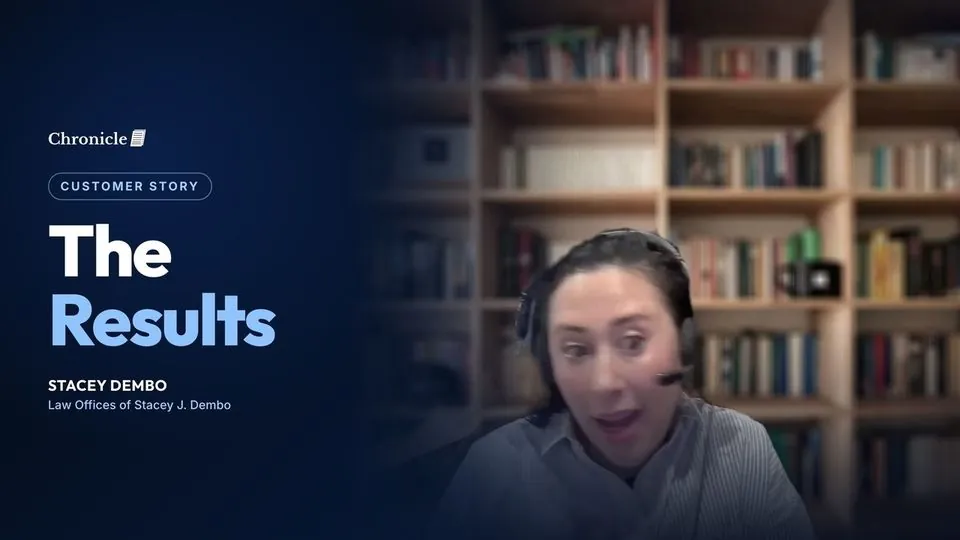
"I'm prepared for my hearings because these tools help me be prepared without spending hours upon hours to do it."
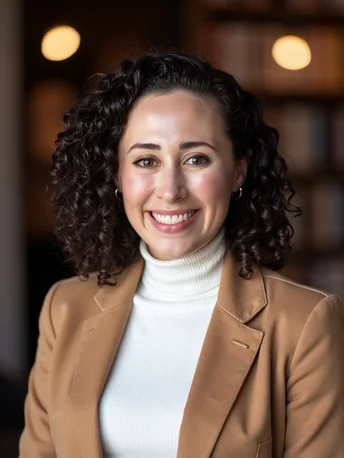
"It's a tool that comes with me. I don't have to go to it like I used to have to do to an office."
Stacey Dembo, Attorney and Owner
After
The takeaway
When Stacey started practicing in 2008, the job required an office: in-person hearings, paper medical records, agency mail, and CDs. Now she can check a case from the car while picking her kids up from activities.
The worry she used to carry was the mail. Stacey has moved offices a few times, and Social Security still sends letters to addresses she left a decade ago. "So if it wasn't for Chronicle, I would never know about those things."
Her advice to an attorney still checking the ERE and the mail by hand is blunt: "you're doing it wrong."
"If you are nervous about using technology because you think that's a problem, I think you're creating more problems for yourself by not using it."
Stacey Dembo, Attorney and Owner