
In August 2026, a room of smaller Social Security disability practices joined Disability Peers in Practice, Chronicle’s monthly peer community where SSD practitioners work through real operational problems together. The topic: hiring, training, and trusting the team behind the practice.
Nobody in the room was debating whether to grow. They were working out how to hand something to another person for the first time and believe it will get done.
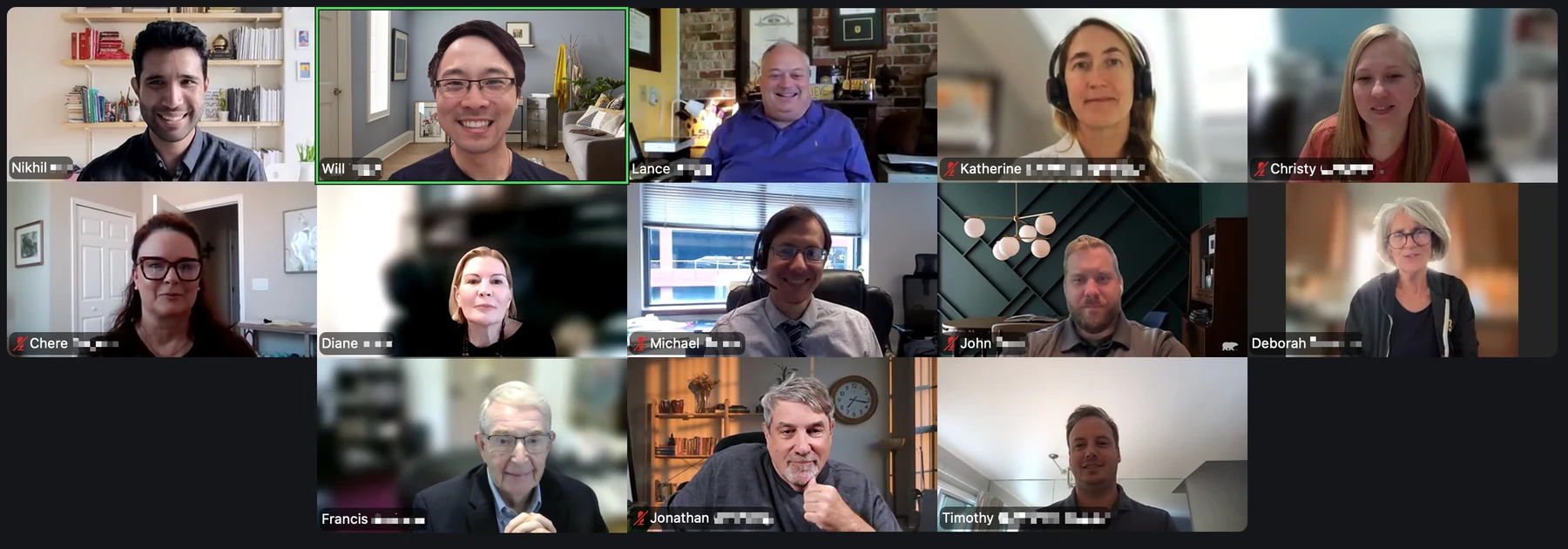
The room ran from a solo practitioner whose caseload swings year to year, through two-person practices, up to firms around 350 active cases with a mix of full-time, part-time, and contract staff. Seven states were represented, from Louisiana and Georgia to the Bay Area, Hawaii, and Florida. Several practitioners were fifteen years into running a firm the same way and had just concluded that the way no longer works. What they had in common was that the next decision each of them faced was the first one they couldn’t make alone.
Sizing the First Hire Is Arithmetic Before It Is a Judgment Call
- The number that matters is fully loaded cost, not salary
- One practitioner converts that cost into full fee cases per month and checks it against her pipeline
- Local job-board searches are how the room sets the market half of the number
- The firms two hires further along report the cost was recovered every time
The fear in the room was specific and unanimous.
We’re talking about hiring her full-time, which I am telling you terrifies me to no end, for so many reasons. Primarily just making sure everyone can get paid and all the bills can be paid.
— Christy
The most transferable method in the session was her answer to it. Before deciding anything, she took a proposed salary to her accountant and asked what it would actually cost: payroll taxes, a retirement match, and the health insurance she may need to start carrying if her husband leaves his job, since she can’t offer it to herself without offering it to staff. Then she converted the total into the unit she already thinks in.
I think of everything in full fee cases. So I’m like, okay, I need this many full fee cases a month in order to make sure that everyone gets paid and all the bills get paid. Because that’s the big goal. You don’t want to be in the red.
— Christy
That turns an act of faith into a threshold you can hold against your own pipeline. For the market half of the question, one practitioner who hired his first employee in March searched his region on a job board to see what other local firms were paying for the same position before setting a range, then set it slightly below and got 120 applicants in a day.
The counterweight came from the practitioner in the room furthest along:
Every single staff person I have added has increased my revenue… When I hired this paralegal who was absolutely fantastic, we were winning so many more cases at initial and recon, because they’re contacting that analyst all the time, they’re getting the records in, they’re doing all of that stuff that as a solo attorney you can’t necessarily do when you’re also preparing for hearings.
— Kat
What this means: get the fully loaded number from your accountant before you get attached to a candidate, and express it in whatever unit you already use to think about revenue.
Splitting an Existing Job in Two Is a People Problem, Not an Org-Chart Problem
- Two practitioners described the same failure independently, minutes apart
- In both cases a strong paralegal experienced the split as losing control
- A small firm has no HR function to absorb the friction
- The fix on the second attempt was to hire above the role rather than beside it
I had a paralegal, a very good paralegal, for about five years, and she was very take-charge, really helped grow the practice. And then I got to the point where I needed to break apart my operations from my intake, because they’re just two separate functions. And this particular person had a hard time letting go of the intake side of things and wanted to kind of control everything.
— Jonathan
Another practitioner recognized it before he finished.
Oh my gosh, I have exactly the same situation. I have a wonderful paralegal who was doing a lot. And so we hired another person to come in and take on the intake functions and some other things, and it was a personality clash as well between the two of them, but it was absolutely a disaster.
— Kat
She named the structural reason it landed so hard:
I don’t have an HR. I am HR, and I’m also the lead attorney, and I’m everything else.
— Kat
Her second attempt inverted the approach. Rather than hiring alongside the paralegal again, she is hiring an office manager with explicit seniority over workflow and task completion, someone whose title carries the expectation of being in charge. And she left intake where it was, because the paralegal was good at it and wanted it, instead of promoting her into higher-level work she had not asked for.
Both practitioners came out of it with the same standing rule: intake and operations stay structurally separate, because they are separate functions and the person who is excellent at one is not automatically the person to run both.
The version of this conversation that hasn’t happened yet was also in the room, from a contract operations lead who is the entire staff of a two-person firm:
I’ve been doing everything from A to Y. She does the hearings, but I do everything else. And I just don’t know how I would piece apart what I’m in routine of… I’ve just never had to delegate, so it makes me nervous.
What this means: when you divide a job someone already holds, the incumbent will read it as demotion regardless of your intent. Decide in advance whether you are hiring beside them or above them, and say which.
They Interview Well, They Test Well, and Then They Can’t Do the Job
- The most-discussed unsolved problem in the room
- Raised by the largest firm present and immediately recognized by the smallest
- Three-month probations are real but expensive, because early slowness is genuinely ambiguous
- Three responses were put on the table; none of them is free
We’re having trouble basically keeping people through probation, because they interview well, they test well, but ultimately when we get them in the office — and even if they have Social Security background — they don’t always, quote-unquote, get it.
— Nancy, whose firm carries 750 Social Security cases
The recognition was instant.
This person sounded fantastic when they were talking about all of the processes that they’d come up with in prior jobs. We get them into the job, and it’s literally taking them three to five times as long as anybody else to do simple tasks.
— Kat
She let that hire go before the end of a three-month probation, and was clear about the real cost: not the salary, but the training time spent and the other candidates who were gone by then. She had the signal early and still ran nearly to the mark, because the work is complex enough that a new person being slow is ambiguous for weeks.
The room offered three responses.
A paid trial work period before the offer. About a week in the office, sitting with a paralegal or intake person, listening in on client calls with permission, and debriefing after each one: what did you think, what would you have done differently, what issues do you think exist here. The objection was practical: would a good candidate agree to it?
Hypotheticals that test judgment rather than knowledge. One practitioner asks candidates what they would do with a client who calls saying she is suicidal, or a client calling from a closet while her spouse assaults her, and makes it explicit that patience is the job. Another gives three or four problems from outside the candidate’s area entirely, purely to watch how they think:
My experience has been it’s a total crapshoot. You can talk to somebody who sounds great and there’s zero. You have somebody who you kind of think, well, there’s nobody else, I’ll take them, and they turn out to be the best in the world.
— Jonathan
Hire two into probation at once. Borrowed from how sales teams hire business development reps, where the same unpredictability is assumed: run two probationary hires in parallel, plan for the likely failure, and don’t end up restarting a two-month search from zero. It got the most immediate uptake of anything raised in the session, and carried into the afternoon room as well.
And it creates competition too. So you would be able to see who really has the drive and wants to win and wants to stay, and knows that, hey, you’re not the only one that wants this job.
— Christy
What this means: the probationary period is not the safety net it feels like: by the time it tells you the truth, you have spent the training and lost the alternates.
Make Sure the Software Is Doing Its Job Before You Decide the Problem Is Headcount
- The strongest dissent from “how many cases means a new hire”
- The test is exhaustion that persists after the system is doing everything it can
- One firm rebuilt its case management process around what arrives in the mail
- The same practitioner also named the point where she crossed the threshold anyway
For me personally, how many cases isn’t necessarily the marker. What I look at is: is our software working the way that it should? Is it helping mitigate the actual task that a case is generating?
— Christy
She chose her case management platform specifically because she could build her own process on top of it, and was blunt that the out-of-the-box workflow was not what she wanted. So she built the tabs, the buttons, and an intake script that answers yes, no, or unknown with the next instruction already embedded, so whoever is running intake can finish without stopping to ask her. The whole structure is organized around what arrives in the mail: what Social Security requests, what forms go back, what letters come in, and what action each document triggers. A letter arriving means a case manager presses one button, which generates a pre-written client email she signs and sends.
The first place to start is actually making sure that your software is helping your staff be as effective as they can be as a human. And then from there, start looking beyond.
— Christy
What makes the argument credible is that she also named the point where the tooling ran out:
Now it’s to the point where, okay, this is just too much. Even with the computer doing so much for us, we’re still redlining. We’re exhausted by the end of the day. We’re brain dead. We’re talking in sentences that are not structured properly, because the words are out of order. Our brains are tired.
— Christy
What this means: exhaustion is a real hiring signal, but only after the system has been made to do everything it can; otherwise the new hire inherits the same friction and you need another one sooner than you think.
Long Training Videos Don’t Get Watched
- Repeat questions from staff are a length problem, not an attention problem
- The fix is granularity: five-minute, single-topic captures instead of full walkthroughs
- Two firms independently landed on quizzes at the end of each unit
- Generative tools now remove most of the authoring cost
This was a lightning round at the end of the hour and it was the most immediately usable ten minutes of the session.
People kept coming to me asking me the same type of questions. And I’m like, I know that’s in the training. And then it occurred to me that they were probably a little too long. Because at some point you’re just going to be like, I don’t hear this anymore.
— Christy
Her replacement approach is short single-topic screen captures: “and when I say short, I mean five minutes, specific topic. Okay, once I know you understand that, then we’ll move on to the next thing.”
What the room is actually running:
Loom: screen-capture walkthroughs paired with a written job description (what the role is, what you need to do, how you do it), grown over time so new people and existing staff can both go back to it.
Scribe: short, single-topic step captures, chosen specifically to replace long-form video.
Notion: procedures and training manuals broken into daily chunks: we’re learning this today, that tomorrow.
In-house video: every stage of a case recorded, with questions at the end of each session that staff have to answer.
NotebookLM: the shortcut to authoring all of the above.
You can dump a bunch of stuff in there and just say, create 15 lessons with quizzes at the end. It’ll do it.
— Lance
What this means: if staff keep asking questions the training already answers, shorten the training before you blame the staff.
When the Whole Caseload Is Sitting at DDS
- A cash-flow problem specific to small disability practices, where the swing is existential
- One practitioner has had a single hearing all year; another has 75% of her caseload at the hearing office
- The second is the delayed version of the first, and both are hard
- The answer the room converged on was consistency, not correction
I’m really small potatoes out here, and my cash flow and my caseload fluctuates wildly. It’s like a tsunami. Last year I had an incredible year and made lots of money. This year, all of my cases are sitting at DDS. I’ve had one hearing this whole year.
— Rhonda
Another practitioner in the room had predicted exactly this at her previous firm, and is now living the other half of it:
I kept telling my employer, all of these cases are stuck at DDS. What’s going to happen is eventually they’re all going to come out, and I have this gut feeling they’re all going to come out at the same time, and then we’re going to have months where we’re having 10 to 15 hearings a month, and we have no idea what to do, because we have so much prep that has to occur.
— Christy
Roughly 75% of her caseload is now at the hearing office. She contracted two people to absorb the prep surge, and at the same time started rebuilding the front of the funnel, because surviving the wave with nothing behind it is the same problem arriving twice.
That turned into the most concrete commitment made in the room. Told she does no marketing at all right now, and that anything would be an improvement, she was pushed to make it structural rather than aspirational:
The practice of law is not linear. You’re going to have ups and downs and cycles. And I think stopping and starting marketing is not a good idea… Back in the early days, I would carve out either one hour a day, or four hours on Saturday, and I would write blog posts, or I would shoot video. But I was always out there marketing and being seen.
— Nancy
The advice was to put a blocked half hour in the calendar starting that day, for the rest of the year, on the reasoning that a firm taking cases at the initial, reconsideration, and hearing stages has a chance to attract clients at all three, so the marketing has to be running continuously rather than when the pipeline is already empty.
What this means: the tsunami is structural, not a run of bad luck, so the response has to be a standing habit rather than a reaction once the calendar has already gone quiet.
One More Thing Worth Copying: Your Own Effective Hourly Rate
The most useful idea offered by the largest firm in the room travels down-market cleanly, even though the rest of her operating apparatus assumes an associate and a staff to unfold plans to.
How much does it cost per hour for the intake function? How much does it cost for your paralegals? How much does it cost to try the case? So you understand what the effective hourly rate is of the particular employees that are doing these functions. And quite frankly, if you’re the attorney doing everything, your hourly rate is probably less than what you could earn at McDonald’s — which is not a good reflection of you or your skills.
— Nancy
What this means: it converts the hire from an act of faith into arithmetic on your own time, which is exactly the thing the rest of the room described being frightened by.
The Question That Closed the Day
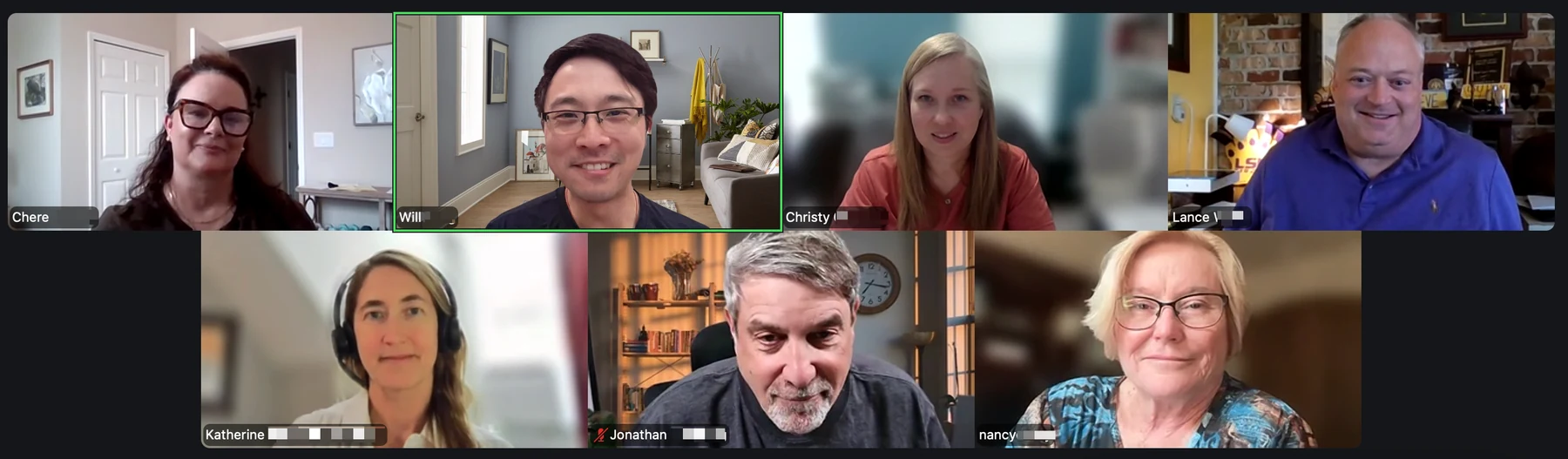
The month’s most concrete beginner question came from the afternoon session, from a practitioner who had started her firm two years ago and hired her first assistant that week: how do you train someone with no Social Security background at all?
The room’s answers were unglamorous and specific. Sit them as physically close to you as possible while you work. Position them next to someone who has been doing it four or five years, named as one of the genuine costs of hiring remotely. Bring them to trainings you deliver elsewhere, have them sit in on a hearing, and give them the first chapter of Thomas E. Bush’s Social Security Disability Practice as an overview of what the work actually is.
She also said the truest thing anyone said all day: “I’m just in a very different place than everyone else.” She was right. Both rooms this month were mostly firms two to four hires ahead of hers.
And then a solo practitioner who had sat in both sessions closed the afternoon:
In doing this on my own, I know that I need help, and I’m really afraid to just kind of relinquish some of these tasks and duties to others and feeling like they won’t get it right.
— Stephaine
Nobody told her the fear was misplaced. What the room offered instead was sequencing: hire above rather than beside, hold one person accountable for one thing and watch what happens, and accept that some of the time you will be wrong and will have to start again.
Also in This Series
The large-firm cohort met the same day and covered different ground: case-manager caseload ratios between 180 and 300, three failed attempts to hire an operations leader from outside against one fractional COO that worked, direct-versus-agency offshore staffing, and what firms are using to get institutional knowledge out of senior people’s heads. Read the large-firm recap.
The July 2026 sessions covered client communication across both cohorts. Read the July small-firm recap.
About This Series
The SSD community has been missing a regular virtual space where practitioners in similar situations talk through real operational problems together. Chronicle built Disability Peers in Practice to be that space.
Sessions run monthly, segmented by firm size, free and capped to keep them small. The format is peer-led and practitioner-first: structured conversation focused on what’s actually working in the room.
Register for the next session →
About Chronicle
Chronicle is an ERE monitoring and analysis platform built for Social Security disability practices. It checks the SSA’s ERE and e-file daily across your firm’s cases, surfacing status changes, new documents, and upcoming deadlines before they become problems. Chronicle is CMS-agnostic: it works with any CMS with an API, or with no CMS at all. Disability Peers in Practice is one of the ways Chronicle brings the SSD community together outside of conference season.