
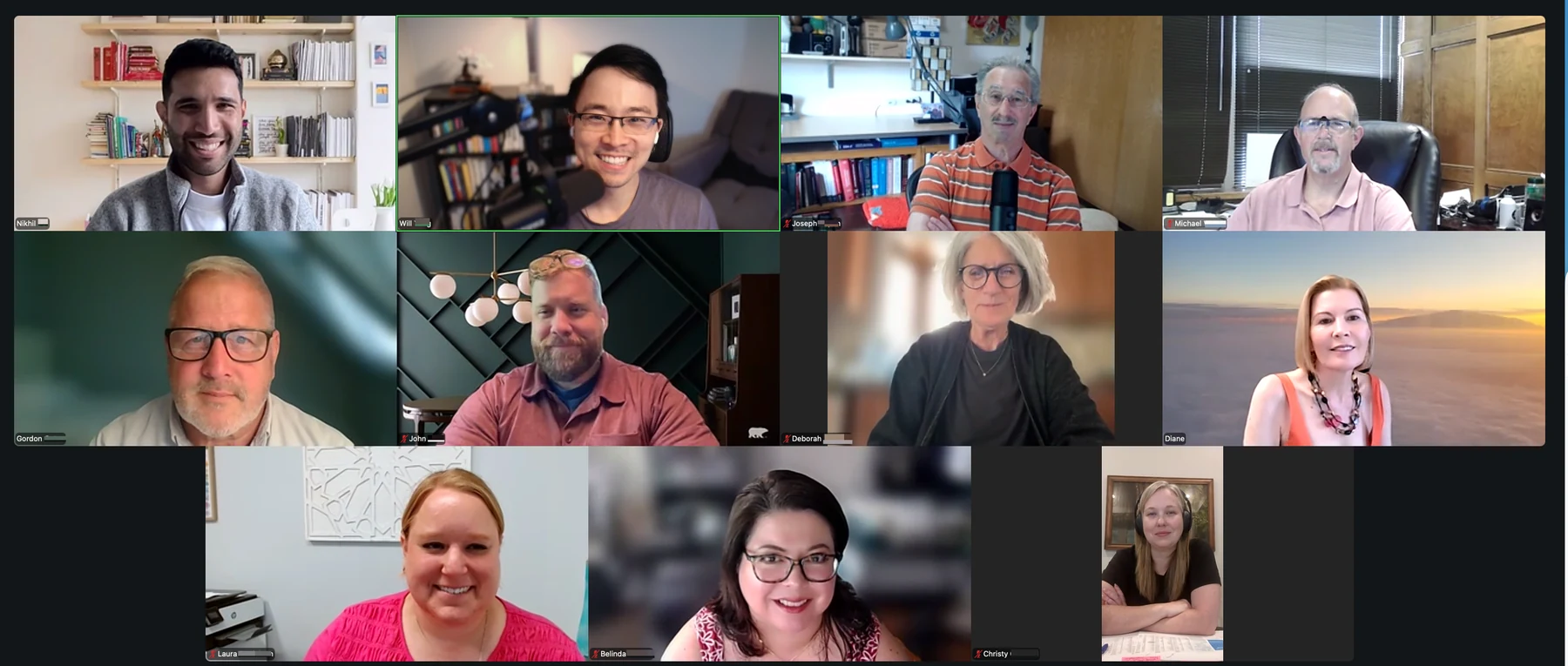
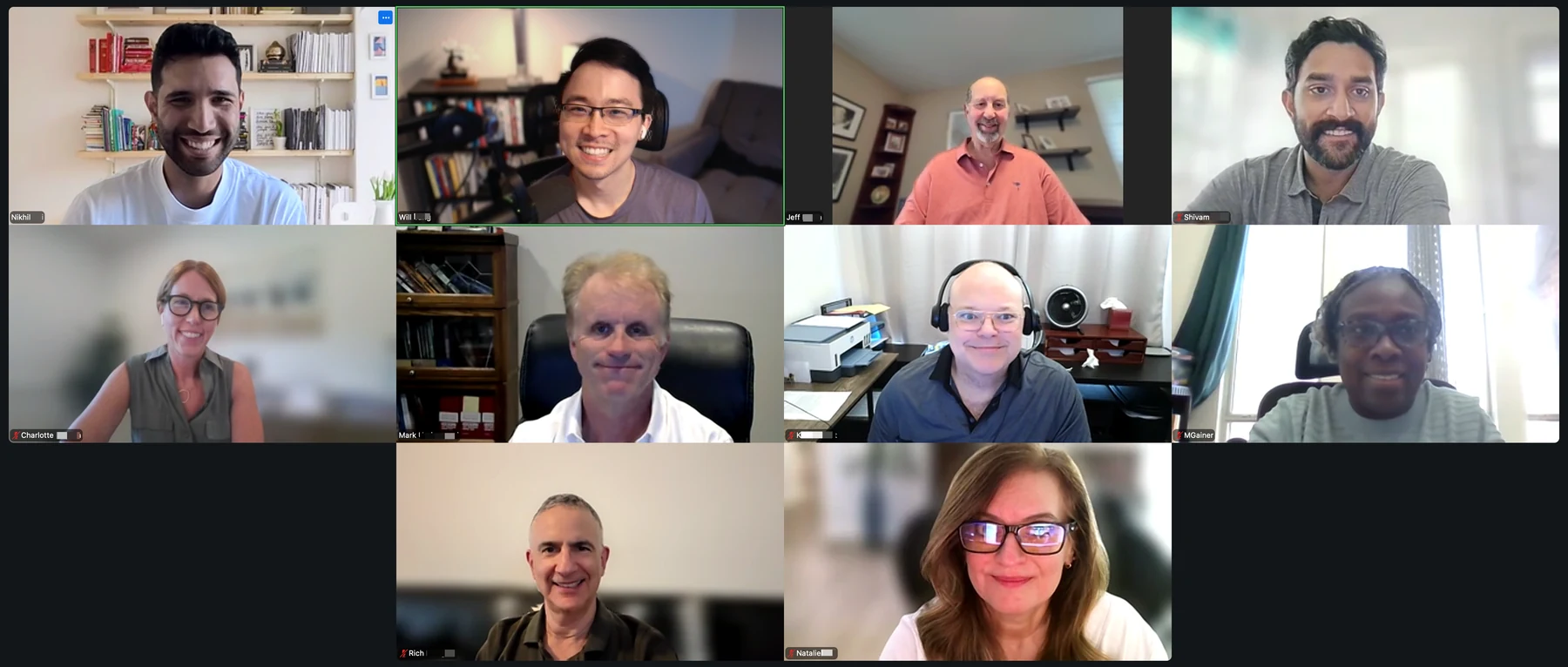
In July 2026, two rooms of solo and small Social Security disability practices joined Disability Peers in Practice, Chronicle’s monthly peer community where SSD practitioners work through real operational problems together. The topic: client communication, from intake through decision.
The opening exercise asked everyone to grade how their clients would rate them. Almost nobody picked a letter above B, and almost everybody put the gap in the same place. Not the hard conversations. Not the denials. The months in the middle, when there is nothing to report and the case is silent.
The Hardest Communication Problem Is the Case Where Nothing Is Happening
- Every practitioner graded themselves in the B range, and every one located the gap in the silent stretch
- Communication is easy when SSA does something; it decays when SSA does nothing
- The only proven fix anyone had used was a dedicated person working a continuous call loop
- That is exactly the headcount a small firm cannot carry, which is what drives the interest in automation
One practitioner had solved it, once, at three times his current size. The solution was a person whose entire job was the phone.
And so months would go by with nothing really going on, we’re not really updating the file, because you’re doing that sort of as hearing approaches. But people back then, they got annoyed, you know? It’s like, what are you doing? What’s going on? And so I ended up hiring someone, and her only job was to call every client in sequence, and once you were done with the last one, you started again with number one, and maybe you told them, hey, there’s nothing going on, but just want to keep you informed. That’s very valuable work, even when nothing’s going on.
— Gordon
He graded himself an A during that period and a B now, and he was direct about why: the person is gone and he is not making those calls himself. The rest of the room recognized the pattern immediately.
It’s really hard to give them information when I have nothing to tell them.
— Christy
I’m good at responding when they ask a question, but not so good at being proactive and keep them updated unless they are bugging me.
— Laura
Asked at the close what he was taking away, Gordon did not name a tool.
Just to do a better job of communicating when there’s nothing going on. Because that’s the status of most of the cases most of the time. And communication is easy when there’s something happening, but when there isn’t, it’s almost just as important.
— Gordon
What this means: the silent stretch is not an edge case in a disability practice. It is the default state of the caseload, and it is the only part of client communication that requires a system rather than a reflex.
Expectations Set at Intake Do More Work Than Any Tool
- The calmest practitioners were not the ones with the best software
- They had written down what clients can expect, and what is expected of clients, and said it at signing
- The document suppresses avoidable inbound contact and gives the firm a standard to point at
- Two attendees in the second room named this as their single takeaway
The most developed version came from a practitioner who put both halves in the sign-up paperwork and then walks through it on the first call.
We have a 48 business hour communication, I guess you’ll call it a rule. So that’s in the sign-in paperwork, and when we do our initial conversation with them, we discuss that as well.
— Christy
The second half is the one the room had not considered.
I also, in that paragraph, have a couple of sentences about respectful communication. I basically say, we’re gonna respect you, we expect that you respect us, and that failure to respect me or my staff, or inappropriate language, can result in my termination of the representation contract with you. I recently had to invoke that, sadly.
— Christy
She pairs it with an explicit invitation to follow up, which removes the anxiety that drives repeat calls: if you have waited two business days and heard nothing, call again, because everything here is electronic and things do get lost.
In the second room, the idea landed as a concrete action item.
I like the idea of the expectations letter that they have. That way, if we send that out to clients at the very beginning, they understand that they’re not going to hear from us every week.
— Amy
We do have a letter like that that goes out at the initial level, and we let clients know that this is a long process. It’s not a quick fix.
— Natalie
What this means: the expectations document is doing two separate jobs. It reduces call volume, and it gives you something to stand on when a relationship becomes untenable. The second job is the one nobody plans for and most practitioners eventually need.
Protecting the Attorney’s Calendar Is a Client Communication Strategy
- Several practitioners described losing the entire day to returning calls
- The firms that escaped it made attorney phone access scheduled rather than ambient
- Concentrating call-backs into defined windows was the other half of the fix
- The practitioners still drowning were the ones whose direct line still rang at their own desk
Sometimes I’m overwhelmed by, I spend all day returning phone calls, and then I can’t get to the actual work until later in the day.
— Laura
The structural answer came from a practitioner who went from five staff to one and had to rebuild around the constraint.
One thing that has really helped clear me up… I don’t take phone calls unless I have an appointment. All of our phones, even my direct line, rings to her phone. If someone wants to talk to me, then she schedules them a slot on the computer, on the calendar for me to speak with them.
— Christy
The same firm blocks the week rather than the day, with the assistant on the phones Monday through Thursday and the attorney catching up on Friday.
I work about 12 hours a day, so my firm is technically closed on Friday. And I tell clients, you may get a call from me on Friday, because generally I work on Fridays, I call it my catch-up day. But you’re not going to be able to get us on the phone on Fridays.
— Christy
I do set pretty strict boundaries with my time, because I am a non-attorney hearing rep, so I do hearing after hearing after hearing.
— Natalie
What this means: this is a routing problem, not a discipline problem. Both practitioners who solved it moved the ringing phone off their own desk and converted attorney access into calendar slots.
Give an Anxious Client Something to Do
- The most transferable tactic of the day, and one attendee named it as his takeaway on the spot
- Financial-crisis calls get routed into two concrete actions the client can take part in
- Congressional inquiry and dire need request, applied by threshold rather than by default
- Participation itself is what reduces the distress and the call volume
Sometimes it’s just about, like, giving them a guiding point. So I’ll usually refer them to, like, a congressional inquiry online. Just to help them feel like they’re getting involved. And then also, I’ll recommend a dire need request… It definitely does kind of help ease them, because it gives them something to be proactive about in their own case.
— Chantelle
The thresholds matter, and she was specific about them. A congressional inquiry when the case shows visible SSA errors, or when it is approaching the end of the 9-to-15-month window the firm quotes at intake. A dire need request only for documented essentials, rent or utilities, not for general frustration, and never at one to four months in.
The dire need workflow is built to require something from the client.
The action plan is always, can you send me, like, the notice, so that I can go through Social Security’s POMS, get it typed up, and get it sent out. And then usually once they get a copy of the formal letter that we draft, and then they send me their eviction notice, it’ll help them kind of feel like they’re collaborating.
— Chantelle
The idea traveled across the room within minutes.
As soon as anybody says that, sending them the link for dire need, or congressional inquiry. I don’t know to what extent that’s really going to help them, but at least it feels like they’re doing something.
— Mark
The same logic came at the problem from the other direction, from an attorney taking cases at the hearing level.
I’m willing to put in as much effort as you’re willing to put in. If I ask them to do one little form or one little thing and get it back to me, and they don’t do anything… there’s not much I can do with that.
— Charlotte
What this means: both rooms treated collaboration as the mechanism, not the paperwork. A client with a task is a client who is not calling to ask whether anything has changed.
The System of Record Has to Be Filterable, Not Just Complete
- Everyone logs client contact somewhere; the useful logs had a retrieval structure imposed on them
- Categorize by subject, not by channel, so a case history can be filtered later
- A fixed review cadence and a daily surfacing mechanism did the rest
- Logging without retrieval is worthless in the moment a client asks a question
The sharpest version categorizes every entry by what it was about rather than how it happened.
If it’s a phone call about a function report or work history, I have a category for that. So that specific conversation will go under the category function reports… So when it comes to an appeal, I just filter all medical updates, and it’ll show me all the conversations that I’ve had with them about medical updates.
— Chere’
She was candid that this takes training to hand off, because the instinct is to log a phone call as a phone call. She also runs a color-coded monthly review pass over the whole caseload in a spreadsheet, with orange meaning she is waiting on someone else and yellow meaning the ball is still hers.
A lighter version of the same principle, on a different platform:
I have a pinned Social Security communication and client communication, where I just log all of the notes there… look at the last note for whatever client call was made, so that you know what happened. That way, if the client asks you something, you’re not sitting there like a deer in headlights.
— Christy
And the lowest-tech version in the room, which works because it puts the open item physically in front of the practitioner every morning:
If I send an email to a client saying such and such is due on such and such a date, I will take that email and I’ll turn it into a calendar. So I’m always looking at my daily calendar, and until these things get done, they show up in front of my face every day. And then when I finally get a response, I simply knock it off the calendar.
— Gordon
The gap nobody in the room had closed was named plainly by a true solo carrying about sixty cases: a retrievable log tells you what you said about the case in front of you, but it does not tell you which of your sixty cases is quietly stuck.
I would love to have a more comprehensive idea of where we are in each case, and I just haven’t been able to figure that one out yet.
— Joe
What this means: build the log so you can filter it, and accept that contact history and case posture are two different questions. Most small-firm systems answer only the first.
Event Alerts Changed What Proactive Means
- Across both rooms, proactive stopped meaning a scheduled check-in
- It now means reaching the client the day something moves at SSA, ahead of the mail
- Practitioners are building outbound contact directly on top of ERE event notifications
- The wish list from here is for the trigger to fire the message without a human remembering
Once you’re on a claim, anytime anything happens, you basically get an email alerting you. A case has been assigned. A functional report has been sent out. A CE has been examined. And of course, you’re on top of it days before you get anything in the mail.
— Joe
Here, we get these letters about your function report is due in 3 days. Great, thanks. But if we can get a jump on it, and I can get the client working on it, we’re ready to go.
— Joe
The second room wanted the next step, and described it as a specific sequence rather than a general wish.
When the initial app gets filed, email goes out saying, hey, congratulations, your initial app’s been filed. We get an initial denial in: we received your initial denial. You know, 98% of the cases are denied on the initial app, or we’re gonna request reconsideration within the next 60 days. Hold on to your seat, get ready to go. We haven’t lost this yet. Even to take it one step further, have a video go out, a link to a video each step of the way.
— Mark
He had a reason for wanting it that landed hard in the room: the firm recently got a poor Google review, on a case they won, for not communicating enough.
With Chronicle, we’re able to see that a little earlier. You don’t have to drop everything and call them right then, but, you know, to head it off [at] the pass, you’ve got a couple of days.
— Mark
What this means: the trigger already exists and is already reliable. What is missing for most small firms is the automatic step between the alert arriving and the client hearing about it. This is the same conclusion the large-firm room reached from the opposite direction.
Delivering Bad News Is a Rehearsed Routine, Not a Reaction
- Nobody improvised the denial conversation; each practitioner reused a deliberate framing
- Strong consensus on getting there by phone before the letter does
- Equally strong consensus on never delivering it by text
- Two distinct patterns for buying preparation time, both intentional
I have a box of Band-Aids, and I just pick a Band-Aid and call them and say, I’m ripping this Band-Aid off. Here’s the bad news.
— Christy
The framings themselves were reusable. Gordon explains the difference between a DDS denial and a hearing by analogy, and reports that clients understand it immediately:
I give the old-fashioned example of, like, listen, it’s like that old TV show, Mash. DDS is like MASH surgery. They decide who lives and who dies, but an ALJ hearing is like when they send someone to Tokyo to a specialist. And everyone seems to understand that, and knows why they have to go to a hearing.
— Gordon
Two practitioners had each built in a deliberate pause, for different reasons. One splits the news from the decision so the client reads the letter before they discuss the appeal:
I’m always trying to reach out and notify them of a decision, favorable or unfavorable, before it comes in the mail, especially if it’s unfavorable… And what I’ve been doing is saying, I want to wait till you get the letter in the mail too. You reach out to me once you get that notice, because I want to discuss it with you before I file the appeal.
— Charlotte
Yeah, I don’t want to send that in a text, you know? So I usually text them real quick and say, I’d like to schedule a call today or tomorrow, and then call them.
— Charlotte
The other schedules the call so she can walk in prepared:
When I get an unfavorable in, I do notify them and say, hey, we got an unfavorable, let’s schedule a time to talk about this later this afternoon, or in the morning. And that way they know that they’re going to get to talk to me, and it gives me a chance to read the unfavorable and go back and listen to the hearing recording if I need to.
— Natalie
She was also blunt about the expectation that has to be reset alongside the news.
There’s no magic number for me to call, there’s no magic person for me to call… a lot of clients think that we have the ability to fast track something when we really don’t.
— Natalie
What this means: neither practitioner takes the denial call cold, and that is the whole technique. An unprepared call turns a denial into an argument about the firm rather than a conversation about the appeal.
Solo Practice Needs a Continuity Plan Before It Needs Anything Else
- One practitioner arranged backup hearing coverage a few months into running her own firm
- She needed it almost immediately, and the arrangement held
- The operational requirement is a signed 1696 on file in advance
- The relationship requirement is knowing someone well enough to call them in a crisis
The story came up because someone asked what happens to a solo caseload when life interrupts it. She had an answer, and only because she had made the arrangement before she needed it: two months into the business something came up that took her out for a stretch, and other representatives covered her hearings without a single continuance.
The people she called were practitioners she had met through her association and phoned occasionally for advice, never worked with formally.
I think it’s probably a good idea to just have someone, especially as a solo, that can always kind of back you up if something happens, and can do those hearings for you. But that requires some advanced planning.
— Christy
Her reason for treating it as urgent was about the clients, not about herself.
I’m really big on getting my clients their disability as quickly as possible. So I try not to caused problems in scheduling. I don’t want to have to request a continuance because something personal for me has happened.
— Christy
What this means: the paperwork half of this takes an afternoon. The relationship half takes years, which is the argument for showing up to association events and rooms like this one before you need anything from them.
Also in This Series
The July 2026 large-firm cohort ran the same hour on the same question, and reached a strikingly similar place through different plumbing: an SSA bulletin that landed mid-session, informal stage videos, portal activation rates, and the case manager load problem.
The June 2026 sessions covered AI adoption across both cohorts.
Read the June 2026 small-firm recap →
About This Series
The SSD community has been missing a regular virtual space where practitioners in similar situations talk through real operational problems together. Chronicle built Disability Peers in Practice to be that space.
Sessions run monthly, segmented by firm size, free and capped to keep them small. The format is peer-led and practitioner-first: structured conversation focused on what’s actually working in the room.
Register for the next session →
About Chronicle
Chronicle is an ERE monitoring and analysis platform built for Social Security disability practices. It checks the SSA’s ERE and e-file daily across your firm’s cases, surfacing status changes, new documents, and upcoming deadlines before they become problems. Chronicle is CMS-agnostic: it works with any CMS with an API, or with no CMS at all. Disability Peers in Practice is one of the ways Chronicle brings the SSD community together outside of conference season.