
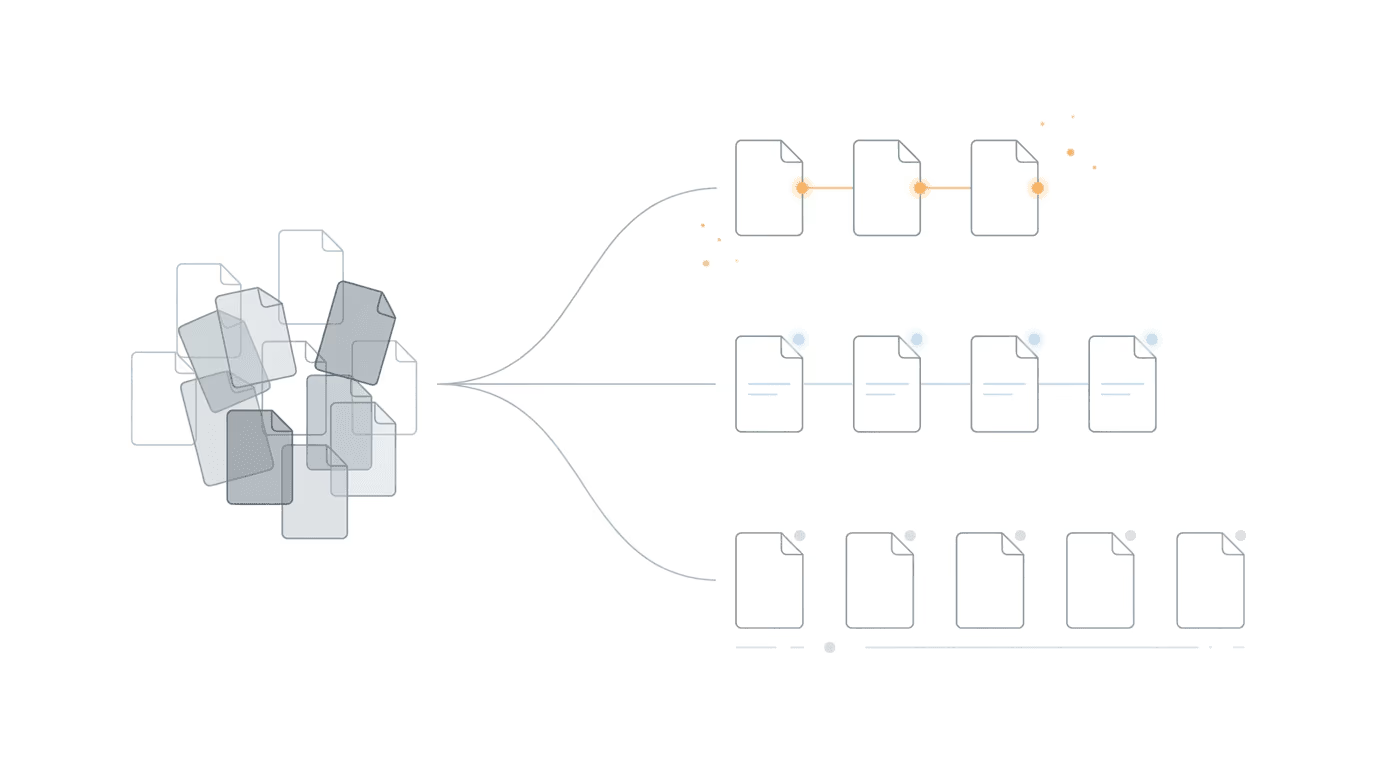
When everything feels urgent, nothing gets proper attention. The disability firm operating in reactive mode works whatever comes in hottest—the client who called twice, the deadline discovered late, the task that’s been sitting longest. None of these are real prioritization criteria. They’re symptoms of a visibility problem.
Effective case prioritization requires knowing what actually changed at SSA, which deadlines are approaching, and which cases will benefit most from attention today. Without that visibility, staff default to first-in-first-out or loudest-client-first, and neither optimizes outcomes.
The framework that works: a three-tier priority system based on deadlines and case stage, combined with value-weighted judgment for cases sitting at similar urgency levels.
The Urgency Trap: Why Everything Feels Critical
Reactive workflows have a predictable pattern. Updates arrive through client phone calls rather than proactive monitoring. Mail brings deadlines that are already half-spent. ERE checking happens when someone remembers, which means surprises become routine. The time cost adds up fast—many firms find their paralegals spending 15+ hours weekly just checking ERE before any real case work begins.
At Martin, Jones & Piemonte, the team described the mail timing problem: “We’d get a 10-day notice on day 9 or a 25-day letter on day 24. That made things a lot more challenging.”
When you discover a 10-day deadline on day 9, everything feels urgent because everything actually is urgent. You’re not paranoid—you’re operating with inadequate visibility.
The breaking point comes around 100-125 active cases. Below that threshold, an attentive attorney can hold most case details in memory. Mental tracking works, barely. Above it, memory fails. At Disability Advocates, the managing partner described hitting this ceiling: “It wasn’t as bad at 50 or 75 cases. But once we hit 100–125, it became more and more cumbersome.”
The problem isn’t that your staff can’t prioritize. They don’t have the information they need to prioritize intelligently.
The Priority Matrix for SSD Cases
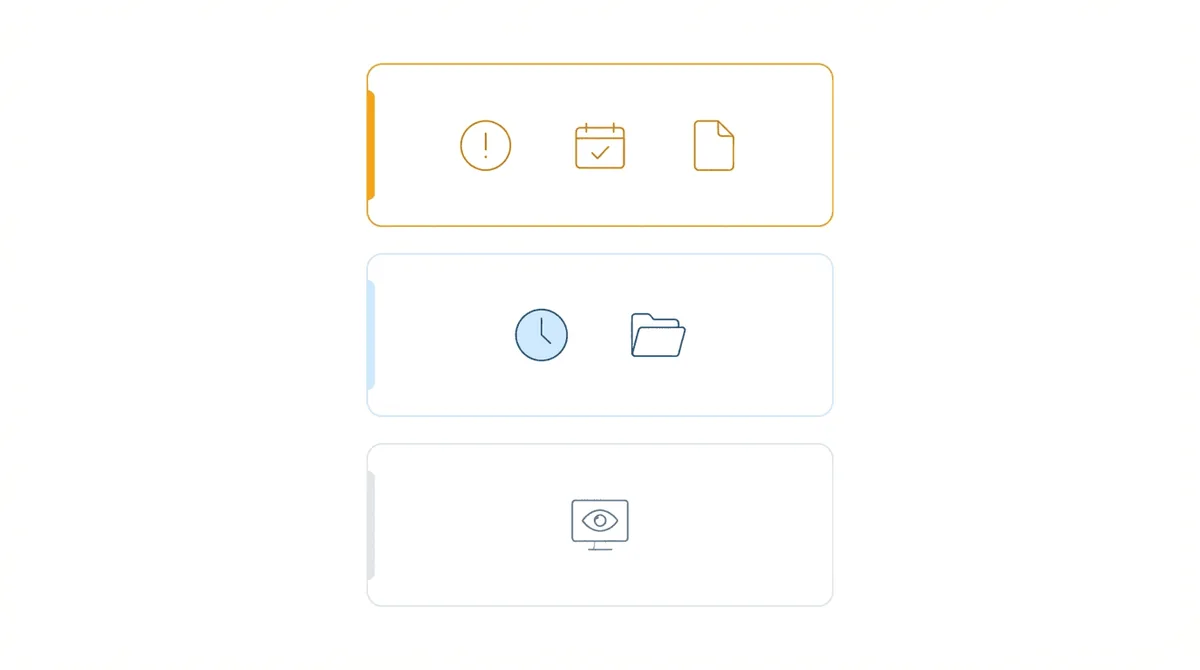
A practical prioritization framework has three tiers, organized around time sensitivity and required action.
Tier 1: Act Today Cases requiring same-day action to avoid negative outcomes:
- SSA deadlines within 5-10 days (questionnaires, appeals, evidence submissions)
- New hearing schedules requiring immediate acknowledgment
- Questionnaires with short response windows
- Cases where missing today’s action creates downstream problems
Tier 2: Act This Week Cases that need attention within the week but haven’t reached emergency status:
- Deadlines approaching in 2-4 weeks (work them at 50% of deadline, not 90%)
- Missing evidence that could cause denial if not addressed soon
- Status changes requiring follow-up (decisions, hearing updates, notices)
Overdue client communication fits here too, assuming it hasn’t crossed into crisis territory.
Tier 3: Monitor Cases in waiting stages where effort won’t change the timeline:
- Cases pending SSA action with no immediate deadline
- Post-submission cases awaiting examiner review
- Cases in scheduled hearing queue with prep complete
- Routine follow-up on stable cases
| Priority Tier | Timeframe | Examples | Staff Action |
|---|---|---|---|
| Tier 1 | Today | 10-day questionnaire due, hearing tomorrow | Immediate work |
| Tier 2 | This week | 30-day deadline approaching, missing records | Schedule this week |
| Tier 3 | Monitor | Pending decision, hearing months away | Check weekly |
Case stage matters here more than it might seem at first. Initial and reconsideration cases often have tight questionnaire deadlines. Hearing-stage cases have prep timelines that build over weeks. Post-hearing cases may sit in appeals limbo for months. The same “action required” means different things depending on where the case sits in the process. For a deeper look at how these stages connect, see our guide on full-lifecycle SSD operations.
Deadline-Driven Prioritization
Deadlines create the primary structure for daily prioritization. Certain SSA deadlines demand attention regardless of other factors, and knowing which ones matter most prevents the scramble.
10-day questionnaire responses: These are the tightest common deadlines. Missing one can delay or damage a case—check for these daily.
60-day appeal windows: Appeal deadlines from initial denial or reconsideration denial. Missing these closes doors. Work appeals at the 30-day mark, not day 55. SSA’s regulations on reconsideration and appeal filing leave little room for error once the window passes.
Hearing prep** timelines (30-75 days)**: Once a hearing is scheduled, prep begins. Medical chronologies, brief development, exhibit review—all require time, and working backward from the hearing date creates the timeline.
Evidence submission cutoffs: Five business days before hearing for most submissions. Missing this means exhibits may not be considered.
The “deadline plus buffer” rule is worth stating plainly: work cases at 50% of the deadline timeline, not 90%. A 10-day deadline gets attention by day 5. A 60-day appeal gets attention by day 30. This prevents the scramble that happens when everything surfaces at the last moment.
Building a deadline-first workflow means checking for approaching deadlines before diving into tasks. Your staff should know what’s due today, this week, and next week before they start working on anything else.
Value-Weighted Prioritization
Deadlines create structure. But judgment decides between cases at similar urgency levels.
When you have three cases all needing attention this week, value-weighted thinking helps allocate effort. The criteria aren’t complicated, though applying them consistently takes practice.
Case strength: Which cases have the strongest chance of approval with proper attention? A well-documented claim near decision benefits more from focused work than a case that needs months of additional development.
Fee potential: Larger backpay amounts mean larger fees. This isn’t the only factor—probably obvious—but it’s a legitimate business consideration when allocating limited time.
Client risk: Some claimants face more urgent financial or health situations. The client who loses housing next month may warrant priority over one with stable support. SSA maintains expedited processing programs for the most severe conditions, but the vast majority of cases depend on your firm’s own triage decisions.
Stage advancement opportunity: Which action actually moves the case forward? Sometimes the highest-value action is a 15-minute document submission that triggers the next step. Other times it’s a 3-hour medical chronology that enables hearing prep. The time investment varies enormously, and so does the return.
Value-weighting isn’t about neglecting difficult cases. All cases get attention. It determines sequence when you’re forced to choose, which, realistically, is most days.
Daily and Weekly Priority Rituals

Frameworks don’t implement themselves. What makes prioritization operational is the discipline of regular check-ins.
Morning triage routine (15-20 minutes):Before diving into tasks, review what changed overnight. What deadlines are approaching? What new documents or notices appeared? What client communications need response? This creates the day’s work list based on current information rather than yesterday’s assumptions.
With automated ERE monitoring, staff see overnight changes summarized rather than logging into cases individually. The morning triage becomes a review of what surfaced, not a search for what might have changed.
Building the daily “top 5”:Each day, identify the five cases requiring priority attention. These become the must-complete items before routine work. Tier 1 items first, then the highest-value Tier 2 items.
Weekly review (30-45 minutes):Once per week, step back from daily execution. Which cases are advancing? Which are stalled? What deadlines are approaching next week? Which cases haven’t had attention in 30+ days? The weekly review catches the things that slip between daily triage sessions—and something always slips.
The inbox zero trap:Worth mentioning because it catches people. Clearing tasks isn’t the same as working priority cases. Staff can spend an entire day responding to emails and small requests while high-value cases sit untouched. Protect time for priority work. Urgent-seeming noise has a way of crowding out the genuinely important stuff if you let it.
Teaching Staff to Prioritize Independently
“Ask me what to do next” doesn’t scale. When every prioritization decision flows through the attorney, you’ve built a bottleneck that limits growth.
Create shared prioritization criteria: Document the priority framework so staff can apply it independently. What makes something Tier 1 vs. Tier 2? What deadlines require escalation? Staff should be able to triage new items without waiting for approval.
Role-specific priorities: Attorneys prioritize differently than paralegals. Case managers prioritize differently than intake staff. Each role needs criteria matched to their responsibilities, and those criteria should be written down somewhere accessible.
Dashboard as shared visibility layer: When staff can see case status in a centralized firm dashboard, they don’t need to ask about priorities. The information is visible. A centralized view showing what changed overnight and what needs attention gives staff the context to make their own prioritization decisions. For a deeper look at what to evaluate in dashboard software for disability law firms, we’ve covered what actually matters for SSD-specific workflows.
Calibration through feedback: Weekly review should include a brief discussion of prioritization decisions. Did the team focus on the right cases? Were there near-misses—something important that got deprioritized? This kind of calibration sharpens judgment over time in a way that written criteria alone can’t.
The goal: independent triage capability across the team. The attorney reviews priorities rather than creating them from scratch every morning.
Frequently Asked Questions
How do I decide which disability cases to work on first?
Use deadline-driven prioritization as the primary structure. Cases with SSA deadlines within 10 days get Tier 1 status and same-day attention. Deadlines within 2-4 weeks get Tier 2 status and this-week attention. Cases in waiting stages with no immediate deadline get monitored weekly. Within each tier, use value-weighted judgment—case strength, fee potential, client risk—to sequence work.
What cases should get priority in disability law?
Priority flows from deadlines and case stage. Tier 1 priority goes to cases with imminent SSA deadlines (questionnaires, appeals, evidence submissions), new hearing schedules requiring acknowledgment, and situations where delay creates compounding problems. Beyond deadlines, prioritize cases where your action advances the case—completing evidence, submitting appeals—over cases in waiting stages where effort won’t change the timeline.
How do I triage my disability caseload?
Start each day with a morning triage routine: review overnight changes, identify approaching deadlines, and build a top-5 list of priority cases. Work Tier 1 items first, then highest-value Tier 2 items, before routine work. Conduct a weekly review to catch cases that slipped between daily sessions. A shared dashboard helps staff triage independently without bottlenecking through the attorney for every decision.
How do I know if my prioritization is working?
A few indicators. Deadlines are met with buffer time, not last-minute scrambles. Staff can articulate why they’re working specific cases. Clients receive proactive updates rather than calling to ask for news. Cases advance through stages without unexplained stalls. If you’re constantly surprised by deadlines and operating in reactive mode, the visibility layer probably needs attention before the prioritization framework itself does.