

Nathan Chapman went to his first NOSSCR conference 35 years ago with one client. He had been freelancing for a single disability firm out of New Orleans, and he figured the conference might hold a few more.
It did. The agency he started, Firmidable, spent most of the next three decades working only with Social Security Disability firms. It has lived through three changes of medium since: television first, then Google search, and now AI search. Nathan calls the current version of the company Firmidable 3.0.
On September 23, 2026, Chronicle hosted Nathan for a workshop on what he has watched work across all three. He has seen firms make a nice living, a few flop, and some turn into regional powerhouses. His opening point was that the marketing he did for each of them looked much the same.
As Nathan put it: “What I was doing for them in each case was kind of similar. So what’s the difference?”
The answer he gave took the full hour, and it started inside the firm, not in the ad budget.
This session was part of Chronicle’s Advancing Disability Law series, which brings practitioners and subject matter experts to the community to work through a specific problem facing SSD firms. Nathan also joined Chronicle’s Mid-Year Checkpoint panel in August.
You can catch the replay here:
Speakers:
- Nathan Chapman: President, Firmidable. Nathan founded Firmidable 35 years ago and ran some of the first professional marketing campaigns built for disability attorneys, starting in New Orleans in the 1980s.
- Will Yang: Head of Growth, Chronicle. Host and moderator for the Advancing Disability Law series.
Key Takeaways
- The firms that scaled were run differently before they marketed differently. One person or a small group makes the decisions, the managing partners hire others to handle hearings, and they manage intake instead.
- Attorneys on intake sign more cases. Callers are impressed to reach an attorney, and attorneys who have been to hearings screen better than paralegals.
- Buying leads is the opposite of branding. Branding means the claimant is looking for you, not just for a disability lawyer, and arrives halfway sold.
- You are not your audience. Claimants are out of work, often unwell and at home with the TV on, which is why Nathan expects SSD to be the last category still using television.
- Five website fixes do double duty for Google and AI search: longer pages than your competitors, question-shaped content, current information, a fast site, and more reviews than your competitors.
- AI search trusts what others say about you. In Nathan’s ChatGPT test, four of five recommended firms were cited for their reviews and the fifth for NBTA board certification.
- Paid search is the conversion tool. Nathan sees Local Services Ads leads cost as much as four to five times more than paid search, and he says to bid on your own firm name so a competitor cannot.
- Your intake process is as important as your lead process. Record the calls, and listen for voicemail hang-ups and staff who send callers away to apply on their own.
How are the most successful disability firms structured?
Nathan’s first section was about the client, not the marketing. He has an MBA, and he opened with a case study from business school.
One person in charge
Steve Jobs was forced out of Apple when the board lost confidence in him, then brought back to do some of his best work. That, Nathan said, is how the corporate world handles leadership: somebody is in charge, and if they lose the board, somebody else is.
Law firms run on partnerships instead, and he finds that surprising as a business person. His description: “oh my goodness, they’re managing by committee. Who thought that would be a good idea?”
The firms that do best, in his experience, have one person in charge or a couple of people. There may be more partners. What he warns against is the eat-what-you-kill setup where a partner votes down something good for the firm because it is not good for them personally.
That’s just not a way to be a functional, growing organization.
Nathan Chapman
The profitability move that is not about winning cases
Nathan asked the room for the number one way he has seen firms raise profitability, then gave a clue: it is not about winning more cases.
His answer: “I’ve seen the managing partners of the most successful firms hire others to handle the hearings.”
He was careful to say this is not the only way to succeed. It is the pattern among the firms that grew the most. They spent time working on the business, not only in it, held their hearing attorneys to a high standard, and turned their own attention to intake.
As Nathan put it: “The lifeblood is in the intake process, so they managed that.”
The managing partner’s desk in the middle of the intake room
He described visiting one of those firms. A big room full of desks and people doing intake, and the managing partner’s desk sat in the middle of it. There was another office for private meetings, but day to day, he wanted to hear how the calls were being answered and whether the phones were ringing.
Attorneys on the intake calls
Nathan’s last observation about the most successful firms was the unusual one: an attorney handles intake. First the managing partners, then, as the firm grows, other attorneys hired partly to screen.
He gave two reasons:
- It impresses the caller. Reaching an actual attorney on the first call makes the prospective client more likely to sign.
- Attorneys screen better. Someone who has been to hearings knows what it takes to win, and can see when extra reports or a different presentation might make a case viable.
In his words: “They’re just better at that than the paralegals, even paralegals who’ve been with you a long time.”
What is the marketing funnel for a disability firm?
In honor of the 35th anniversary, Nathan went old school: the marketing funnel, a model that predates the internet. His point was that claimants pass through stages, and each stage needs a different message in a different place.
- Awareness. They may not know the category exists, or they know it but do not know you. When Nathan started, almost nobody knew Social Security Disability representation was a thing.
- Consideration. They are thinking about it and doing research, but not ready to reach out.
- Conversion. They are ready, and the question is who they contact.
- Lead. They reached you. The rest of the workshop walked through what works at each step today.
Why does branding still matter when you can buy leads?
Heinz, not ketchup
Branding started with ranchers marking cattle that otherwise look identical. Advertisers borrowed the idea so shoppers would stop looking for ketchup and start looking for Heinz.
Nathan’s question for the room: “are they just looking for a disability lawyer, or are they looking for you?”
Buying leads is a blind date
He was explicit that he has no problem with buying leads, and that plenty of firms do it happily and successfully. But he called it the opposite of branding. It is a blind date. Sometimes a blind date ends in marriage.
His alternative is the setup with someone you have already heard good things about. In his words, “you’re halfway sold even before we get to the rest of it.”
Buying leads is the opposite of branding.
Nathan Chapman
Public speaking works, but it does not scale
Speaking to nonprofits and support groups, such as meetings of people living with MS, is the oldest way to build awareness. Nathan said to keep doing it. The limits are the size of the room and the cost to your evenings.
Does television advertising still work for disability firms?
The number one mistake in advertising
Nathan answered with another question: what is the number one mistake in advertising? The classic answer is using yourself as a model for your target audience.
| The people in the webinar | The claimants they are trying to reach |
|---|---|
| Employed | Not working, by definition |
| Higher income | Lower income |
| Highly educated | Lower education level |
| Healthy, active and mobile | In poor health, often at home with time to fill |
As Nathan put it: “Yeah, they’re on their phones a lot, but that TV’s on. It’s on a lot. So this category will probably be the last one standing for using television.”
Commercials you make once and run for years
A commercial is made once and can run for years, reaching thousands of people without the attorney spending more time on it. Streaming counts too, because many claimants choose the cheaper tier with ads. Broadcast still has an audience, from the local news to Judge Judy.
Video on Meta works the same way
Nathan groups Facebook and Instagram video ads with television. In both cases the viewer was not looking for a lawyer. They sat down to watch a show or to check on friends, and the ad found them. Video also carries personality in a way a text ad cannot.
His summary of the whole awareness section was one line: “My mission here is to help you not be generic.”
How do disability firms get found in AI search?
The biggest change since Google
Nathan’s consideration stage is the research stage, and research has moved. He told the story of an employee who researched eye surgery for a long time before she called a single doctor. Claimants do the same research, and they increasingly do it through AI.
He showed a plain Google search where Google put an AI Overview above the traditional results without being asked. Then he showed his own client, Lachman & Gorton in upstate New York, cited by name as a source in AI answers.
The goal is not only to be cited. As Nathan put it: “you’re not in the information business. You’re providing a service.” He wants the reader to click through to the firm’s site and sign up.
The hot five
Nathan’s list of the five most important website changes, which he says help with both Google and AI search:
- Longer pages than your direct competitors. He showed a real firm whose only Social Security page ran three paragraphs. Firmidable builds separate pages for applying, applying for a child, applying with cancer, and so on. If a competitor has 1,000 words on a topic, write 1,200 or 2,000, and make them substantive, not fluff.
- Write in questions and answers. AI search is built on questions, so content should be shaped around the questions people actually ask.
- Keep it current. Old statistics lose value. His example was a page still quoting figures from 2019.
- Make the site fast. Claimants are on smartphones, often without Wi-Fi. Nathan called this probably the most important advice he could give, and recommended the free test at PageSpeed Insights.
- More reviews, with a higher score, than your competitors. This one matters more every year because of how AI search decides who to trust.
Why do reviews matter more in AI search than in Google?
AI wants a third party to vouch for you
Nathan’s explanation: your own website, however good, is you saying you are great. AI search knows whose website it is. He compared it to someone at a party announcing that they are the best Social Security lawyer in town.
In his words: “AI wants to know who else thinks you’re an expert besides yourself.”
He quoted a line he heard at a conference: nothing helps AI like being in the New York Times. Few firms will get there, which is why the rest of the section was about the third-party validation any firm can build.
Four of five firms were recommended for their reviews
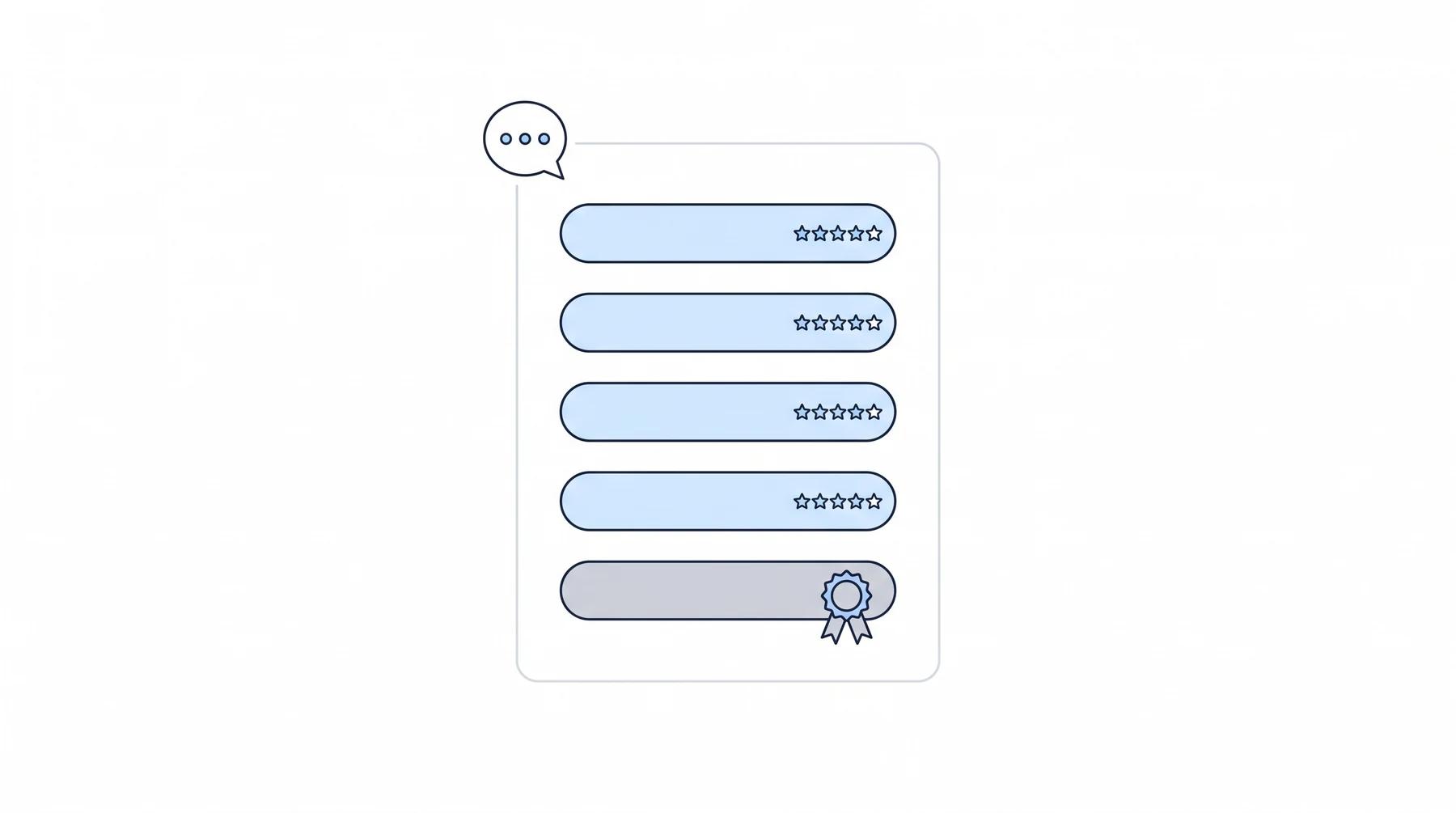
He asked ChatGPT for the best Social Security lawyer in one city. It returned five firms. For four of them, the stated reason was their reviews.
The best system he has seen is simple: one platform that texts a review request to the client’s phone right after you tell them they won. Nathan said: “Studies actually show that’s the moment of peak happiness, not even when they get the check.”
Say yes to the podcast
AI also consumes webinars and podcasts. Nathan recently accepted a guest spot on a podcast about SEO and AI that he admits none of his prospects will ever watch. In the past he would have declined. This time he said yes because AI search would see it.
The fifth firm was board certified
The fifth firm in his ChatGPT test was recommended because it was board certified through the NBTA, the National Board of Trial Advocacy. Nathan separated that from pay-to-play listings: certification requires tests and criteria, and that is exactly the kind of signal AI search treats as expertise.
Especially now with AI, this is among the best advice I can give you.
Nathan Chapman
A website is never finished
Nathan closed the consideration section with the failure he sees most often: a website that was fine when it was built and then left alone. Good websites need ongoing SEO and AEO, answer engine optimization, which he suggested thinking of as AI optimization. Without it, content goes stale and things break.
Is paid search or LSA the better buy for disability firms?

The ranking you worked for is below the fold
For the conversion stage, Nathan pointed to paid search. He showed a desktop search where the number one organic result sat below Local Services Ads, paid search ads, the map and an AI Overview. On a phone, a single paid ad from a national firm filled the whole screen.
LSAs cost more per lead
He runs LSAs for clients and did not tell anyone to stop. But he reported what he sees in the numbers: “I’m seeing LSA leads being as much as four to five times more expensive than paid search.” Google says the leads are better. His view is that they are not four to five times better.
Bid on your own name
A search for his client Second Chance Lawyer by name showed a competitor’s ad sitting between the searcher and the firm. The searcher who already knew the firm could be pulled away by a “no fee until you win” headline. His advice was to be a player in that space rather than give it away.
Enhanced conversions for leads
Nathan asked the audience to write this one down. Enhanced conversions for leads is a Google Ads feature that uses AI to connect ad data to which leads actually converted, and it helps Google bid and write better ads. Paid search generates huge amounts of data from multiple headlines, times of day and bidding strategies, and he said the tool has supercharged the people who analyze it.
As Nathan put it: “We just broke a firm record again. We’re breaking records over and over, and it’s because of these new AI tools.”
ChatGPT now sells ads
His last conversion note: ChatGPT now shows ads below its answers, and Firmidable has bought one for a firm on an SSDI benefits query. He called it an experiment and did not report results yet.
Why is intake as important as lead generation?
“I can’t give you cases. I give you leads.”
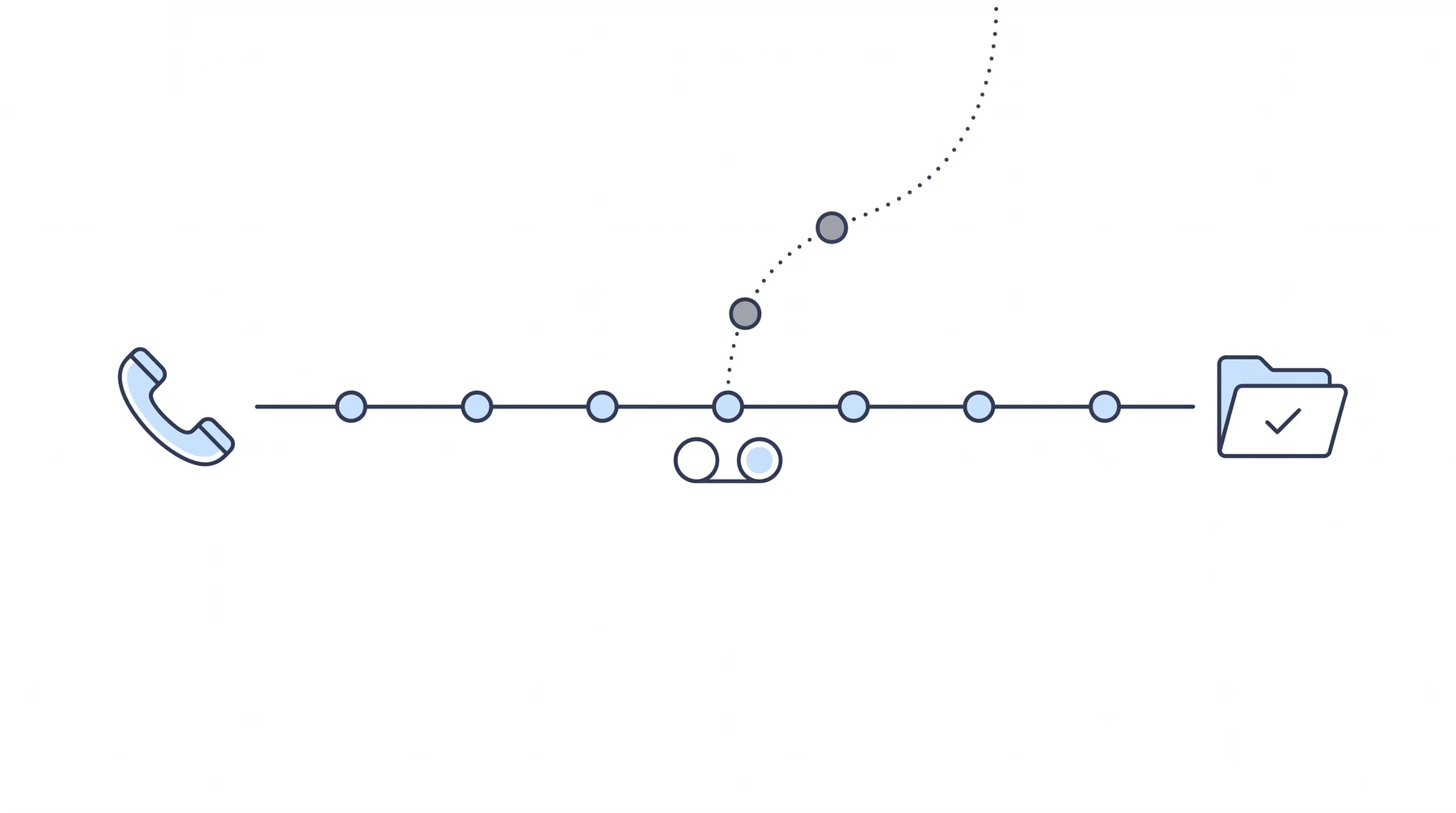
The funnel ends at the lead, and Nathan’s point was that the firm does not. As he put it: “People hire me not because they want leads. They want cases, right? But I’m in the leads business.”
If the leads are not there, hold the agency accountable. If they are there and the firm is not signing them, the problem is usually intake.
Record the calls
Nathan said 90% of his firms record intake calls, and that he now uses AI summaries to review them faster. What he listens for:
- Voicemail. Callers often hang up as soon as they hear a recording, and the firm never learns the lead existed.
- Turning callers away. Firms that say they take initial applications, while intake staff tell callers to apply on their own and call back if they are denied.
- Gaps between the partner and the phones. Managing partners who do not know what their intake team is saying.
That takes time, and it’s a team sport.
Nathan Chapman
Capacity is the other bottleneck
Nathan ended with one of the biggest obstacles he sees to growth: firms that are too busy to take more clients and do not want the overhead of more hires. He said that is why Firmidable recommends Chronicle, and closed on spending on technology rather than headcount.
What This Looks Like for Your Practice
Nathan’s funnel gives any firm a four-question audit:
- Structure. Who makes the final call at your firm, and how much of the managing partner’s week goes to hearings versus intake?
- Awareness. Would a claimant looking for help in your market look for you by name?
- Consideration. Run your site through PageSpeed Insights, compare your page length and review count to your top competitor, and ask an AI tool who the best disability lawyer in your town is.
- Leads. Listen to ten recorded intake calls this week. Count the voicemails and the callers told to apply on their own.
The capacity problem Nathan closed on is the one Chronicle works on. Chronicle checks each case’s ERE eFolder daily and flags what changed, so staff stop logging in to check by hand. Chronicle Dispatch texts clients when something happens on their case, using templates the firm writes, which is also a natural moment to ask for the review Nathan talked about. To see how it would fit your firm, book a demo.
Frequently Asked Questions
How much should a disability firm budget for paid search?
Nathan said the number Firmidable focuses on is cost per case acquisition, not cost per lead, and that it sometimes raises the cost per lead on purpose to get leads a firm is more likely to accept. For overall paid search budget, he said Firmidable generally starts at about $5,000 a month, because the AI bidding tools need enough data to hit their sweet spot. Other channels, such as a website, vary too much by market for a single number: downtown Los Angeles needs more than downtown Lubbock.
Does comedy work in disability firm advertising?
It can. Personal injury firms use it effectively, and it helps a firm stand out. Nathan’s caution is cost: a funny spot goes stale quickly, so it needs a steady stream of new material, where a serious commercial can run for years. Recording short videos in the office is one way to make the economics work.
How do you recover from someone review-bombing your firm on Google?
Nathan gave three steps. First, outnumber the bad reviews with more good ones. Second, if a review is unfair, appeal it to Google; Firmidable has had reviews taken down that were about something unrelated to the firm. Third, reply to every review, positive or negative, because everyone else is watching how you respond. A calm, professional reply such as noting you have no record of representing the reviewer can win the moment with every other reader.
Should a firm start with paid search or with its website?
Nathan starts most firms on digital before television, because viewers who see a TV ad usually look the firm up on their phone. Within digital, if a firm can only fund one at first, paid search produces cases faster, while organic search helps with AI visibility and has a lower cost per lead once it is working. His answer was a longer-range plan that funds both over time.
Are Local Services Ads worth it for disability firms?
Firmidable runs them for clients. Nathan’s caution is price: he sees LSA leads costing as much as four to five times more than paid search leads, and he does not see them performing four to five times better.
What is the easiest way to get more reviews?
Use a single review platform that texts the request to the client’s phone, and send it right after you tell them they won. Nathan said that moment is peak happiness, even more than when the check arrives.
Watch the Full Replay
Upcoming Events
Disability Law Tech Summit: CAPACITY ‘26
A free, half-day virtual summit co-presented by NOSSCR and Chronicle on where firms are already carrying more capacity than they are using. Open to everyone in disability law.
Thursday, November 12, 2026 · 12:00 PM ET / 11:00 AM CT · Register now →
About This Series
Advancing Disability Law is Chronicle’s series on what is actually changing in disability practice: SSA processes, tools, and the operational and business decisions firms are making right now. Sessions are short, practical and led by practitioners and specialists.
Firmidable and Chronicle have worked together on several sessions this year, including Nikhil Pai’s appearance on Firmidable’s Built to Grow webinar and the Mid-Year Checkpoint panel. For more on marketing operations at disability firms, see the marketing, operations and AI panel recap.
Chronicle also produces Disability Heroes, a podcast on the people behind disability practices. If you have a story to tell, share your feedback and let us know you would like to be a guest.
Every session is free and listed on the Chronicle events calendar. Recordings and written recaps are published on the Chronicle blog.
For questions or to learn more: Contact support@chroniclelegal.com or book a Chronicle demo.
Follow us on LinkedIn to stay informed about upcoming events and sessions.
Full Session Transcript
The transcript below has been lightly edited for clarity and readability.
Welcome and housekeeping
Will Yang: Welcome, everybody, to today’s workshop, which is 35 Years of SSD Firm Marketing: What Really Works, with Nathan Chapman, the president of Firmidable.
In case it is your first time here, as a heads up, we are recording this session and we will have a replay for you in case you want to review anything from today’s workshop afterwards. That’ll be posted on our blog as well as on YouTube, so don’t feel the need to take copious notes. We’ll take care of that for you.
If you have any questions along the way throughout this presentation, feel free to leave them in the Zoom chat. Two hashtags in front of it just makes it a little bit easier to spot. We’ll save them for Nathan at the end for Q&A.
Introducing Nathan Chapman
Will Yang: With that, I’m really excited to introduce our guest today, Nathan Chapman, from the Firmidable team. Nathan has been in the disability law marketing space since pretty much its inception. He began in the 1980s in New Orleans, running one of the first professional marketing campaigns for disability attorneys. He’s helped several notable larger firms scale their practices, as well as firms of all sizes, figuring out exactly what marketing mediums work best for disability practitioners.
By Firmidable’s count, their work has helped more than a million people who are unable to work get the disability legal help they needed, through the collaborations they’ve had with disability firms. We’re really excited that Nathan is one of the partners we’ve been working with over time. In case you find his insights valuable here, he was also part of the Mid-Year Checkpoint panel we had a month or so ago, which you can check out online. Just Google it or go on our blog. We’ve done a couple of different collaborations at this point, and we always appreciate Firmidable’s perspective.
In terms of what we’re going to learn today, you’re going to walk away with a few key understandings. If you want to take the next slide for me, Nathan.
By the end of today’s session, we’re going to have a better read of your firm structure. Are you structured like the firms that have been able to scale, or are you just spending like they are? We’re also going to go through actual branding examples, so that you can do a quick audit of your website and see how it holds up versus who you’re advertising against.
We’re going to talk about TV: what is working and what is not. Nathan has seen it all on the TV end. He’s also seen a lot of what’s happening on the AI search and discovery side. If you have any questions about how your firm can get more in front of the right people, that would be something to drop in the chat. And lastly, we’ll talk about a shortlist of intake leaks that you might want to double-click on this coming week.
With that, I’m really excited to pass it over to Nathan, so that he can share his insights from more than three decades in disability marketing. Nathan, take it away.
35 years of Firmidable
Nathan Chapman: Gosh, Will, thanks so much. I so appreciate being here, and I have enjoyed working with you and your team at Chronicle. It has been a good partnership.
Today’s going to be kind of fun for me. This is our 35th anniversary, so we decided to do a theme where we look back. But rest assured, we’re going to spend most of our time looking at today and looking forward.
Taking that little step back first, here I am starting my agency. First I just had one firm, as a freelance situation, in the 80s. I heard about NOSSCR, and I said, I might be able to get a bunch of firms there. So I started the agency. There I am at my first NOSSCR conference, 35 years ago. From there I went around the country, jumped on planes a lot, knocking on doors. Today we do all types of law, but because we were Social Security only for the longest time, there’s literally nobody who does more. Even though we do other things, it’s mostly what we do. So it’s really been a fun journey.
Looking forward, we actually right now are calling ourselves Firmidable 3.0. We started with only doing television. We’ll talk about that in a minute. Then it was, if we don’t master digital marketing, we may not survive. So there was 2.0. Last year I gathered the team together, told them that story, and said, that’s the way I feel about AI. We better get on top of it. I recently spoke at a NOSSCR conference about how to use AI to attract clients, and we’re going to talk about some of that today. Gosh, it wouldn’t be any fun if we didn’t have new challenges and keep reinventing ourselves. So it’s been a great journey.
When you get to be in a specialty, and you get to do a lot of the similar things, you do get to learn a lot. You want the brain surgeon who does that surgery multiple times a week, not once a month, right? You get to see patterns of things going well. When you’re surprised, and maybe even disappointed, you go study it: wait, what happened here? What was different? That’s really helped us be really deep in the space and have insights that I’m hoping to bring to you today.
Now, I’ve said “I” how many times already, so I better catch myself and make sure you know it is not just myself. There’s about 15 of us that work here. I absolutely couldn’t do it without a great team, and at the upcoming conferences I hope you get to meet some of them as well.
All right, here’s what we’re going to talk about today. First, I’m going to talk about you. Having done this for 35 years (you notice I had dark hair when I started; I’ve earned this gray hair), I’ve seen a lot of firms do well and make a nice living. I’ve seen a few flop, and I’ve seen some turn into regional powerhouses. What I was doing for them in each case was kind of similar. So what’s the difference? I’m going to tell you what I’ve observed in the very most successful firms over the years.
Then, in honor of our occasion, being 35 years, we’re going to go a little old school and talk about the marketing funnel. In a minute I’ll tell you what that is. It’s an old-school technique, but we’re going to put the latest principles to it. Let’s see if we can be old school and cutting edge at the same time.
What the most successful firms do differently
Nathan Chapman: Let’s start with the most successful firms.
I have an MBA. In MBA school we study businesses of all types, a lot of case studies. Here’s one you may be familiar with: Steve Jobs. He was a pioneer and transformed the computer industry. He’s just rocking it, what a golden boy, doing so great for his company. But at some point he’s out. The board lost confidence in him, and they said Apple will be a better company without him. So he’s gone. Then they bring him back, and he does amazing things again, including the smartphone and a big long list of things.
This is the way the corporate world works. There’s somebody in charge, and if they lose the confidence of the board, they’re out, and somebody else is in charge.
Now, law firms, y’all have this thing called partnerships. As a business guy like myself, I’m amazed sometimes: oh my goodness, they’re managing by committee. Who thought that would be a good idea? So that’s the first thing we need to look at.
The firms that do the best are the ones where there’s one person in charge, or maybe a couple of people. There may be more partners, but you don’t want the situation where the expression is “eat what you kill,” and somebody says, well, this may be good for the firm, but it’s not good for me personally, so I’m going to vote against it. That’s just not a way to be a functional, growing organization.
We start with that. Now I’m going to put another thing to you. What’s the number one way I have seen people raise their firm profitability? Let me give you a clue. It’s not about how to win more cases.
It’s that I’ve seen the managing partners of the most successful firms hire others to handle the hearings. A lot of you may not want that, and that’s okay. I’m not saying you have to do that to be successful. This section is about the ones that are most successful.
There’s a rule in business that you need to spend time working on the business, not just in the business. These firms that have really grown figured out they could hire somebody else to do the hearings. They paid attention to it. They gave them good quality. They made sure they’re doing a good job. And they focused on where the most profitable part was. The lifeblood is in the intake process, so they managed that.
I even went to one firm one time, and there was this whole big room with all these desks with people doing intake, and the managing partner had his desk in the middle of it. He had another office where we could have private meetings, but day to day, he wanted to see what was going on. How are they answering the calls? Were the phones ringing? That’s the way you really scale, and the big companies do it.
I’ve got one more for you. This is unusual, but my most successful firms have done this. The intake process is handled by attorneys. Maybe it’s the managing partners at first, and when they get a little bigger, they hire other attorneys who also help do the screening. Why do they do this?
It helps with the intakes. It impresses the callers: oh, you’re an actual attorney? Yes, I am. They’re likely to sign up, because they’re impressed with the quality of the call. And they’re better screeners. Those attorneys, or experienced advocates who’ve been to the hearings, know what it takes to win. They know, well, maybe if I order some extra reports or present it this way, we might have a shot. They’re just better at that than the paralegals, even paralegals who’ve been with you a long time. This takes your intake process up to a whole other level, way beyond even the marketing.
The marketing funnel
Nathan Chapman: Okay, that’s my pitch for inside the firm. Now let’s talk about the external-facing side, the marketing. Here’s that marketing funnel. It predates the internet. It predates me.
A long time ago, they figured out that consumers go through different stages, and you need to speak to them and reach them differently depending on where they are in the process. At the beginning, maybe they don’t even have awareness of the category. When I started, nobody even knew Social Security Disability was a thing. Or maybe they’re aware of the category, but they don’t know you. Beyond that, there’s consideration. Now they’re thinking about it and starting to do some research, but they’re not yet ready to reach out to somebody.
Then they are. Now, who do they reach out to? We call that conversion. They’re conversion ready, and we need to make sure we get found then. And if we are successful, they turn into what we call a lead. We’re going to go through each of these and talk briefly about what it’s like today and how you succeed at each step.
Awareness: branding, television and video
Nathan Chapman: Let’s start with that first one, awareness. Going old school on you a minute.
Awareness comes from a term we call branding. Branding actually started with ranchers. You know how cows all look the same? Maybe not to other cows, but to the rest of us, all cows look the same. So the ranchers started branding the cattle, so you know this cow belongs to this particular ranch. That’s how we keep the cows straight.
At some point the advertising world (maybe there’s a TV character, Don Draper of Mad Men) started picking up on this concept. Maybe all products should not look the same. We want them to know which products are superior. So instead of going into the grocery just looking for ketchup, now they’re going into the grocery looking for Heinz.
What does that have to do with us? Well, are they just looking for a disability lawyer, or are they looking for you? If we spend time and some resources on this branding awareness stage, we can have them looking for you.
To help illustrate this point, I’m going to go to the other end of the spectrum. Buying leads is the opposite of branding. I did not mean that to put it down. I know there’s a lot of people who buy leads, and they’re very happy and successful. I’ve got no issue with that. It’s kind of like a blind date, though. Some people go on blind dates and they get married. It’s fabulous.
But I’m going to suggest there’s more opportunity for success another way. Instead of me saying, I want to fix you up with someone and you don’t know anything about them, I say, hey, I’d like to set you up on a date with Susan, my cousin. And you go, oh yeah, Susan, she’s real cute. There’s a sense of anticipation. You’re looking forward to it, you’re expecting it already, and there’s more chance of success. That’s why I like branded marketing, where they’re looking for you and you’re halfway sold even before we get to the rest of it.
How do we get this branding awareness? The longest, most traditional way is public speaking: reach out to the nonprofits and speak at their meetings with people with MS, or issues like that. Do it, do it, do it. I’m not saying don’t. But the problem is you can only get so many people in the room, and it takes a lot of time. It kills your evening.
On the other hand, something like television: we can make those commercials once, we can run them for years, and we can reach thousands of people without you having to spend time on it over and over. But the question becomes, yeah, Nathan, that might have been fine when you had dark hair. What about television today? Really good question.
I’m going to answer the question with another question. Do you know what the number one mistake in advertising is? This is classic. It’s using yourself as a model for your target audience.
Who are you, in today’s audience? We have attorneys and advocates. You’re employed, you’re hopefully higher income, you’re highly educated, you’re healthy, active and mobile. Is that who we’re trying to reach with our marketing? No, not at all. We’re trying to reach the claimants. By definition, they’re not working. They’re lower income; for one thing, they don’t have a job. They’re at a lower education level. And because of their health situation, they’re in bad health, they’ve got a lot of time, and they’re frequently at home, because they lack income and maybe they’re not feeling well.
So what do we think they’re doing all day? Yeah, they’re on their phones a lot, but that TV’s on. It’s on a lot. So this category will probably be the last one standing for using television.
Television is evolving. These days we can do streaming. For us, streaming means with commercials. The premium packages don’t have commercials, but a lot of these people are on the commercial version anyway, because it costs less. So that’s an option, and there’s still a lot of broadcast going on. Whether it’s the news or Judge Judy, there are still a lot of people watching.
Let me mention something that’s top of funnel that’s not television. We’re doing more and more these days with Meta. That means Instagram and Facebook. What they have in common with television is that in either case, nobody’s looking for a lawyer. On TV, they just sat down to watch the show, and here comes a commercial. Same thing on Meta. They just got on Facebook to connect with their friends. They weren’t looking for you, and all of a sudden, here comes a video ad.
There’s another similarity. You can educate and show a personality with video that you can’t with, say, a pay-per-click ad. By reaching them when they’re not even looking, we can start building that awareness, so when there is a need, you’re the one they’re looking for.
My mission here is to help you not be generic. Stand out. These are the ways we can start creating a personality for you, so you don’t look like everybody else you’re competing with.
Consideration: websites and AI search
Nathan Chapman: All right, that was section one. Let’s now go to consideration. They’re aware that there are lawyers and advocates like you, and they’re starting to do research.
I like to tell the story of a woman who worked for me one time. She had thick glasses, and she was thinking about radial keratotomy. Somebody working on surgery on her eyes creeps me out, right? But she was motivated, and she studied a lot about it. She did not just jump on the phone to talk with a doctor.
These days, when you’re doing research, you do it online. We go to the websites, and if it’s a good website, it’s being worked on regularly through things like SEO. And by the way, now we don’t just go to websites. We go straight to AI. So we work on optimization for that too. That’s what we’re going to talk about for when they’re in research mode, consideration.
I mentioned AI. AI is the biggest change on the internet since the introduction of Google. Huge, huge, huge.
One reason is because of Google. Let me show you this. This is a traditional Google search. I did not say I wanted AI, and I did not go to ChatGPT. I just did it with Google. Here are my results at the bottom; that’s number one in this particular search, a traditional answer. But up here are the AI results that Google chose to feed me, even though I did a traditional search. They call it AI Overview.
So here’s the mission these days. This is my client in upstate New York, Lachman & Gorton. We got the AI platforms to cite them as a source, to use their information, and they gave them credit for it. We see that here on the left, and we see it on the right. I’m hoping that the AI reader notices these things. But even better: you’re not in the information business. You’re providing a service. After they read this information, they still need some legal help. So I’m hoping they click right through, end up on my firm’s website, and go ahead and sign up.
Firmidable’s hot five for your website and AI
Nathan Chapman: So how do we make those things happen? Here’s my hot five list on how to improve your website and how to be found in AI. We could have a whole webinar just on this, and I do that sometimes. But let’s do my biggest five items.
One more piece of good news: there’s a lot of overlap. The things you do for AI are going to make Google happy, and vice versa. Not entirely, and I’m going to talk about the differences, but there’s a lot of overlap, so I’m going to use them almost interchangeably.
All right, number one. The page length on your website needs to be longer than that of your direct competitors.
What do I mean by that? I probably look at more law firm websites than anybody you’ve ever met. This is a real one. This firm told me they do all kinds of things, but Social Security was their main thing. They have one Social Security page, and this is it. Something so important to them, and they have three paragraphs about it. Let me tell you, when we build your website, we’re going to have way more than three paragraphs on a page, and we’re going to have page and page and page and page.
Our website is going to have all the stuff. We’re going to have a page just about applying, and another page about applying for children, and this and that, and applying if you have cancer. So when Google and AI need some information because somebody asked, what do I do if I have cancer, and this other page doesn’t even mention cancer, we’ve got a whole page about it. We’re going to outrank them.
There’s another way this comes into play. Even if your page is not that thin, I see it a lot where people don’t understand that the length of the page is one of the most major factors. Let’s say we’ve got 800 words. Hey, that’s not bad. Then we check and say, oh, but our competitor is beating us. They’ve got a thousand words. So we’re going to go in and write 1,200 words, or maybe 2,000 words. Now, they’re really good words. That’s not fluff. But it’s going to be pages of more substance, and therefore we’re going to win the race. These are things you need to keep up with.
Number two: that content needs to be written in a format that aligns with the questions being asked online. Especially for AI, because AI is all about questions and answers. So we want to write in the form of questions and give those answers.
Number three: both AI and Google like it when your information is up to date. There’s no law that says you have to have a website that somebody works on all the time, but you’re better off for it. We’ll see content that has some statistics in it, and over time those statistics get old, and Google and AI are paying attention. It’s like, well, they’re quoting something from 2019. Its value starts shrinking, and it starts dropping in the rankings. So we need to keep everything current.
Number four: you need to use an online tool to check the speed of your website. Google hates slow websites. Why is that? Because most of the public is on smartphones. As a plaintiff attorney, your audience is on smartphones. Those are little bitty computers out in the field. They may not even be at home with Wi-Fi. So the speed of the website is really important to it working technically, and Google and AI want it to work well technically. This is not sexy, but speeding up your website is probably the most important advice I can give you.
Here’s how you do it. Good news: it’s an easy way to check, and it’s free. There are a lot of tests out there. This is the one I like, at the top: pagespeed.web.dev. Write that down, pagespeed.web.dev. You get this simple little page. You put in the URL for your website, press analyze, and it gives you an answer. Maybe you’ll have all green, but the most important one here, for this firm, is in the red zone. This is really bad. So somebody needs to be working on the website to make it fast. Maybe you need a new website. The good news is a lot of times there are things we can fix, and I can’t get into them all here just out of time, but there’s a lot we can do under the hood to make it faster.
All right, number five in my hot five. You need more online reviews, with a higher score and in greater quantity than your competitors. I’d have given you that advice a year or two ago, and now it’s even more so because of AI.
Let’s talk about why. Here’s where we get into a big difference between AI and Google. AI especially relies on third-party validation of your expertise. AI wants to find experts and pull information from true experts.
The problem is I can build you the most amazing, beautiful website, and no matter how great I say you are, AI is aware it’s your website. Essentially, it’s you saying you’re great. At a party, if you go around and tell everybody, hey, I’m the best Social Security lawyer, did you know that? My statistics are fabulous, you want to hear about them? That’s not going to impress anybody at the party. Well, it doesn’t impress AI either. AI wants to know who else thinks you’re an expert besides yourself.
I wish I could claim credit for this quote. I heard it at a conference, and I would give him credit, but I’ve honestly missed who it was. The quote was: nothing helps AI like being in the New York Times.
If the New York Times decides to do an article about Social Security, and they do stories like that all the time, and they call you and interview you, that’s impressive. Hopefully the people reading the newspaper that day pick up on that. But AI will. It goes back, looks at these stories and says, oh, the New York Times thought this person was an expert in Social Security disability. That’s third party.
It’s a little hard to get in the New York Times. So what else can we do? Back to our reviews. Now that we’ve got the concept, I want to look back at that. Here’s a little experiment I did in this city. I asked, who’s the best Social Security lawyer in this town? I only asked for one, but it gave me five answers anyway. This is ChatGPT, of course. For four out of the five answers, the reason it listed them among the top firms was their reviews. I put it in green: they’re telling us the reason it’s recommending this firm is these reviews.
How do we get more reviews? You’ve probably experienced this, because it’s happening all over the country. You got an oil change, and they ask you to give a review. You get a text on your phone. I’ve gotten it from my dry cleaners, and I don’t know about you, but I’ve gotten them from my doctors. So it’s not just for the dry cleaners anymore. There are a lot of companies with platforms. We have one here. We put it through a particular filter, and we try to make it lawyer-friendly and help you with that.
In terms of a system, it’s hard to beat one platform where you ask for the reviews right after you tell them they won. Studies actually show that’s the moment of peak happiness, not even when they get the check. At the moment they won, you send them this, it’s right on their phone, it’s really easy, and you get your reviews up.
There are other ways to be the third-party expert. AI pays attention. They’re out there being consumers of us right now. Hello, Mr. AI, of webinars; so thank you, Chronicle, for having me here. And podcasts. It would be nice if you had your own podcast, but they’re a lot of work. If you can do it, great, do it. But if you’re ever asked to be a guest on one, do it, because there’s a chance.
I was asked not too long ago to be a guest on somebody else’s podcast about SEO and AI. To be honest, none of you will ever see that. In the past I probably would have turned it down, because my audience was not watching that. But AI was watching it. So this time I said, thank you, yes, I would love to.
Remember a minute ago I said four out of the five answers were due to the reviews. What about the fifth one? The fifth one made it because they’re board certified. This is really interesting. This is the definition of being an expert.
There’s an association called NBTA, the National Board of Trial Advocacy, through which you become board certified. You may be familiar with this; we see doctors who are board certified, same thing. I guess not everybody’s familiar with it. I mention this sometimes to attorneys, and they get it mixed up with things like Super Lawyers. In fact, they go off on me: oh no, that’s a scam. Well, whether Super Lawyers is a scam or not, it is pay to play. You have to pay money for it. I’m not saying don’t do it; there is some value in it. But this one is truly legit. You have to be really good. You have to take tests. There’s all this criteria, but the reward is worth it when you can say it. It probably was always true, but especially now with AI, this is among the best advice I can give you. You should jot this one down for sure.
All right, I’m going to close this section with this thought. I see websites over and over that were fine when they were built, but the firm didn’t pay attention to them. They said, we’ve got a website. Good websites need to be worked on regularly. They call that SEO, and these days we call it AEO. The real term is answer engine optimization, but you can think of it as AI optimization. It keeps you up to date and keeps things from getting out of date. We add more pages, and you get stronger and stronger. If you don’t do it, bad things happen. You get out of date, things break. I’ve seen that over and over again. So somebody should be working on your site regularly.
Conversion: paid search
Nathan Chapman: Okay, we’re done with that section. We’re on number three, conversion.
Remember my employee? She studied it, and she’s ready to go have the surgery. Now she’s ready to pick a doctor. Which doctor? She is ready to convert, so now she’s searching with a different kind of mindset.
The most powerful tool for you is paid search. For years we called it pay-per-click. It’s not new, but it’s very powerful, and let me explain why.
Here I did a search. This is from my desktop, and I had to scrunch it down. Look what’s going on here. At the top we have these ads. These are a type of Google ad called Local Services Ads. Here’s the paid search, the pay-per-click I was mentioning. Then we get a bunch of free stuff: there’s the map feature, snippets, maybe the AI Overview. And what’s way down here? Here’s the ranking. This firm is number one. My whole job with the SEO was to get you to be number one, and yet look at all this stuff ahead of you. Maybe they’ll scroll down to here, but don’t we want to be up here also? This is why paid search is so powerful.
Now, you might be wondering, what about that other one, LSA ads? We do those. I’m not saying don’t do them. Do it, do it, do it. But because we study this so much, I’m going to give you a tip. LSAs, while they’re at the very, very top, cost a lot more per lead. I’m seeing LSA leads being as much as four to five times more expensive than paid search. Google will tell you they’re better. Maybe they are a little better, but are they four to five times better? I don’t see it. So that’s why I’m zeroing in on paid search today.
Here’s another paid search example. Remember our awareness, creating that branding before it happens. This firm is called Second Chance Lawyer, and we’re searching for them by name. Here they are. But wait, what’s this in the middle? Somebody bought an ad. Maybe the searcher skips over that and says, well, that’s not Second Chance Lawyer, I want them down here. Or maybe they get confused. Or maybe they go, oh, no fee until you win, that sounds really good, and they weren’t that loyal. I just think we need to be a player in this space. We can’t be giving this real estate up.
And here’s a major factor. I just showed you a couple of examples on my desktop. Remember, your people are on smartphones. Here’s a smartphone example. This is Atticus. If you don’t do it, and maybe your competitors in town don’t do it, the national folks are doing this. Look, the smartphone screen is small, and it has shoved everybody down. I think I see another one peeking out, but we don’t even see it. We do that too when we run paid search. We like to shove all the other people down. We just don’t want to give this up to everybody else. So this is something we need to pay attention to.
Okay, here’s another major thing. If you’re multitasking, pay attention now and write this down. Terrible name, but there’s a thing called enhanced conversions for leads. They could have called me for branding on that.
What is it? It’s a new AI tool that helps make your paid search better. I hire really smart humans to run my paid search program, and there’s a lot of data. A paid search ad is not like a magazine ad. With a magazine ad, we do one ad, we ship it over, and that’s what runs. When you write paid search ads, you write multiple headlines, and Google will try this headline versus that headline. We write multiple second sentences and multiple calls to action. We run some in the afternoon, some in the middle of the night, some in the morning, and there’s a whole bidding strategy, because we have to pay more for daytime than the middle of the night.
It’s a lot of data. My humans were really good at studying all that data, but now AI has supercharged my humans. Because of that, we have deeper insights into how the ads convert into leads, and Google is helping us create better ads with the best headlines and better bidding strategies.
So here’s the big headline, and this is why I told you to pay attention. The news I’m telling you this year, in meeting after meeting: my account people and I are saying to our clients, I have some amazing good news for you. We just broke a firm record again. We’re breaking records over and over, and it’s because of these new AI tools.
While I’m on AI and on the topic of ads, let me give you something new. The last time I spoke about AI, this was not true, but now ChatGPT is selling ads. Here’s the question: I’m looking for SSDI benefits. Here’s the organic answer; earlier we talked about how we get listed there, and we want to do that. But you can also buy ads at the bottom. This is one of my firms that we bought an ad for in AI. This is really new. Come back to me later and I can tell you how it’s doing. We’re still experimenting with it, but things are always evolving, so we’ve got to keep up and test things.
Leads: intake is half the job
Nathan Chapman: All right, my last section: leads. We’ve done all of these things. We created the awareness. They considered us through the website, they looked at our ads, they converted, and they became leads. The leads are coming in. Hallelujah, we made it, game over, right?
Well, sorry, no. I’ve learned this; this is also how I earned my gray hair. People hire me not because they want leads. They want cases, right? But I’m in the leads business. I can’t give you cases. I give you leads. There’s all this stuff that happens in between, and we’d better pay attention to that, such as the intake process.
Your intake process is as important as the lead process. You can hold us accountable if the leads aren’t there. We’re going to have meetings about it, and you can yell at me. But if we show you the leads are there, and you’re not signing them up, and I do this around the country, it’s probably not our fault. There’s probably room for improvement in the intake process.
This is optional, but I’ll tell you 90% of my firms do it: you should record the phone calls so you can see what’s going on. You know how a lot of times you’ll hear “this call is being recorded for quality assurance”? This is the quality assurance part, and you need to be checking on that quality.
We’re going to help you with that, and here’s one way. Once again, we have an AI improvement. Here’s the call; you can listen to it. You give me permission, and we’ll try to help you by checking on the calls. But now AI gives us a summary, because it takes a long time to listen to those calls, and we can scan through them faster.
This is the kind of thing we’re looking for. There’s a voicemail message. In my world, that’s a big no-no. Sometimes that’s fine. Your people are busy, I understand: there’s a voicemail, they leave a message, you call them back. But I’ve listened to those calls, and sometimes they hang up, and sometimes they hang up during the recording, and you don’t even know they hung up. You don’t even know what leads you missed out on, because they hung up as soon as they got that recording.
This is stuff we should be on top of, and there are other things we listen for. I have firms that say, oh yes, of course we help people at the initial application level. And then we hear somebody saying, why don’t you go down and apply at Social Security, and just call us back if you get turned down. The managing partner doesn’t even know what the intake team is saying. We want to spot check and make sure you’re happy with how things are being handled. That takes time, and it’s a team sport.
All right, I’m at the end of my stuff. I want to close with a big shout-out and a big thank you to Chronicle. We recommend them all the time. I do that because they’re a good company, but I also do it because it helps us. One of our biggest obstacles to growth is when you go, oh, we’re too busy, we actually can’t take a bunch more clients, I’ll have to hire more people, and if I hire more people, my overhead goes up. Well, that’s why I recommend Chronicle, because they have ways to help you be more efficient. Let’s spend on technology, not on hiring employees, because that’s really expensive. So anyway, thank you, Will. Thanks for having me here. This has been a lot of fun.
Key takeaways
Will Yang: Awesome, thank you so much, Nathan, for that. If folks have any questions, feel free to start typing them in the chat, and I’ll summarize some of the key takeaways from today’s workshop that you should be walking away with.
First and foremost, the most profitable firms are run by partners who manage the business, own intake, and hire others to handle hearings. It’s that classic phrase of working on the business as opposed to working in the business.
Also, buying leads is the opposite of branding. You want to make sure you give claimants a reason to want you, and not just a disability lawyer.
Some of the tactical methods Nathan shared throughout have some low-hanging fruit, which I’ll come back to in a little bit on the podcast side, because we have a new podcast you can be invited on. There’s your first invite, from the Chronicle team.
Third, you are not your target audience. Claimants are at home with time to fill, so TV and streaming still build awareness, even if that channel has been around for some time.
Nathan also shared a lot of good, tactical SEO practices. The fundamentals: longer pages, question-shaped content that covers the fan-out queries, making sure your page speed is fast, and getting more third-party reviews than your competitors, so that when the AIs crawl your website and your business’s reviews, they have more than just your website to cite.
And lastly, your intake process is just as important as your lead process. If you aren’t already doing so, you want to be listening in and auditing that process so you can improve it.
Chronicle announcements
Will Yang: We have a couple of questions to start us out, but before we get to them, I want to do some quick announcements, for Chronicle folks and for folks who may not be familiar with us.
Chronicle released Chronicle Dispatch last week. This is a great opportunity to improve the overall client experience, and it also creates natural touchpoints for when you can be asking for reviews. Because the Chronicle system is monitoring the ERE for you on a regular basis, we’re now able to text your clients automatically on your behalf, in your voice, and you have full control over all the messaging that goes out. Essentially, it allows you and your team to see when there is an ERE update and send that immediately out to your clients, so they’re not hearing about it later from the mail or from SSA. It makes you look good. It improves your client retention, gives your clients peace of mind, and hopefully reduces some of those inbound calls as well. It also includes a custom portal, so you can add your firm logo and everything else. If you haven’t checked it out yet, feel free to reach out to us at support@chroniclelegal.com to learn about Dispatch, or check out our blog, where we had our launch event last week.
A couple of final announcements. First and foremost, we launched a podcast last week. Our first episode was with Diane Haar, out of Hawaii. We’ve got another 15 already scheduled, so we’re already looking at next spring for when the next episodes will be out. But we’d love to have you if you have a great story to tell. We do all the work for you, and we essentially make you look good. It helps your crawlers, helps your discovery, and helps your claimants better understand who the person behind the practice is. It can be anybody. It’s not limited to managing partners. It can be anybody in the disability process. From our standpoint, everyone has a story worth telling, and we want to tell yours.
The other thing is we’re going to be at NOSSCR next month, and we’re looking forward to seeing you at our booth. We have a number of new swag items to give away. If you liked our socks a year ago, we’ve got a new design for Salt Lake City. I’ve also been preparing custom pressed hats, so if you want a Utah hat, you can choose which patch you want at our booth, or fully customize it with your name. Great for gifts for grandkids or people in your family. We’re only going to have a couple of hats there, so be sure to stop by. And we have a golf night planned for the last evening of the event, so feel free to reach out if you’re interested.
And lastly, we’re doing a collaboration with NOSSCR in November: our CAPACITY ‘26 Tech Summit. This is going to be a free, half-day virtual event for you and your teams. We’re partnering with a couple of different folks in the space to teach you more about how technology has been changing different parts of the process. Collaboration partners include Benny, LexMed, a federal appeals firm, and PR Legal Marketing. Look out for more details, but that will be about a month after the conference.
Q&A
Will Yang: With that, our first question of the day, from an attendee: what is the average cost for paid search, or what are some benchmarks that you recommend? Your thoughts, Nathan?
Nathan Chapman: Oh gosh. The question was about cost for paid search. It really varies a lot. I will tell you the number we focus most on is cost per case acquisition. Sometimes we will intentionally drive up the cost per lead, which sounds terrible, right? But not if it’s a higher-quality one that you’re more likely to accept and turn into a case. So it’s a strategy. Unfortunately, that’s just not a simple answer, but I’m happy to dive into it a little deeper individually, based on where you are. We watch all of those metrics, for sure.
Will Yang: Are you able to give a ballpark range? For a smaller firm, a medium-sized firm or a large firm, what are you telling them to budget?
Nathan Chapman: Oh, in terms of overall budget. Generally we start out at about $5,000 a month for paid search, and it scales a lot. We talked about AI a lot, and AI needs a certain amount of data to work. There’s no law that says you have to spend that amount, but that’s where we really start hitting the sweet spot, and that’s where we’d probably encourage you to start.
In all of these things, we mentioned a lot of different things. Well, what about a website? What about AI, et cetera? I would encourage you, and I have it on the screen, I’m happy to do an individual consultation with you. Sometimes we slice and dice: if we do some of this, maybe we can back off of that. I do this a lot, but it’s not one size fits all. It should be: what are your goals, what’s your budget, and let’s make a plan for you that’s better than one size fits all.
Will Yang: Generally speaking, for the different channels you shared today, how much would each cost if a firm wants to focus on one piece versus the other? Say they’re focusing on the search side, or just on the website-building side. What are some ballpark budgets folks should be operating with, similar to your $5,000 a month reference point?
Nathan Chapman: Oh, got it. I was able to do paid search for you because it’s a much narrower thing, but so many of the other things are way more tailored. If you’re in downtown Los Angeles, you need a bigger budget than if you’re in downtown Lubbock, right? A lot of those things really do vary, and we work across the board. I do a lot of big stuff, and I do stuff for sole proprietors. So let’s move that to a one-to-one, if that’s okay.
Will Yang: Got it. To help stand out in advertising and generate brand awareness, what’s your thought on using comedy in advertisements, assuming the ad has a matching serious spot?
Nathan Chapman: A lot of attorneys, particularly in the personal injury space, do it, and effectively. We talked about having your own personality and not looking like everybody else, so that could be a player. It is a more expensive route, though. When I do something like a video shoot, I try not to have you do it again very often. I shoot a bunch; with TV commercials, we probably shoot every five years. You can’t do a funny thing over and over. It’s, yeah, I heard that joke, I heard that joke. So your production needs are going to be a lot higher, because you’ve got to constantly come out with new material. But if you have a way to do that, maybe creating the videos in your office or something like that, it can be effective. Because of the economics of it, I haven’t done it as much, but I’m not trying to discourage you.
Will Yang: Another attendee was asking: what’s the best way to recover from a disgruntled person who starts review-bombing you on Google? They use multiple different profiles and write as many one-star reviews as possible.
Nathan Chapman: Great question. We do a lot of coaching in that respect. I mentioned the platform we have, but we also have a human who helps you deal with those kinds of issues. There are multiple things you can do.
One, the best success is to have more good ones. We will all get occasional bad reviews, and that’s okay, as long as we’re overwhelming them with a lot more good ones. So first we focus on that.
If it’s unfair, you can appeal it to Google, and we would help you with that to get it taken down. I know somebody where a person was really mad at them for something unrelated to their law firm, and we were able to get that taken down from Google.
My last piece of advice on this: you need to reply to every review. You should be doing that whether it’s positive or negative, but right now we’re talking about negative. The reason we’re replying is not necessarily to talk to the person who gave you the bad review. It’s because everybody else is watching. We just had a food fight; they threw something on you. How are you going to react? If you act reasonable, everybody else goes, who is that? For example, the most common frustration is: we don’t even have a record that we ever represented you. If you say that in a professional way, everybody else reading it goes, well, who’s that wacko? They don’t even know who their lawyer was. And you totally just won the moment.
Will Yang: I think that’s a great point too, because the crawlers would also be seeing that you’re responding, so they’d incorporate that, going back to your point on how search results are being returned.
Nathan Chapman: For sure, for sure. So those would be the combinations and strategies.
Will Yang: One of the other questions: a lot of these firm owners have competing priorities, and you gave them a lot to chew on in terms of channels to explore right now. If you were to simplify it down to a checklist, what are typically the best lemons to squeeze for the time they have to allocate toward investing in their marketing and getting the word out?
Nathan Chapman: I love that question, because it gives me a chance to touch on something I did not. These days we usually do a lot of things, and most typically I start with the digital strategy. We made a big case for TV, and it’s still great. But TV these days: I put a phone number in the commercial, but mostly they’re sitting there watching that TV screen with another screen in their lap. The smartphone is right there, and they’re likely to go, oh, that sounds good, and go look for you online. So if there isn’t a good digital system, we’re feeding potential opportunities into a place where we lose them.
So, depending on budget, we start with digital first, and then we add on these other things as we grow and make more money and want to make even more money. Then within digital, if we can’t do both paid search and the website first and we have to choose, and I’m often in that boat, I ask you: what is your priority? Paid search works faster. A lot of firms go, oh yeah, I want cases now, and we can work on the website more later when we’ve got more money.
Okay, but why don’t we only do that? The reason we still like the organic: one, it’s helpful for the AI, but also, when it’s working well, it’s a lower cost per lead, because you don’t have to buy the ads. So we like the power of one and the cost efficiency of the other. And that’s a personal choice: which do you want to focus on first? So once again, no one answer for everybody.
Will Yang: I think that’s one of the things where it’s a balancing act. If you’re looking for faster results, you go paid for the short term, but you also start planting the seeds for the organic plays that are going to play out on a six-to-12-month time horizon. At least that’s what I’ve seen on the marketing side of my career.
Nathan Chapman: Yeah, 100%. If we can have a longer-range plan, it doesn’t mean we do everything at once. It’s still good to have a plan.
Closing
Will Yang: Yep, makes sense. Well, with that, I think I’ve covered all the questions in the chat today.
For folks listening: if you want an opportunity to get a page created about you, and you’re a Chronicle customer without a case study, we take care of that for you as well. Feel free to reach out to me at will@chroniclelegal.com. We’ve made some great videos for folks, and I’ve seen them get ranked. And if you’re not a customer and you’re in the general disability space, do feel free to reach out about the podcast as well. We want to give you opportunities to get in front of these search results too.
With that, we are at the top of the hour. Look out for the replay and summary, folks. Thank you so much, and we hope to see you all at our next event, or in person next month. Thanks, everybody. Have a good rest of your day.