
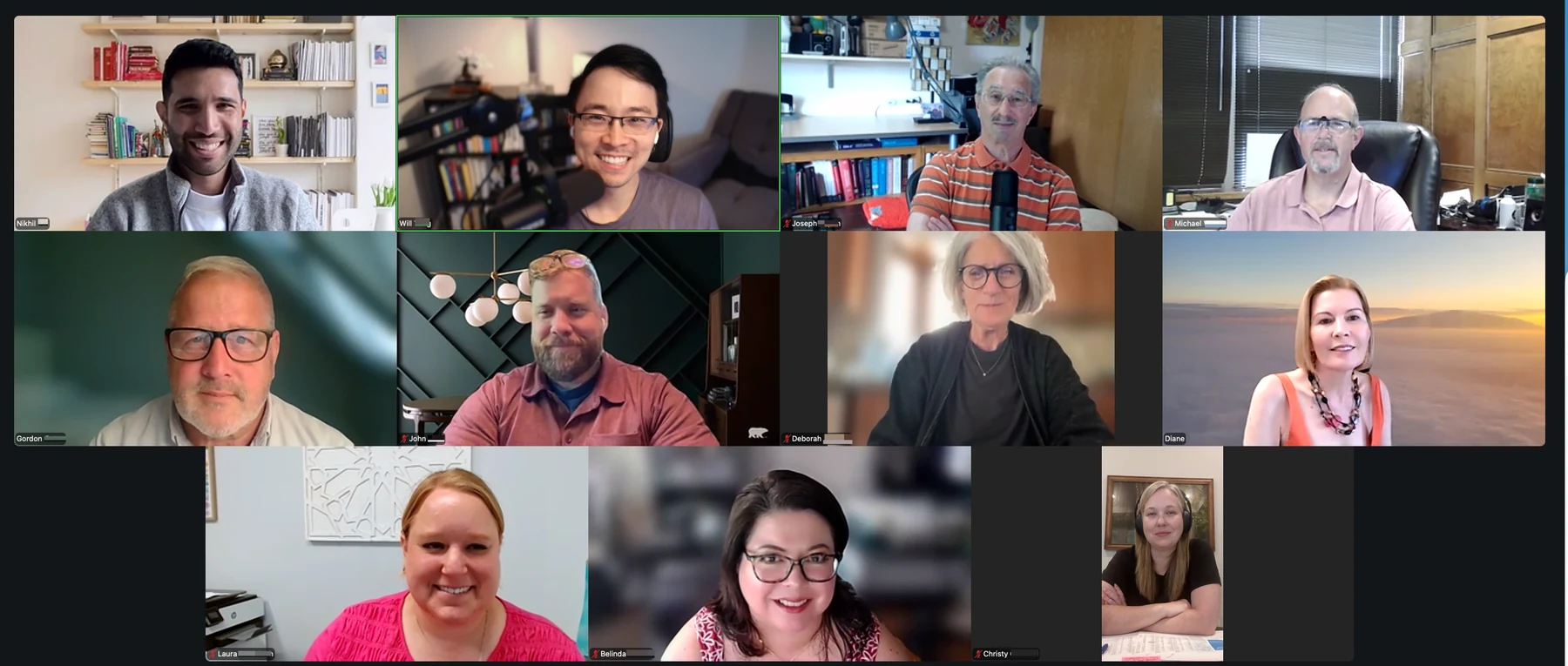
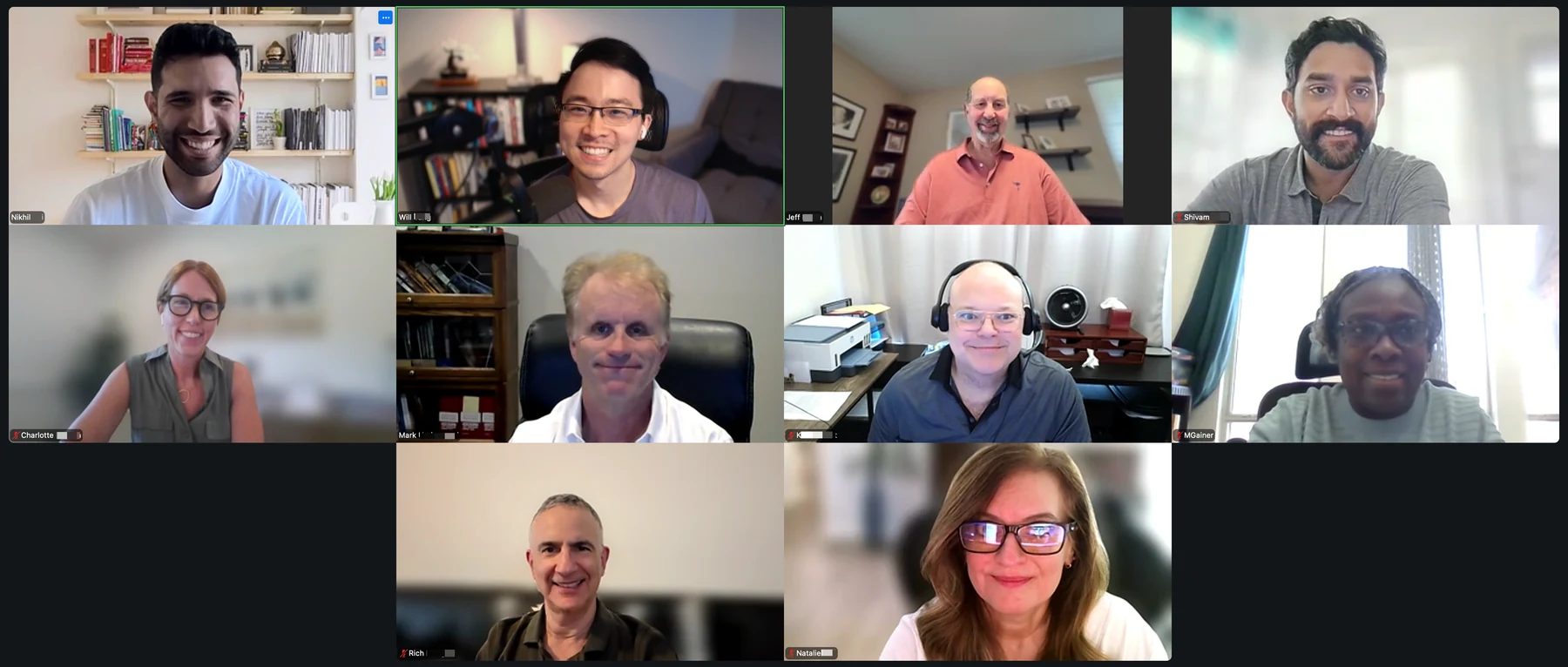
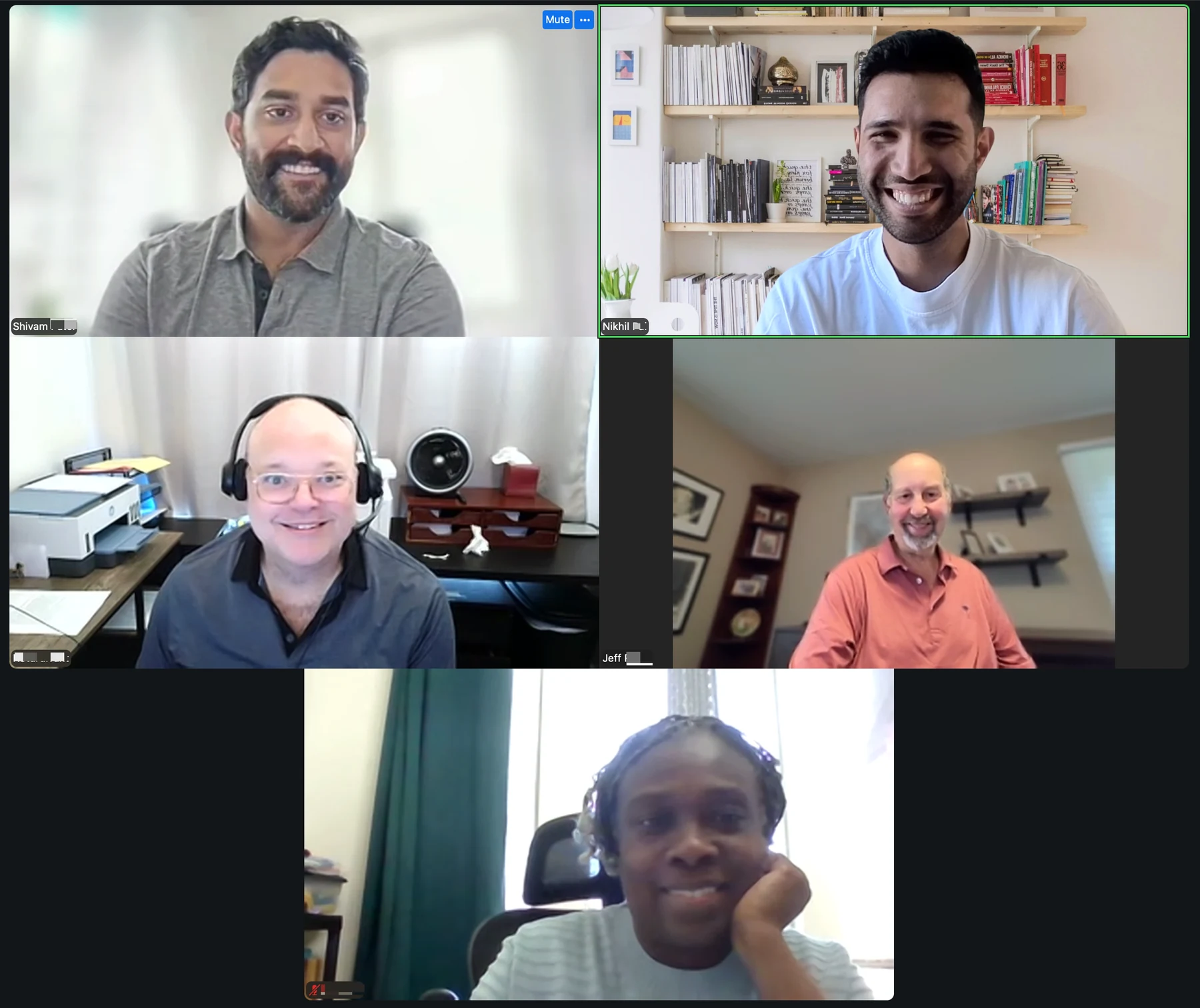
In July 2026, two rooms of large Social Security disability practices joined Disability Peers in Practice, Chronicle’s monthly peer community where SSD practitioners work through real operational problems together. The topic: client communication, from intake through decision.
The planned conversation was about touchpoints, portals, and staffing. It got interrupted, in both rooms, by an SSA bulletin that had gone out that week and that nobody had a plan for yet.
SSA’s Push to Have Claimants File Their Own Forms Landed Mid-Session
- An SSA bulletin issued that week lets claimants submit three hearing-level adjudication forms through their own my Social Security account
- It also releases 26 additional notice types digitally to the claimant’s my Social Security Message Center
- The alarm is narrow and specific: procedurally consequential actions taken without counsel
- Nobody in either room had a plan for it yet
It surfaced in the first room as an interruption, from a practitioner who could not let it go.
Let me raise one thing. I hate to talk so much, but I’ve got to raise this. Did everybody get that note from SSA this week? Encouraging people to upload their own forms directly to SSA… It’s brutal.
— Deborah
Most of the room had not seen it. She circulated the bulletin in chat, and the reaction was immediate and consistent.
Don’t go out there and encourage a represented claimant to submit their own forms. All communication is supposed to go through us at that point, of course.
— One attorney in the room
The detail that drew the most attention was what the change does and does not include.
And the item that we just shared, they list 26 discrete notices that clients will be able to access through their own my Accounts now. And oddly, we found that the notice of decision is not among them.
— Deborah
Two hours later the second room read the same bulletin live and landed in the same place, but sharpened the objection considerably. The concern is not claimants seeing their own notices. It is claimants executing filings that carry procedural consequences.
I don’t want my clients sending in a good cause [form] to reschedule a hearing, or to make a good cause request without us being involved in it. We need to write that, not clients. Some of this is a little scary.
— Jeff
He added a waiver of timely written notice to the same list, on the same reasoning: it is a document with consequences that a represented claimant should not be signing without their representative seeing it first.
The reaction inside firms was equally fast.
I posted it for my team and already got a nasty Teams reply saying, I don’t think this is a good idea. We need to talk about this.
— Jeff
One practitioner made the fair-minded case for the change, and then drew the line in the same breath: it is genuinely useful for an unrepresented claimant, and the problem is that it makes no distinction.
There was no enhancements for us, just enhancements for requirements.
— One attorney in the room
What this means: the forms now submittable online are HA-4631 (Recent Medical Treatment), HA-4632 (Medication Information), and HA-4633 (Work Background). The three items the rooms named as unacceptable to hand to a claimant unsupervised were withdrawing a hearing, requesting good cause for late filing, and waiving timely written notice; all three do appear in the 26 notices now released digitally. The structural issue underneath all three is that the change adds claimant capability without adding any representative-side visibility into what the claimant did. Worth reading the bulletin and deciding your firm’s position before a client acts on it.
Proactive Outreach Fires on SSA Activity, Not on a Calendar
- Both rooms described the same architecture: the trigger is an event at SSA, not an interval
- Practitioners enumerated their trigger lists with unusual precision
- Every list was built on ERE visibility arriving days ahead of the mail
- The gap is the case that has been filed but has not appeared in ERE yet
The most complete trigger list in either room:
We contact the client whenever we receive notice that a CE has been ordered, or that forms have gone out from DDS. There’s a new procedure at DDS in our state that was new to us: as soon as the case is assigned to an adjudicator, their computer pops out forms to the client same day. And the client can then expect them by mail, or our staff can download them from Chronicle and email them to the client. So whenever there’s activity from DDS, we think that warrants contact with the client.
— Deborah
The same firm has a clever move for the ambiguous case, where a decision has clearly issued but its content is not yet visible.
Another time we’ll reach out to a client in particular is if we know a case has been decided, but we can’t determine the decision. So what we do is call the client, email the client and say, check your online status, send us a screenshot.
— Deborah
The second room described the same pattern with a different pivot point: the moment the case reaches a live examiner.
Once the case get assigned to a disability examiner, and they’re finally paying attention to the case, that’s what sparks a lot of communications… that’s when things kind of ignite.
— Kyle
That’s pretty much the same for us, especially now with Chronicle, like being able to see that we have ERE access quicker. That’s usually when we’ve kind of built it into our workflow to send people emails to get started on the various DDS questionnaires.
— Shiv
What this means: event-driven outreach is excellent precisely where there are events, and silent exactly where clients get most anxious. The filed-but-not-yet-in-ERE window has no event stream at all, and the only answer anyone had was a person keeping a spreadsheet and calling SSA.
Call Before the Mail Arrives, Especially on an Unfavorable
- The most consistent tactical agreement across the large-firm rooms
- Getting there first converts the worst call of the case into a managed one
- It also gives the firm visible credit for vigilance it was already performing invisibly
- The constraint is a thin window when the notice reaches both parties the same day
What we really like with communication and Chronicle, and I keep pushing my attorneys, is when we get an unfavorable hearing decision, I want them to call the clients before the clients get it in the mail. Because it decreases that oh my god, look at this, and then the screaming phone call, and the you guys failed.
— Jeff
The script he wants his attorneys using is short and does two things at once. It delivers the news, and it signals that the firm was watching the file rather than waiting on the mail: don’t worry, we’re going to appeal, you’ll hear from us, but I wanted to give you a heads up that this is coming. The second half is the part he thinks actually lands.
It shows we’re being proactive, and it shows we can get into the judge’s computer and look at things, and I think that takes a little bit of the sharp edge of getting the notice of decision unfavorable in the mail.
— Jeff
What this means: this is the highest-leverage single use of early decision visibility, and it is a policy decision rather than a technology one. The information is already arriving early at most of these firms. Whether an attorney picks up the phone before the letter lands is a rule the firm either sets or does not.
Video Is the Touchpoint Firms Are Betting On Next
- The most-copied idea of the day, adopted live by two other attendees
- One firm reversed from expensively produced video to deliberately unpolished Loom recordings
- Low fidelity is the point: it reads as more real to this client population, and costs almost nothing
- The natural first target is any explanation a staff member currently gives every single client by phone
I’ve gone out and hired firms and done very expensive, fancy videos with backgrounds and all this language and stuff on. And for these, I just decided to go in the opposite direction. Loom costs, you know, almost nothing… I’m doing these very informal Loom videos, leaving in some of the stutters and the stumps, missed words or whatever. Just to sound more real for the clients.
— Jeff
He was refreshingly honest about the evidence so far, which is thin.
I’m hoping maybe clients will appreciate that it’s just me and that it’s real, and that it isn’t like a formal video thing. I don’t know if this is gonna work or not, but it’s brand new. Send it out 40 or so times, I’ve gotten 0 feedback from clients on it. I don’t know if it’s good or bad, but Loom says it has been opened and read and watched.
— Jeff
The appeal to the rest of the room was about reaching the clients that written communication does not reach at all.
I love the video idea. That is great, because we’re dealing with clients who aren’t… a lot of them are not technology savvy, and a lot of them don’t like to read or have impairments that they can’t read. So they’re not reading a lot of the stuff that we post in our portals.
— Kyle
I think it just simplifies stuff, especially in the age of technology, where a lot of people like viewing things as opposed to reading emails and stuff.
— Shiv
The most useful moment was watching the idea get applied to a specific recurring cost, in real time:
You know, Shiv, that’s a really good idea. I hadn’t thought about that, but I think I going to do a short Loom video on: we understand you’ve got your notice to have a consultative exam, let’s talk about it. Because right now it’s a phone call that Grace has to have with every single client.
— Jeff
What this means: the selection rule that came out of this exchange is a good one. Find the explanation a staff member repeats verbatim to every client, and record it once. The production-value inversion is the second lesson, and it is counterintuitive enough to be worth testing rather than assuming.
Portals Only Work for the Clients Who Activate Them
- Every firm in both rooms had a portal or was mid-migration on one
- Every firm reported the same split population, and the honest numbers were low
- One firm reported that portal messages increased inbound calls rather than reducing them
- Granular permissioning was the room’s best answer to the objection that keeps portals closed
The clearest number anyone put on it:
The clients that do actually activate it and use it, they’re not as needy, because when we get stuff, we upload it and they get a notification… But I think only about maybe 40% of them actually activated and use it. The other 60% is just, the link just sits there.
— Jayson
Pressed on whether the portal was causing the improvement or merely selecting for it, the same practitioner was clear that it is mostly selection.
The ones that are more active using the portal are a little bit more comfortable with technology… they know that if nothing’s happened, then there’s nothing really going on. They’re not the ones calling every 2 weeks, because the ones that don’t activate, they’re the ones calling every 2 weeks.
— Jayson
And in the second room, the uncomfortable finding:
They get a portal message, and that spurs them to call, so at times it actually increases phone call activity, rather than reduce it.
— Kyle
The migration story underneath that is worth flagging for any firm planning a platform change, because the automation is the thing that quietly does not come with you.
We instituted a portal for our clients about 5 years ago in a case management system called LawBase… if we got a decision and entered that date into a field, LawBase automatically would send a portal communications to our clients to let them know we got a decision… Then we switch to Filevine in January of this year. We’ve still are trying to use a client portal, though it is not automated in the way that we had hoped. You have to actually, kind of, right now, [copy-paste], which is a step backwards.
— Kyle
Others are holding back deliberately, for a reason that has nothing to do with adoption:
Clio does have a portal, and I feel like I use it in limited circumstances, more if somebody wants to send us medical records. Because then it does allow them visibility into what’s in their folder, and that often leads to more questions.
— Shiv
That is the objection the room’s best counterexample answers directly: one firm limits what clients can see so the internal activity feed and case notes stay private, which removes the main reason to keep the portal closed.
What this means: portal activation rate is the metric nobody tracks and everybody should. At 40% activation, a portal is a second channel rather than a replacement channel, and the 60% who never activate are the same population generating the recurring status calls.
Firms Are Building Around the Case Stage, Not Around the Message
- The case stage in the CMS is becoming the spine that everything else hangs off
- Portal messages, emails, texts, and stage videos all get attached to a stage change
- One firm had this fully automated on a previous platform and lost it in a migration
- The step nobody has automated is the bridge: noticing the SSA event and moving the stage
The design pattern is consistent across firms, and it is worth naming because it is portable. Rather than writing a message for each moment in a case, practitioners are defining the stages once and hanging every outbound touch off the transition between them.
When you do switch what Filevine calls phases… it will automatically send out text messages and emails, so we… I set those up. We’ve also given them links to videos that I’ve created for each different stage.
— Jeff
Once that spine exists, adding a channel is cheap. The stage change fires the portal message, and the portal message carries the video for that stage.
If you can change the phase, that will trigger in the portal an email, and then a link to the video that I’ve created at each one of those phase changes.
— Jeff
The same instinct showed up in the first room, aimed at a different moment in the case: the batch of forms DDS sends out when a case is first assigned.
We could automate that. When DDS sends out that first batch, I would not mind having a note go out to the client, text or email, or preferably both, to say form’s been issued, get it back to your lawyer immediately.
— Deborah
What none of it removes is the manual bridge. Something has to notice that SSA did something and move the case to the next stage, and at every firm in the room that something is still a person. That gap is why the most technical practitioner in either cohort has been writing her own connectors.
I do coding as well. So I love the fact that both Clio and Chronicle open APIs. There are folks out there that can figure out how to connect things. If you can imagine it, talk to someone who knows how to do coding, and has the time.
— Diane
She was equally clear about the limit of that approach, which is the more useful half of the lesson.
I build a lot of stuff, but I’m hoping the tech guys will eventually take over, because building it means you have to fix it.
— Diane
The payoff everyone was reaching for is not a quieter inbox. It is a different conversation when the client does call.
That saves a phone call, or at least it’s a shorter phone call, or a different phone call than, hey, you’re incompetent, I got denied.
— Jeff
What this means: if you are starting on this, define the stages before you write any messages. The firms furthest along did not begin with better copy; they began with a stage model clean enough that a machine could act on it. And be honest about the maintenance: building your own connector is a real option, and it is also a thing you then own forever.
The Real Constraint Is Case Manager Load, and AI Gets Pointed at It
- Both rooms framed communication capacity as a staffing economics problem
- The consistent posture: reach for a tool before reaching for a hire, keep humans client-facing
- Complaint volume works as a hiring signal, and one practitioner uses it explicitly
- Every firm drew the line in the same place
Our case managers handle a godzillion calls, emails, and texts a day. And they can’t handle a lot more, so we’re trying to find ways to automate this. So that we can have that communication go back and forth without stressing our staff any more than they already are.
— Jeff
One firm solved a version of this by adding a layer below the case managers rather than beside them, so relationship work and data entry stopped competing for the same person. John described the split in the bluntest terms anyone used all day.
We hired caseworkers to work under the case managers to do more of the data entry and time-consuming, brain-off stuff, as I like to refer to it as, freeing up the case managers to manage the relationship piece of it.
— John
I’m using automation and AI so that we can spend more time talking to our clients.
— Diane
The most portable management idea in either room was a diagnostic, not a tool:
My rule of thumb is when I start getting a lot of complaints, I look to see, is the paralegal or case manager bad, or are they just having too many cases and it’s time to hire somebody else? Kind of using the number of complaints that cross my desk as sort of a guideline.
— Jeff
I know that they’re definitely are have a very big push this year to use tools to solve problems rather than hiring more people.
— Kyle
I would love to automate as much as I possibly can, especially the back office type of things. I think we’ll always need those people in those positions facing the clients, because someone will have to explain that, but rather than have somebody do data entry in the system or draft something that AI could handle.
— Shiv
What this means: every firm drew the same line, which makes it worth adopting rather than re-deriving. Automate the production of the message; keep a person on the receipt of the reply.
AI as a Way to Clone the Senior Practitioner’s Judgment
- The most sophisticated single use case described in either cohort
- The AI never touches the client and never drafts anything that goes out
- It compresses two decades of de-escalation language into a staff reference document
- It pairs with a training cadence driven by actual recent client complaints
I’ve been doing this for 20 some odd years, and I know when these people are talking to me how to diffuse the situation with my own terminology. I’ve got these catchphrases and these things that I use that have just landed really well. So what I did was, I just had this free-form conversation with Claude where I was like, hey, I’m gonna give you all of my ideas that I want you to turn into a kind of helpful script for if this, then that, that my staff can use.
— Travis
The output is a working document, not a polished one, and he is explicit with staff about how to use it.
I think now it’s unfortunately like 14 or 15 pages long, but it’s an if this, then that script that uses my language and the things that I know have been successful in these conversations over the last 20 years. And I tell my staff, these are my words, and these are my scripts, but you need to add your flavor to it.
— Travis
The reasoning behind it is the part worth stealing.
I want to think about the ideas. I’ve got all this experience and knowledge, and I can’t duplicate myself, but I would really like to duplicate my knowledge in a usable format for my staff.
— Travis
A parallel approach in the same room puts the reference material into staff hands live, mid-call:
I have ChatGPT for work, all my employees are on it. There’s one for difficult client calls that they can reach out to while they’re on the call to help them come up with things to say, to diffuse situations. There’s one that feeds straight off of Social Security site and answers their questions… according to the current POMS, [HALLEX], CFRs. It’ll link back and take them to the [POMS] or the CFR.
— Diane
And the framing that ties the whole tech stack back to the client relationship:
The way that I view my tech stack, my tech stack is to allow for the relationship building. If you don’t have the relationship built, then they’re just like, here’s the dude in the ivory tower telling me what I need to do, and he doesn’t know where I’m coming from.
— Travis
What this means: this inverts the usual framing of AI in a disability practice. The model is not writing to the client. It is turning tacit senior expertise into a training asset, which is a use case with almost none of the accuracy exposure that brief drafting carries.
Teaching Clients a Single Rule Beats Teaching Them a Process
- A small idea with the widest applicability of anything said in the large rooms
- One firm teaches clients one word that governs when to call
- Two other practitioners recognized their own version of it immediately
- The mechanism is memorability, not policy
So we use the word change. I tell them, I want to know when things change. I said, don’t call us every time you see the doctor, if we know about the doctor. My team doesn’t have time. But if you see a new doctor, you call us. If you get anything in the mail from Social Security, even if my name is on it, call us. If you move, call us. If you get a job, call us. So the operative word I teach them is change.
— Jeff
The reinforcement is what makes it stick, and it runs through every channel the firm has.
We do that in our intake sessions, and now that’s emphasized in almost every video. Call us if something changes, and I try to do that to control it a little bit. Because otherwise the number of calls is just overwhelming for my team.
— Jeff
One of the things, like Jeff said, we do say, when there is something new that has happened. I don’t necessarily know that we’re using the word change, but in that sense… it’s like, if there is something new that happens, or changes, or if you see a new doctor, those are the things to reiterate to them.
— Mary
What this means: a rule a client can hold in their head survives a two-to-four-year wait. A process explanation does not. The firms getting the fewest status calls had reduced their intake message to something a client could repeat back.
Growing Out of the Client Relationship Is the Cost Nobody Warns You About
- The most personal thread of the day, and the one the room engaged with most warmly
- A senior practitioner walked a newer one through the transition, and named what it cost
- Both large firms had independently settled on the same delegation boundary
- Arriving at the same split separately suggests it is a stable answer, not a preference
Each of us has to get to the point where we work on our business and not in our business… I’m not 100% there yet, but I’m much closer to that than I used to be. It comes at a cost. It comes at a cost of, my name’s on the door, but my name’s not in front of the clients all the time, and that sometimes hurts.
— Jeff
The turning point was somebody telling him plainly:
Many years ago, a younger guy who’s much more of a businessman than I will ever be came up to me and said, Jeff, you’re effing up your own practice. He says, you’re doing too much and you’re getting your own way, and you’re costing yourself a lot of money. And I came back to Chicago, and I went and had a cup of coffee and started thinking about it, and realized he was entirely right.
— Jeff
He was candid that the adjustment was emotional before it was operational: he remembered depositing a fee, back when they were still paper checks, for a client he had never met, and being genuinely bothered by it. He got over it quickly, but he noticed.
What that looks like once it has settled came from the other large firm in the room, which had arrived at the same place by a different route. Kyle described a boundary defined by exception rather than by rule: the attorney appears when something is wrong, or when the decision is genuinely ambiguous.
The only time that we’re really getting an attorney involved at these early levels is if they complain and then demand to speak to an attorney, of course, that’s going to schedule a phone call. And then usually a lot of these partially favorable decisions that we’re getting at the initial or recon levels, that will spark for an actual attorney phone call. But other than that, everything else is left to our caseworkers and paralegals.
— Kyle
Hearing prep is the one thing neither firm delegates, and the staff work is arranged to protect it.
The attorneys usually set one or two appointments before a hearing to personally talk to them about their case. But before that, the staff is already sending out questionnaires to make sure that we know all the information that the attorney needs to know. We’re already requesting records. So hopefully that saves the attorney a lot of time. Although they always manage to learn about new sources of medical treatment when they talk to the client that they’ve never reported to us.
— Kyle
Two things reconciled Jeff to the trade. The clients were measurably better served, and the staff preferred it that way.
Truly, the clients are happier because they’re not all waiting for me to get back to them, and I don’t. So it was a pain point, and by just having experienced people get back to them, they’re happy.
— Jeff
On the other side of the exchange, a practitioner sitting right at that threshold:
I feel like kind of at that stage, I’m still the only attorney. But that’s kind of what’s been on my mind, that we’ve got to hire somebody so I can get out of this day-to-day part.
— Shiv
His case managers have been with him between five and twenty-five years, and by his account they would rather own their client relationships than have him step into them.
What this means: both firms hold the same four things at the attorney level, and delegate everything else to case management: hearing prep, partially favorable decisions, post-hearing strategy, and escalations. If you are working out where the line goes, that is a tested starting point rather than a guess.
Practitioners Come for Tools and Leave With Reassurance
- Both rounds closed on the same note without prompting
- The operational value is real, but it is not what people named at the end
- What they named was the confirmation that the problems are structural rather than personal
One of the biggest takeaways for any kind of meetings like this is a feeling that, wow, we’re not alone. These are the same problems that everybody is dealing with. Because in this work, you can often tend to feel like, well, maybe there’s something innately wrong that we’re doing… but when I hear other people talking about these problems, and the solutions that they’re going through, then that gives me more confidence to know that we are on top of what’s going on.
— Kyle
It’s hard to remember that, yes, we’re a business, but we’re also still trying to help people who need it, and that can take on an emotional impact. So anything like this to make our jobs easier, but also feel supported by a broader community, is always very helpful.
— Kyle
Every time you talk to other practitioners and you hear they’re going through the same set of issues, it does make you feel like you’re not alone, and you’re not as much of a screw-up as you think you are every time somebody gets mad at you. You always beat yourself up, because we all want to be perfect.
— Jeff
What this means: if you run a disability practice and have concluded that your client communication problem is a failure of your own management, the evidence from this room is that it is not. It is the shape of the work.
Also in This Series
The July 2026 small-firm cohort ran the same hour on the same question, and reached a strikingly similar place from the opposite direction: communicating through the silent months, intake expectations that hold up, protecting the attorney’s calendar, and continuity planning for a solo practice.
The June 2026 sessions covered AI adoption across both cohorts.
Read the June 2026 large-firm recap →
About This Series
The SSD community has been missing a regular virtual space where practitioners in similar situations talk through real operational problems together. Chronicle built Disability Peers in Practice to be that space.
Sessions run monthly, segmented by firm size, free and capped to keep them small. The format is peer-led and practitioner-first: structured conversation focused on what’s actually working in the room.
Register for the next session →
About Chronicle
Chronicle is an ERE monitoring and analysis platform built for Social Security disability practices. It checks the SSA’s ERE and e-file daily across your firm’s cases, surfacing status changes, new documents, and upcoming deadlines before they become problems. Chronicle is CMS-agnostic: it works with any CMS with an API, or with no CMS at all. Disability Peers in Practice is one of the ways Chronicle brings the SSD community together outside of conference season.