
This post was originally published on March 31, 2024 and was then updated on January 29th, 2026.
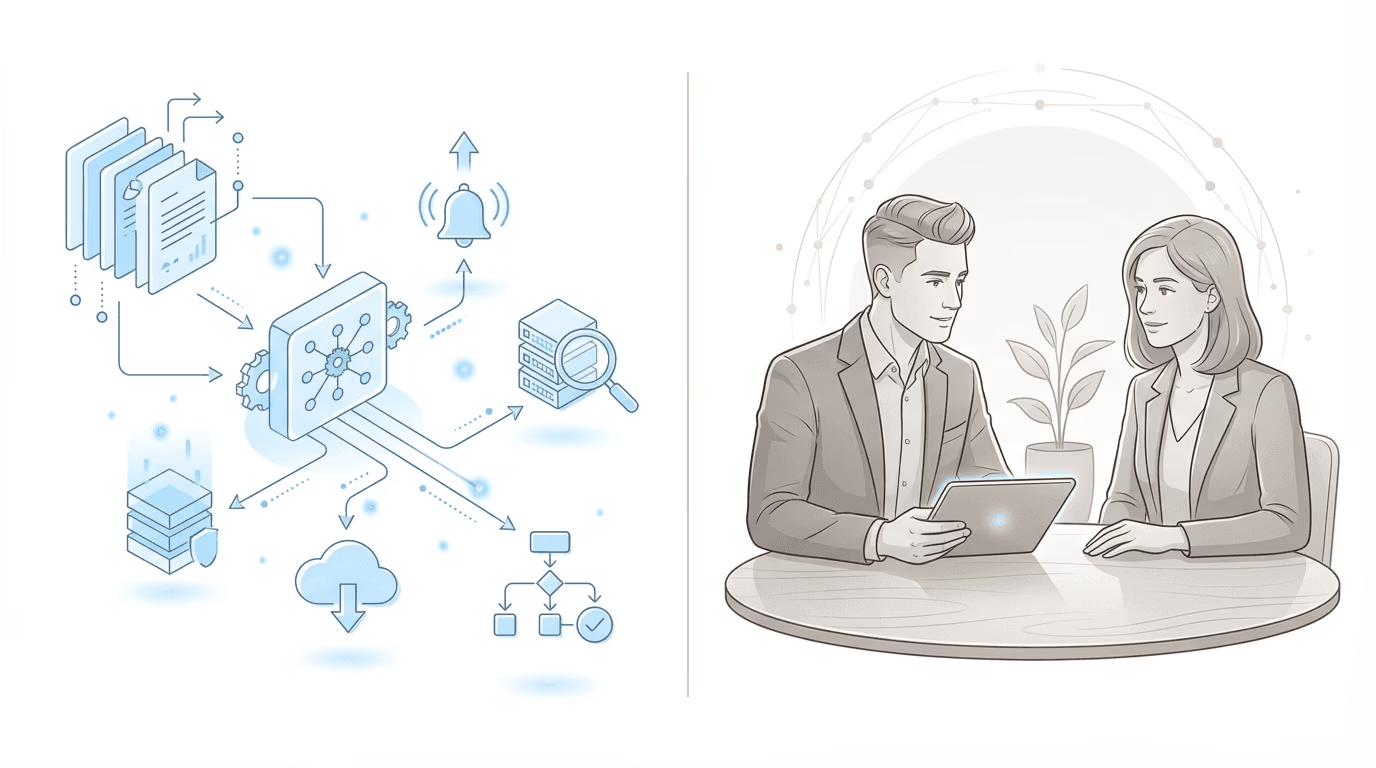
AI won’t replace Social Security Disability attorneys. It handles operational work (ERE monitoring, document organization, deadline tracking) while attorneys provide what AI cannot: judgment, empathy, and live courtroom advocacy.
The real question for SSD firms isn’t whether AI will take their jobs.
It’s whether they’re operationalizing AI effectively to handle the 80% of routine work, freeing capacity for the 20% that actually wins cases. That split is where the conversation should start.
What AI Actually Does Well in SSD Practice

Most of what consumes SSD firm bandwidth isn’t legal work. It’s operational overhead.
Checking the ERE for new documents. Scanning incoming mail for deadlines. Organizing medical records into usable formats. Tracking case status across hundreds of matters. None of this requires legal judgment. It requires consistency, frequency, and an audit trail.
This is where AI delivers.
ERE monitoring: AI-powered systems check the SSA’s portal daily, flagging new documents, status changes, and questionnaires before they become surprises. At The Law Office of Nancy L. Cavey, each paralegal was spending 15 to 20 hours per week in the ERE manually. That time is now automated.
Medical chronology generation: AI can scan thousands of pages of medical records, extract relevant entries, and organize them into chronological summaries. This gives attorneys a structured foundation for hearing preparation rather than raw, unorganized files.
Deadline and status tracking: Automated monitoring creates visibility into what changed, when, and whether action is required. No more learning about decisions from client phone calls.
Administrative task automation: Uploading documents, routing correspondence, flagging questionnaires. Repetitive, high-volume tasks that drain staff capacity without adding strategic value.
Firms that understand this build AI into their operations as infrastructure, not novelty. They treat it like electricity: essential to the work, invisible in execution.
What AI Cannot Do (And Why It Matters)
AI falls apart when work requires real-time human judgment.
Consider what happens at a hearing. The ALJ asks an unexpected question. A vocational expert gives testimony that contradicts the record. The claimant’s affect shifts when discussing a particular topic.
An experienced attorney reads these signals, adjusts strategy, and responds in seconds.
AI cannot do this. Current models have latency measured in seconds (an eternity in live advocacy). They lack contextual awareness of the room. They cannot build rapport with a judge or read when a line of questioning is hurting rather than helping.
Client trust requires human connection: listening to and understanding a client’s story isn’t about gathering data. It’s about making someone feel heard during a multi-year process that affects their livelihood and dignity. AI can transcribe the conversation. It cannot replace the relationship.
Strategic case evaluation requires judgment: should this claim emphasize physical limitations or the mental health component? Is this ALJ favorable to certain arguments? What’s the real weakness in this case, and how do we address it before the hearing? These decisions require pattern recognition built from years of practice, not algorithmic processing. (For a deeper look at what AI innovations may bring to SSD practice, see the future of AI in SSD law.)
SSA proceedings have human elements AI cannot navigate: consultative examiners make subjective assessments. ALJs have individual tendencies and preferences. Agency staff make discretionary decisions. Attorneys who know how to work within this human system get different outcomes than those who treat it as purely procedural.
The 20% of work that requires human judgment is also where cases are won or lost.
SSA Is Using AI Too
The Social Security Administration is integrating AI into claims processing. Understanding what that means is essential for effective representation.
What SSA is doing with AI (as of 2026):
SSA uses AI to analyze medical evidence, identify patterns in documentation, and flag applications for review. Automated transcription tools process hearing audio. AI-assisted systems help reviewers process claims faster by surfacing relevant information.
The goal is efficiency. SSA faces backlogs and staffing constraints; AI is their strategy for handling volume.
What this means for claimants and their attorneys:
AI-assisted review may speed decisions, but it introduces new failure modes. Algorithms trained on patterns may miss atypical presentations. Cases that don’t fit standard criteria might be flagged incorrectly. Incomplete medical records could trigger automated errors that a human reviewer might catch.
This creates a stronger case for attorney involvement, not a weaker one. When SSA uses AI to process claims, attorneys need to present cases in ways that survive algorithmic review while also preparing for human adjudication.
Visibility matters more than ever.
Firms that monitor SSA activity daily have earlier awareness of decisions, notices, and document requests. This matters when timing is tight and the SSA is processing claims through automated systems. If you’re relying on mail to learn what happened in the ERE, you’re operating on a delay that could cost your clients.
How Successful Firms Operationalize AI
The pattern among high-performing SSD firms is consistent: they build AI into operational infrastructure while protecting the attorney-client relationship and strategic work.
ERE monitoring as the operational backbone:
Chronicle automatically checks the SSA’s Evidence and Case Status portal and the e-file for changes across your firm’s cases. This replaces the manual login, check, and record routine that consumes paralegal hours.
The Disability Champions reported that they were wasting 80 to 90 man hours a week doing things a machine should handle. Those hours are now available for client communication and case preparation.
Medical chronology** as hearing prep foundation:**
Chronicle supports medical chronology management as part of hearing preparation workflows. AI organizes the medical record into usable structure; attorneys apply judgment to determine what matters for the specific claim.
The division of labor makes sense: AI handles organization, attorneys handle analysis.
Workflow automation to reduce administrative burden:
Chronicle automates repetitive administrative tasks associated with SSA mail and ERE workflows. Document routing, deadline flagging, status updates. These automations reduce cognitive load on staff and create audit trails for what was processed and when. (For implementation steps, see how to automate ERE tracking.)
What this looks like in practice:
William Viner of Viner Disability Law estimates that Chronicle equals 50 to 75% of a paralegal in workload capacity. That’s not a claim that AI replaces paralegals. It’s a statement that automating routine work lets existing staff focus on higher-value tasks.
The 80/20 Framework for AI in SSD Practice
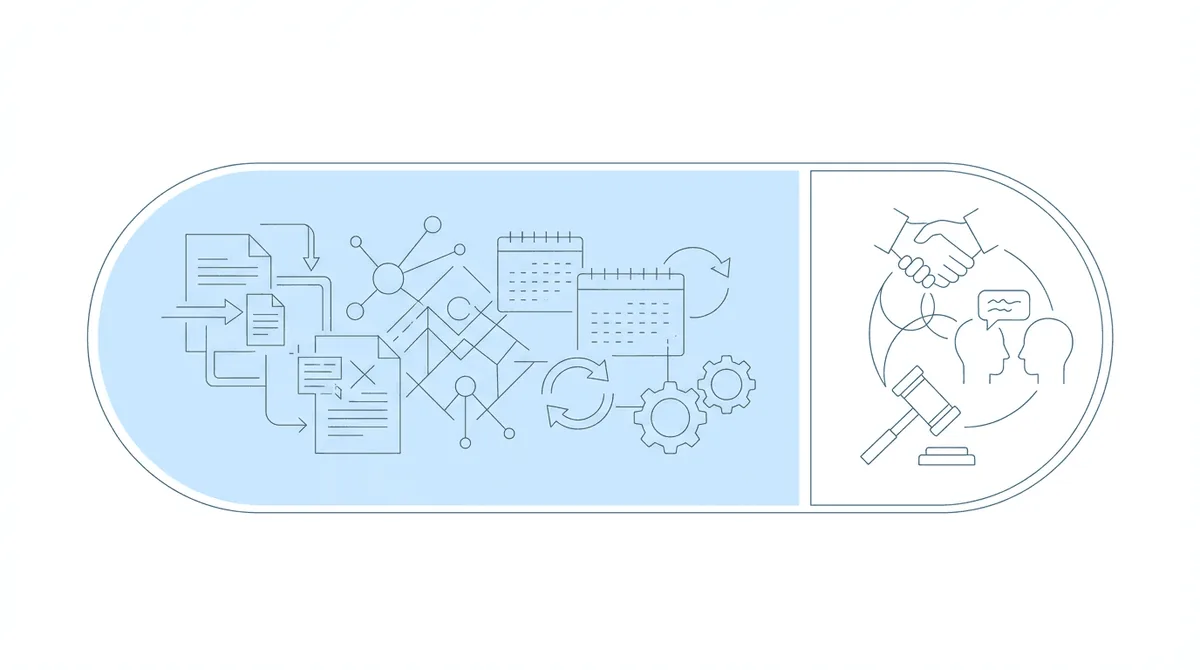
A useful framework: identify the 80% of work that’s routine, repetitive, and audit-able. Automate it. Then protect the 20% that requires judgment, client connection, and live advocacy.
The 80% (automate this):
- ERE document monitoring
- Status change tracking
- Medical record organization
- Deadline flagging
- Document routing
- Administrative correspondence
These tasks don’t require legal judgment. They require consistency and frequency.
The 20% (protect this):
- Client intake conversations
- Strategic case evaluation
- Hearing preparation (the analysis, not the organization)
- Live testimony and advocacy
- Complex legal judgment calls
- Building relationships with ALJs and vocational experts
These tasks require everything AI cannot provide: empathy, adaptive judgment, and human connection.
The infrastructure question:
SSD-specific workflow infrastructure handles the 80% so you can focus on the 20%. Chronicle is built for Social Security disability practices, focused on SSA-facing operational workflows. For a broader view of how this fits into practice management, see full-lifecycle SSD operations.
The firms that thrive won’t be the ones that resist automation. They’ll be the ones that operationalize it effectively while keeping attorneys focused on what only attorneys can do.
Frequently Asked Questions
Will AI eventually replace Social Security Disability lawyers?
No. AI handles operational tasks (monitoring, organization, tracking) effectively, but cannot replicate the judgment, empathy, and advocacy that determine case outcomes. The SSA process involves human decision-makers (ALJs, consultative examiners, agency staff) who respond to human attorneys in ways they cannot respond to algorithms.
Is SSA using AI to decide claims?
SSA uses AI to assist claims processing, including medical evidence analysis, document pattern recognition, and transcription. The decision-making process still involves human reviewers, ALJs, and vocational experts. AI helps SSA process volume; it doesn’t make the final determination on whether to approve or deny a claim.
How much time can AI save in an SSD practice?
Firms report significant time savings from automating routine work. At The Law Office of Nancy L. Cavey, paralegals were spending 15 to 20 hours per week manually checking the ERE. The Disability Champions reported 80 to 90 staff hours weekly on administrative tasks that are now automated. Results vary by firm size and current workflow, but savings are typically measured in double-digit staff hours per week.
What should I look for in AI tools for my disability law firm?
Focus on SSD-specific solutions rather than generic legal tech. Key questions: Does it monitor the ERE automatically? Does it integrate with your existing CMS? Does it provide an audit trail for what was checked and when? Generic automation tools often miss the SSA-specific workflows that matter for disability practice. Chronicle provides AI-powered case summaries alongside ERE monitoring to address both operational and analytical needs.
Does Chronicle use AI?
Chronicle uses AI for specific operational tasks where it adds value: medical chronology generation, document organization, and status monitoring. Chronicle is not a CMS; it monitors the ERE while your CMS manages tasks and firm execution. The AI components handle operational work; the strategic and legal work remains with attorneys.