
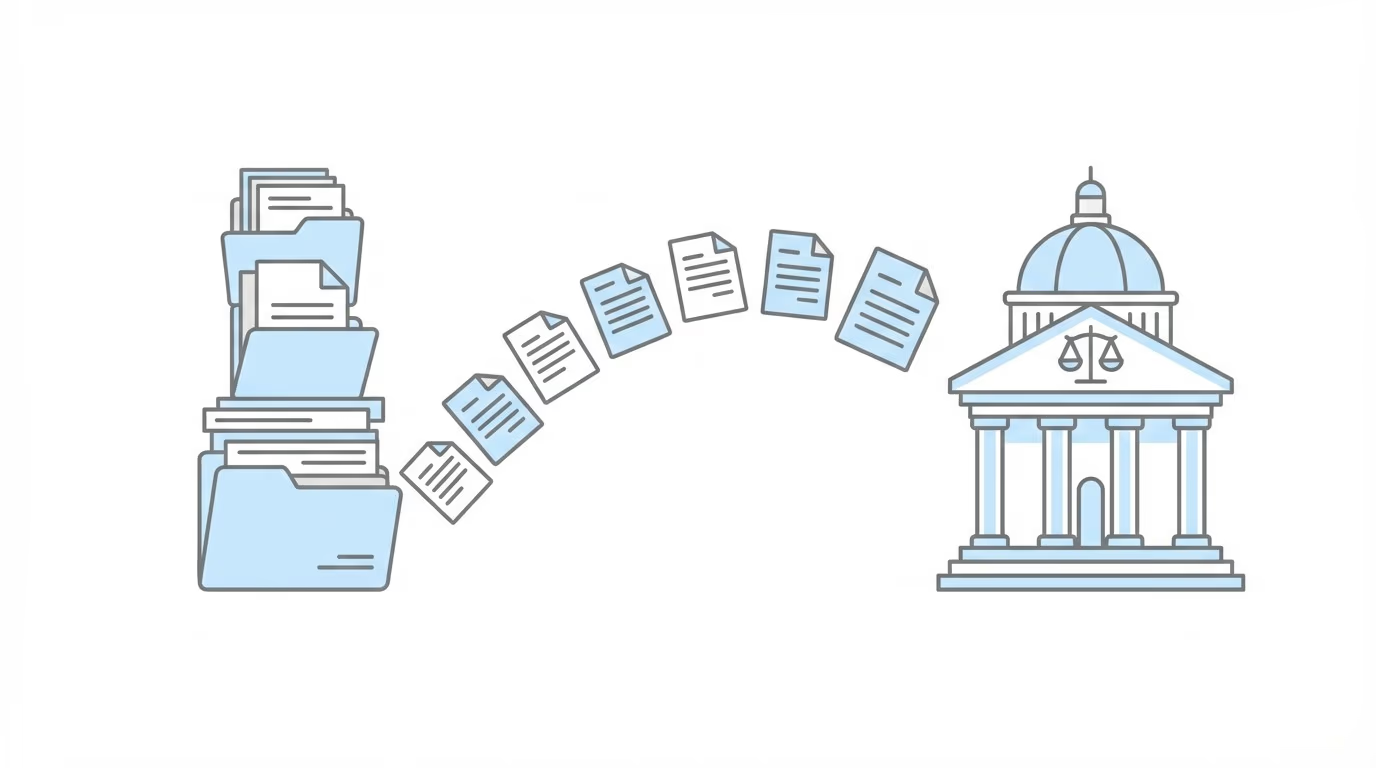
Federal court filings in Social Security disability cases are climbing. One practitioner recently reported a 62.5% jump in filings. The pattern appears consistent across regions. For firms that built their practice around ALJ hearings, this creates a real operational problem: federal court work demands more time per case, different skills, and a workflow that most disability practices were not designed to handle.
The question is not whether to take federal court cases. Many attorneys feel obligated to clients who have exhausted administrative remedies. The question is how to absorb the increased volume without hiring proportionally, without burning out staff, and without letting federal court work cannibalize the ALJ practice that sustains the firm.
The Numbers: What’s Driving the Federal Court Surge
Federal court filings do not happen in isolation. They follow from what happens upstream at the administrative level.
Initial denial rates have risen. In fiscal year 2024, the SSA approved 38.7% of initial claims. In fiscal year 2025, that number dropped to 36% according to Urban Institute. A 2.7 percentage point decline represents tens of thousands of additional denials across the system. Each denied claim becomes a potential appeal. Some portion of those appeals reach federal court.
The backlog reduction effort plays a role too. SSA has been processing claims faster, which means decisions get issued faster. Faster decisions mean faster Appeals Council denials, which means the 60-day federal court filing window arrives sooner for a larger cohort of claimants at once.
SSA staffing cuts compound the effect. The agency is targeting a workforce of 50,000, down from approximately 57,000. Fewer staff processing more decisions means less individualized attention to cases. That translates to more decisions with appealable errors.
The result: more cases entering the federal court pipeline than the system, or individual firms, anticipated.
Impact on Disability Law Practices
Federal court work hits disability practices differently than ALJ work. The time investment per case is substantially higher.
A well-prepared federal brief requires reviewing the entire administrative record, identifying legal errors, researching circuit-specific case law, and drafting arguments that meet the procedural requirements of the relevant district court. Experienced practitioners estimate 15 to 30 hours per case, sometimes more for complex records. Compare that to ALJ hearing prep, which many firms have systematized to a predictable number of hours.
Cash flow timing creates additional pressure. EAJA fees, when awarded, come after the case concludes. That can take 12 to 24 months in federal court. Contingency fees from the underlying benefits only materialize if the client ultimately wins, often after a remand and additional administrative proceedings. The work happens now; the revenue arrives later.
Small firms feel this most acutely. A solo practitioner or small team cannot simply absorb a doubling of federal court volume by working harder. Something has to change operationally, or the firm will either decline federal court work (disappointing clients) or accept it and watch margins collapse. Understanding how to prioritize cases when everything feels urgent becomes critical when federal court work competes with ALJ preparation.
Efficiency Strategies for Federal Court Cases

The firms handling increased federal court volume without imploding share a few common patterns. None of these are revolutionary. Together they create meaningful time savings.
Brief template systems reduce the reinvention problem. Every federal brief requires certain standard elements: the procedural history, the standard of review, the applicable legal framework. Building templates with these sections pre-drafted, then customizing for each case, eliminates hours of redundant work. Some firms maintain libraries of winning arguments organized by issue type, allowing attorneys to start from proven language rather than blank pages.
Paralegal leverage matters more at the federal level than at ALJ hearings. Exhibit indexing, record organization, and preliminary issue identification can all be handled by trained paralegals. That frees attorney time for the legal analysis that cannot be delegated. The firms succeeding with volume have invested in training their support staff to do more substantive pre-brief work.
Medical chronologies serve as brief foundations. The factual summary section of a federal brief draws heavily from the same medical evidence that would be summarized in a hearing brief. Firms using structured chronology tools find that the federal court fact section drafts faster because the underlying organization work has already been done. Jonathan Heeps of Martin, Jones & Piemonte put it this way: “Chronicle is like having the most efficient paralegal in the world…It doesn’t take a day off. It gives you all the information you need immediately.”
Batch processing by issue type is worth considering. When multiple cases present similar legal errors, grouping them together allows the attorney to research the issue once and apply it across cases. This requires some discipline to track issue types, but the efficiency gains are real.
OGC Brief Quality: A Shifting Landscape
The workload surge has affected OGC as much as claimant attorneys, and that creates opportunities. Practitioners are reporting a noticeable decline in the quality of government responsive briefs.
One former OGC attorney who left the agency last year confirmed that the current workload—roughly 14 briefs per month per attorney—is “much higher than the historic norm.” Some regional offices are seeing even worse numbers, with nearly 20 briefs due per attorney per month. That pace is not sustainable without hiring, and hiring is not happening.
The result shows in the work product. Attorneys comparing current OGC briefs to those from 2022 or 2023 describe the difference as “night and day.” Current briefs often spend two-thirds of their length restating facts and general statements of law, leaving only 3-5 pages of actual argument. Some briefs fail to cite cases contrary to the claimant’s position or engage meaningfully with the arguments presented.
There are indications that SSA is running responsive briefs through AI tools, producing boilerplate responses that do not address case-specific arguments. When opposing counsel does not substantively respond to your arguments, that creates tactical opportunity.
Some practitioners have started explicitly requesting that courts rule the government has conceded issues by failing to respond. This works best with judges inclined to hold the SSA accountable. There is supporting case law from the D.C. District, though it relies on local rules. The approach requires judgment about which judges and which issues warrant it.
Voluntary remands have also declined. Attorneys report that SSA is not remanding as often as it was 12 months ago, even in cases where remand would be appropriate. The agency appears to be forcing more cases to briefing. One practitioner noted that within two weeks, he would surpass his entire 2025 reply brief count.
The staff turnover at OGC compounds these issues. Many experienced attorneys have left. The people working your cases now may be entirely different from those working them 18 months ago. Newer staff are learning in an environment where senior attorneys are too swamped to train properly.
For claimant attorneys, this means two things. First, federal court cases may be more winnable now than historical remand rates suggest. Second, the briefs you write need to clearly frame issues so that weak OGC responses are obvious to the court.
Building Scalable Federal Court Workflows
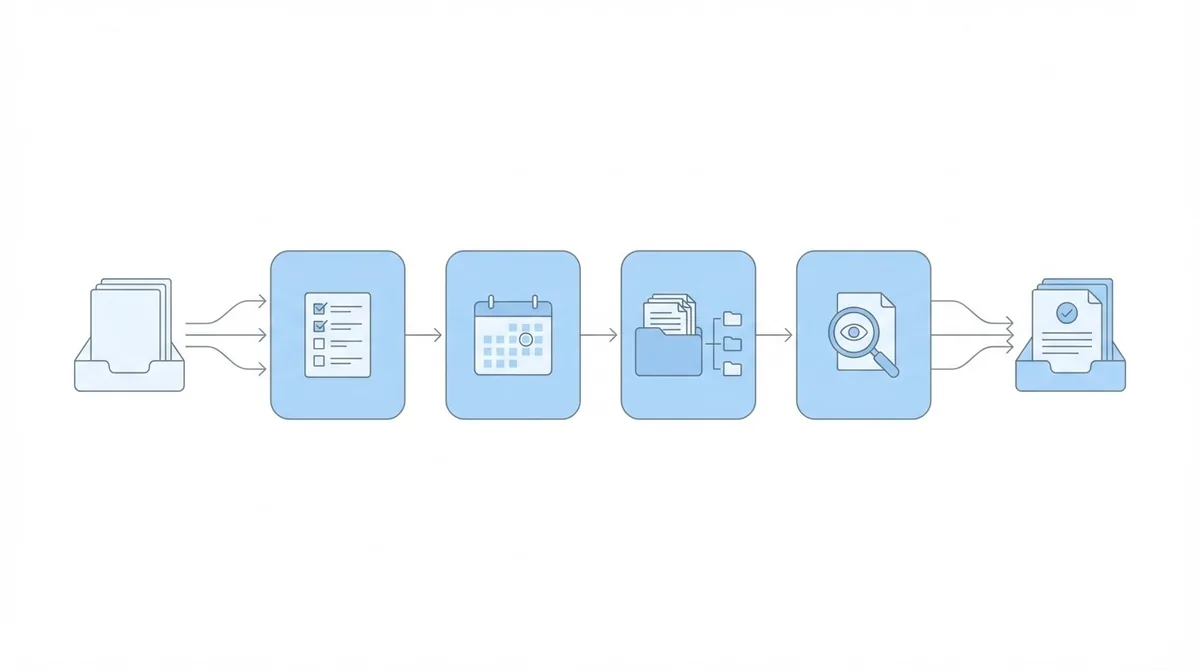
Systems matter more than heroics. A firm with good workflows will outperform a firm with brilliant attorneys but chaotic processes.
Standardized intake procedures for federal court cases ensure nothing falls through the cracks. When a case moves from Appeals Council denial to federal court consideration, a checklist should trigger: deadline calculation, client communication, conflict check, fee agreement review, record request. Firms that treat federal court as an ad hoc extension of ALJ work instead of its own workflow category consistently struggle with volume.
Case tracking that surfaces deadlines is non-negotiable. Federal court deadlines are hard. Missing them can be malpractice. The 60-day filing window from Appeals Council denial, the briefing schedule set by the court, the response deadlines: all of these need to be visible in whatever system the firm uses. Some practitioners use dedicated litigation management software; others build tracking into their existing case management system. The method matters less than the discipline.
Document organization that supports brief writing prevents duplicated effort. If the administrative record is organized logically from the start, attorneys are not wasting time hunting for specific evidence when drafting. The investment in organization pays off during the highest-value work.
ERE monitoring continues during federal court pendency. Firms sometimes forget this. The SSA does not freeze a case because federal court litigation is pending. New evidence can arrive. Status changes can occur. Remands require awareness of what happened administratively since the appeal was filed. Martin, Jones & Piemonte handles approximately 70 active federal court cases while maintaining full ERE visibility across their caseload.
When to Accept vs. Decline Federal Court Work
Not every case that loses at the Appeals Council belongs in federal court. The economics and the merits both matter.
From a merits perspective, federal court success requires clear legal errors in the administrative decision. A case with strong medical evidence but a competently reasoned ALJ decision may not present reversible error. The question is not whether the client deserves benefits; the question is whether the ALJ violated the law or regulations in denying them.
Remand statistics provide context. Approximately 50 to 60% of federal court Social Security cases result in remand. Of those remanded, roughly two-thirds eventually result in benefits. That means somewhere between 35 and 40% of cases filed in federal court ultimately produce awards. Meaningful odds, but not guarantees.
The economic calculation includes time investment, fee uncertainty, and opportunity cost. A firm that spends 25 hours on a federal court case that loses has consumed resources that could have produced three or four favorable ALJ outcomes. For firms operating at capacity, the trade-off is real.
Referral relationships can bridge the gap. Some firms maintain relationships with attorneys who specialize in federal court work, referring cases they cannot efficiently handle in-house. This serves the client while preserving firm resources. Other firms accept referrals from practitioners who do not want the complexity.
Client communication must be direct. Federal court appeals are longer, more expensive to litigate, and less certain than ALJ hearings. Clients deserve to understand the timeline (12 to 24 months is typical), the process (briefing, potential oral argument, potential remand), and the realistic odds. Setting appropriate expectations prevents disappointment and preserves the attorney-client relationship regardless of outcome.
Technology That Helps Manage the Load

Technology will not write federal briefs for you. But it can eliminate the operational friction that steals time from brief writing.
ERE monitoring provides ongoing case visibility even during federal court pendency. The SSA continues to process cases; new documents appear; status changes occur. Firms relying on manual portal checks will miss developments. Firms with automated daily monitoring see changes as they happen. Chronicle checks the ERE and e-file daily for each monitored case, ensuring that federal court cases do not become black holes of information.
Medical chronology tools reduce the time spent compiling medical facts for the brief’s factual summary. Rather than starting from scratch, attorneys work from an organized chronology that has already indexed the key records. The time savings compound when the same case moves through remand and additional proceedings.
Case management integration keeps federal court deadlines visible alongside the rest of the practice. Integration means information flows between systems rather than requiring manual transcription. Firms using CMS platforms with API access can connect their ERE monitoring layer to their system of record. Chronicle is CMS-agnostic; it works with Prevail, any CMS with an API, or no CMS at all.
Document automation for routine filings (complaints, consent forms, disclosure statements) removes mechanical work from the equation. Templates populated with case-specific information generate drafts in minutes rather than hours.
None of these tools replace judgment. They replace friction.
Conclusion
The federal court workload surge is not temporary. Higher denial rates, faster administrative processing, and reduced SSA staffing are structural factors. Firms that wait for the volume to return to normal will be waiting a long time.
The firms thriving with this volume are not necessarily larger. They are more systematic. They have built workflows that let them handle increased complexity without proportional increases in hours worked or staff hired. They use technology to eliminate the administrative drag that steals time from the substantive legal work.
Cavey Law provides a useful frame. As Krysti Monaco explained: “It has changed the dynamic in our firm, saved us money on the business side because I didn’t have to hire a third paralegal, freed up our paralegals’ time so much so that they’re able to call clients more, give updates, upload documents while on the phone with the client.”
That is what sustainable growth looks like. Not more hours, but better infrastructure. Not more staff, but smarter systems. The federal court surge tests whether your practice has that infrastructure in place.
Frequently Asked Questions
Why are SSA federal court filings increasing?
The increase comes from three upstream factors. Initial denial rates have risen (from 38.7% to 36% approval between FY 2024 and FY 2025). The SSA is processing decisions faster through backlog reduction efforts, pushing more cases through the pipeline simultaneously. And agency staffing cuts are resulting in more decisions with appealable errors.
What percentage of federal court SSA cases result in benefits?
Approximately 50 to 60% of federal court Social Security cases result in remand to the agency. Of those remanded cases, roughly two-thirds eventually result in benefit awards. The math works out to 35 to 40% of cases filed in federal court ultimately producing benefits for claimants.
How long does a federal court disability appeal take?
Federal court appeals typically take 12 to 24 months from filing to resolution. This does not include the additional time required if the case is remanded to the SSA for further proceedings. Total time from federal court filing to final benefit award can stretch considerably longer.
Can small firms handle increased federal court volume?
Yes, but it requires intentional workflow design rather than simply working harder. Small firms succeeding with increased volume typically use brief templates, leverage paralegals for record organization, batch similar cases together, and invest in technology that reduces administrative friction.
Should disability attorneys accept all federal court referrals?
No. Federal court cases should be evaluated on both merits (presence of clear legal errors) and economics (time investment versus fee uncertainty). Some cases are better declined or referred to specialists. Client communication about realistic timelines and odds is essential regardless of the decision.