
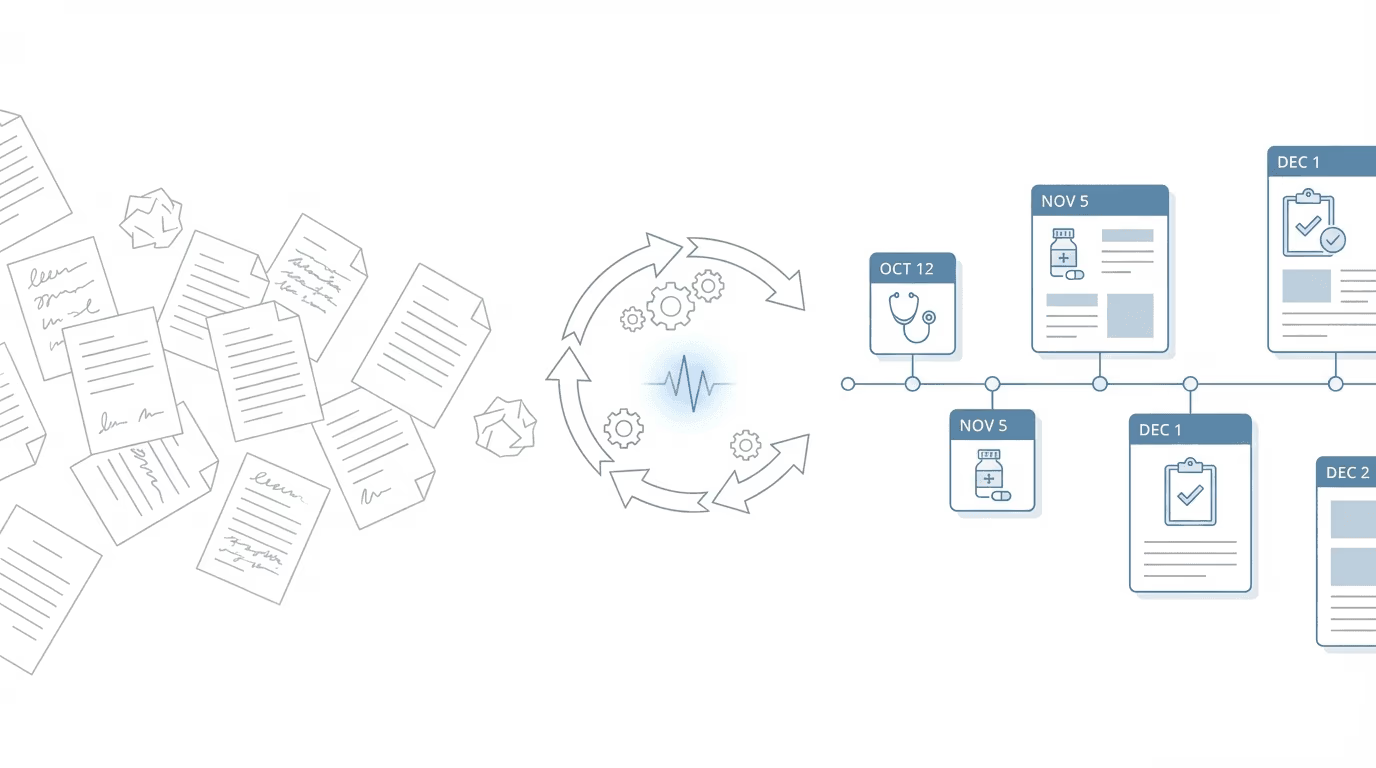
Medical record review is where SSD cases are won or lost. The evidence is there, somewhere in the file. Finding it before the hearing date is the problem.
A typical SSD case file runs 500 to 2,000 pages of treatment notes, imaging reports, specialist consultations, and hospital records. Paralegals spend days organizing this manually. They read every page, extract dates and diagnoses, build chronologies, and flag RFC-relevant findings. It works, but it doesn’t scale.
AI is changing how disability law firms handle medical evidence. Tools now extract key data from records in minutes instead of hours. The output isn’t perfect. But it’s shifting where human expertise gets applied.
The Medical Record Challenge in SSD Practice
Every disability claim depends on medical evidence. The SSA’s five-step sequential evaluation asks whether impairments are severe, whether they meet or equal a listing, and what residual functional capacity remains. Answering those questions requires documentation, and lots of it.
The challenge isn’t getting records. Most SSD firms receive medical evidence through the ERE, from providers, or from clients. The challenge is what happens after records arrive.
A paralegal reviewing a 1,500-page file manually faces several tasks. Identify every appointment, diagnosis, and treatment across dozens of providers. Build a chronological timeline showing how conditions developed. Extract findings relevant to functional limitations. Do this consistently across every case in the queue.
At many firms, this takes 15 to 20 hours per case. Staff who handle 30 or 40 active files hit a ceiling. The work is thorough but slow. And the hearing date doesn’t move.
Complex medical histories make it worse. Claimants with multiple impairments, years of treatment, and records from many providers generate larger files. The evidence exists. Finding the key findings buried on page 847 is the hard part.
What AI Medical Record Review Actually Does
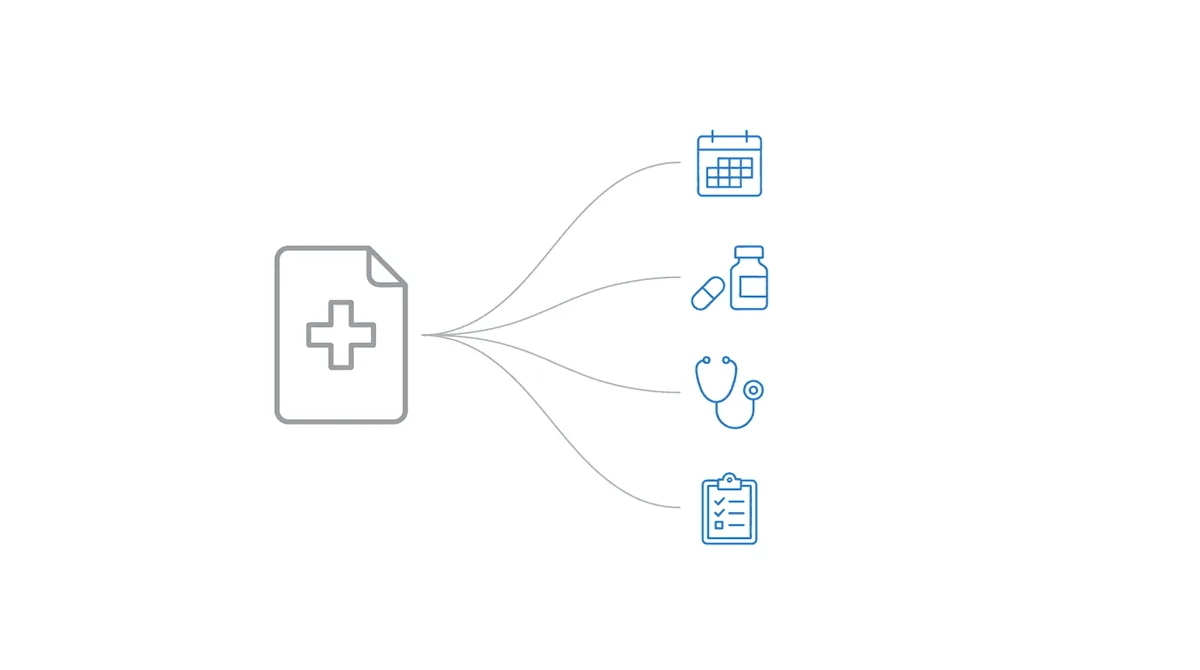
AI medical record review automates extraction and organization. The process works in stages.
The system ingests records. Most platforms accept PDFs, scanned documents, and electronic health record exports. Optical character recognition reads both typed and handwritten notes (though handwriting quality affects accuracy significantly).
Then extraction begins. AI identifies patient demographics, appointment dates, diagnoses with ICD codes when present, procedures, medications, provider names, and clinical findings. The technology mimics what a paralegal does when reading through records. It just processes hundreds of pages in minutes rather than days.
The output is a structured medical chronology. Events appear in date order with source citations. Most platforms include page references so you can verify any entry against the original record. That verification matters. AI isn’t infallible.
More advanced features include condition tracking across time, treatment compliance analysis, and identification of findings relevant to RFC assessment. Some tools flag Blue Book listing criteria and highlight evidence supporting severity arguments.
AI vs Manual Review: What Changes
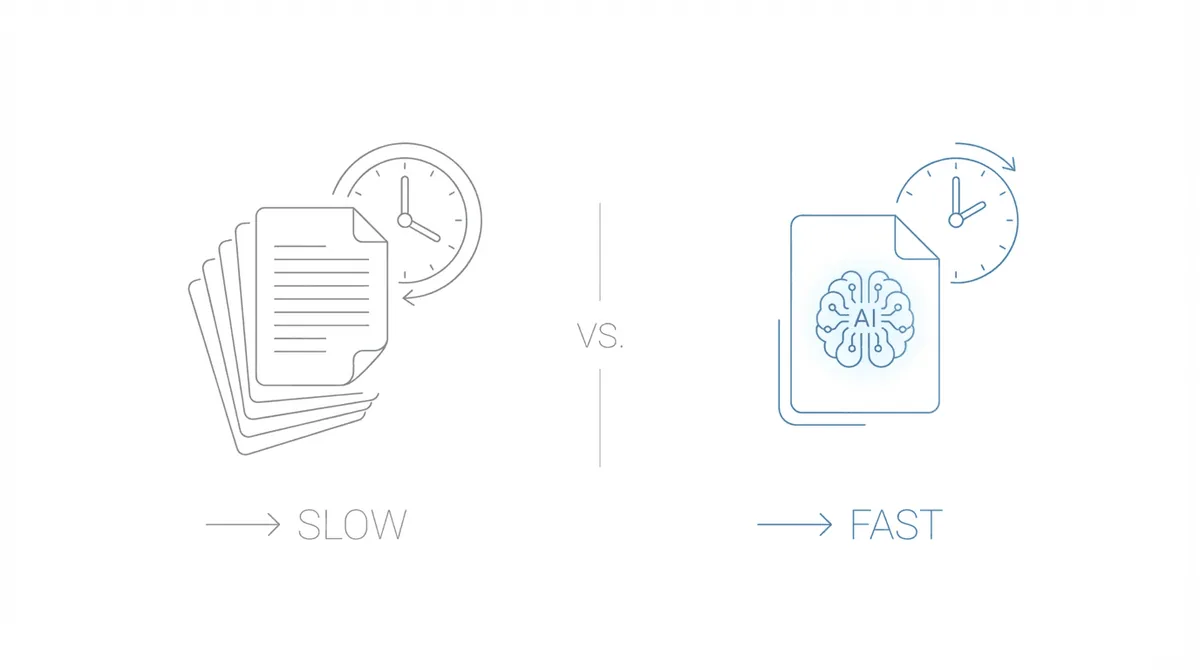
Speed is the obvious difference. AI processes records faster than any paralegal can read them. A 2,000-page file that would take a week of manual review can generate a draft chronology in an afternoon.
Consistency is the less obvious difference. Manual review quality varies with fatigue, experience, and workload. The same paralegal reviewing their fortieth file of the month may miss details they would have caught on file five. AI applies the same extraction logic to every page of every file. It doesn’t get tired.
But AI doesn’t replace human judgment. The technology excels at extraction and organization. It’s less reliable at interpreting ambiguous notes, understanding context that spans multiple entries, or evaluating how findings relate to specific vocational factors. A doctor’s note saying “patient reports difficulty with prolonged standing” gets extracted. Deciding what that means for a warehouse worker’s RFC still requires legal expertise.
The practical shift: AI handles bulk extraction that consumed paralegal hours. Human expertise then focuses on interpretation, strategy, and filling gaps. Staff who spent days building chronologies now spend hours reviewing AI-generated summaries and adding analysis.
At Anderson Marois & Associates, the team used AI medical chronology on a case with over 2,000 pages of records. Manually organizing that file would have consumed multiple paralegal days. Automated chronology made it workable in a fraction of the time.
This pattern repeats across firms adopting AI. The technology doesn’t eliminate paralegal work. It shifts where that work gets applied.
How SSD Firms Are Using AI Medical Review
Adoption varies. Some firms run AI on every case. Others reserve it for complex files or tight deadlines. The right approach depends on volume, budget, and how hearing prep currently works.
The common thread is integration with existing workflows. Records arrive through ERE, from providers, or from clients. Someone uploads them to the AI platform. The system generates output. Staff review and refine before using in hearing prep.
At Ficek Law, medical chronology serves as the hearing prep backbone. The firm starts with a high-level summary, then dives into specific records for detailed review. That workflow depends on having current, organized chronologies ready when prep begins. Waiting for records to be manually organized creates delays that compress the final push before hearing.
The most efficient implementations connect record sources to AI analysis directly. When records arrive in the ERE, they flow into AI review without manual file transfers. The output feeds into hearing prep materials. Each handoff that gets automated reduces handling time and error opportunity.
Privacy and Compliance Considerations
Medical records contain protected health information. Any AI tool handling PHI requires careful evaluation.
At minimum, the platform needs a HIPAA Business Associate Agreement. This creates legal accountability for how PHI is handled. Vendors who can’t provide a BAA raise immediate compliance questions.
Better platforms hold SOC 2 Type II certification, demonstrating third-party verification of security controls. Encryption standards matter: AES-256 for data at rest and in transit is the current benchmark. Access logging shows who accessed what records and when.
State-level AI healthcare regulations are emerging. California requires human review of AI-generated coverage decisions. Texas mandates disclosure when AI is used in diagnosis. These rules primarily affect healthcare providers, but disability law firms should understand the direction. The trend is toward transparency and human oversight of AI in healthcare contexts.
When evaluating tools, ask for documentation. If the vendor can’t produce the BAA, SOC 2 report, or encryption specifications, that tells you something.
Chronicle’s Role in the AI Medical Review Workflow
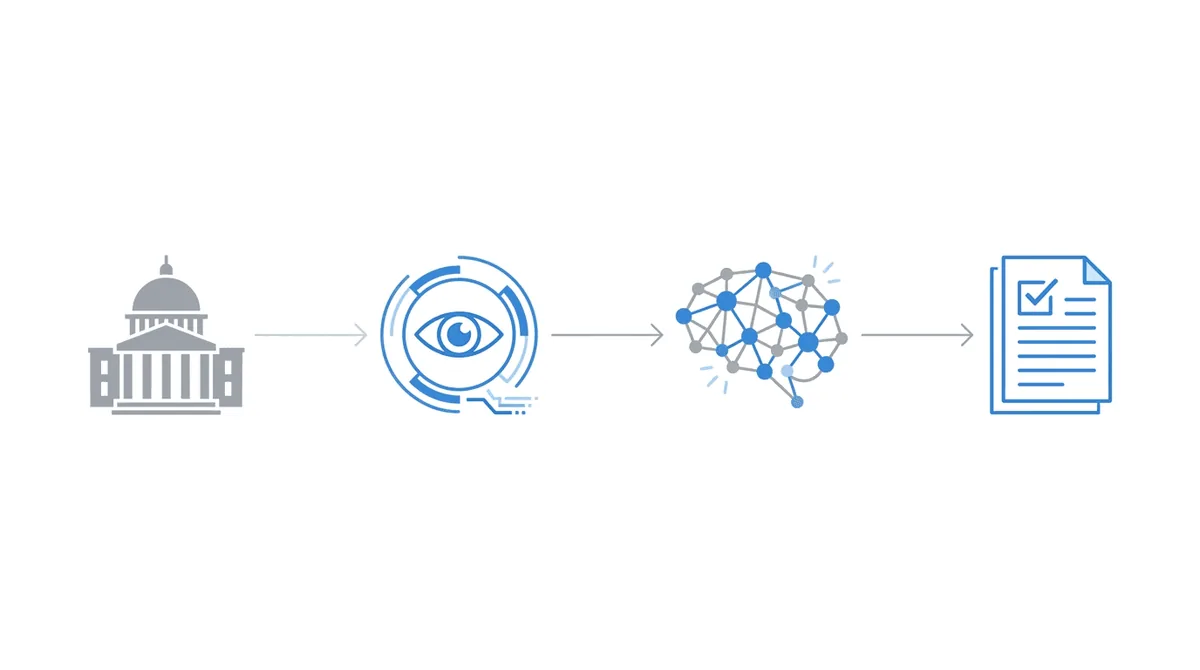
Chronicle is an ERE monitoring platform. It checks the ERE and e-file daily for each monitored case, detecting when new medical evidence arrives.
That monitoring function is the starting point for AI medical review workflows. Records posted to the ERE get detected immediately. From there, they can flow into AI analysis.
Chronicle integrates with AI medical review tools. The Dodo integration enables AI-powered medical chronologies. Records move from Chronicle into Dodo without manual file handling. The Superinsight integration offers another option for firms wanting AI record review connected to their ERE workflow.
The complete pipeline: SSA posts new medical evidence to the e-file. Chronicle detects the documents within 24 hours. Those records flow into AI analysis. The output becomes part of hearing prep materials. No manual downloads, no file transfers, no records sitting in folder limbo.
At Ficek Law, this integration approach supports hearing preparation. “Chronicle gives you your best chance to present a good case for a borderline client.” That reflects what organized medical evidence enables.
For firms already using Chronicle for ERE monitoring, adding AI medical review extends the workflow from document detection through organized analysis.
Frequently Asked Questions
Does AI replace paralegals in medical record review?
No. AI handles extraction and initial organization. Paralegals review output, identify gaps, interpret findings, and apply legal judgment. The role shifts from data entry to analysis. Most firms report that AI frees paralegal time for higher-value work.
How accurate is AI medical record review?
Accuracy depends on the platform and record quality. Vendors cite 90-95% extraction accuracy, but those numbers come from controlled testing. Real-world records include handwritten notes, poor scans, and inconsistent formats. Treat AI output as a draft requiring human verification, not a finished product.
What security certifications should AI medical review tools have?
At minimum: a signed HIPAA Business Associate Agreement. Better platforms hold SOC 2 Type II certification, use AES-256 encryption, and maintain access logging. Ask for documentation.
Can AI identify RFC-relevant limitations?
Some platforms flag findings related to functional capacity. Quality varies. AI identifies clinical findings like pain levels, range of motion measurements, and activity restrictions. Translating those into vocational limitations still requires legal expertise.
How does AI handle handwritten medical notes?
OCR technology reads handwritten notes with varying success. Clear handwriting transcribes well. Illegible scrawl defeats AI just as it defeats human readers. Most platforms flag low-confidence extractions so you know which entries need verification.
Making AI Work for Your Practice
AI medical record review is a tool, not a strategy. The technology handles extraction and organization. Building winning disability cases still requires legal expertise, client understanding, and hearing preparation that AI cannot provide.
Firms seeing value from AI integrate it into workflows that fit their practice. Records flow from sources into AI analysis into hearing prep. The technology handles parts where speed and consistency matter. Human expertise handles interpretation and strategy.
For practices drowning in medical evidence, AI offers a path to managing volume without proportionally increasing staff. For firms where hearing prep runs late, AI compresses the timeline from records to organized chronology.
The question isn’t whether AI will change medical record review in disability law. It already has. The question is whether your workflow captures those benefits.
Learn more about Chronicle’s medical chronology integrations